
Perpetual Calendar (Free Printable)

A perpetual calendar is a calendar that keeps working after December 31. Instead of being tied to one year, it can be reused for many years, either because the year and weekdays are left off or because it lets you set them. The free printable above works that way for everyday planning: type your appointments and notes straight into the boxes, then print it or save it as a PDF or PNG with your entries included.
Write birthdays, anniversaries and yearly reminders under each date. The page works for every year.
Free for personal, classroom and office use. Your entries are included in the print, PDF and PNG. Prints on US Letter and fits A4.
Black and White Perpetual Calendar Printable
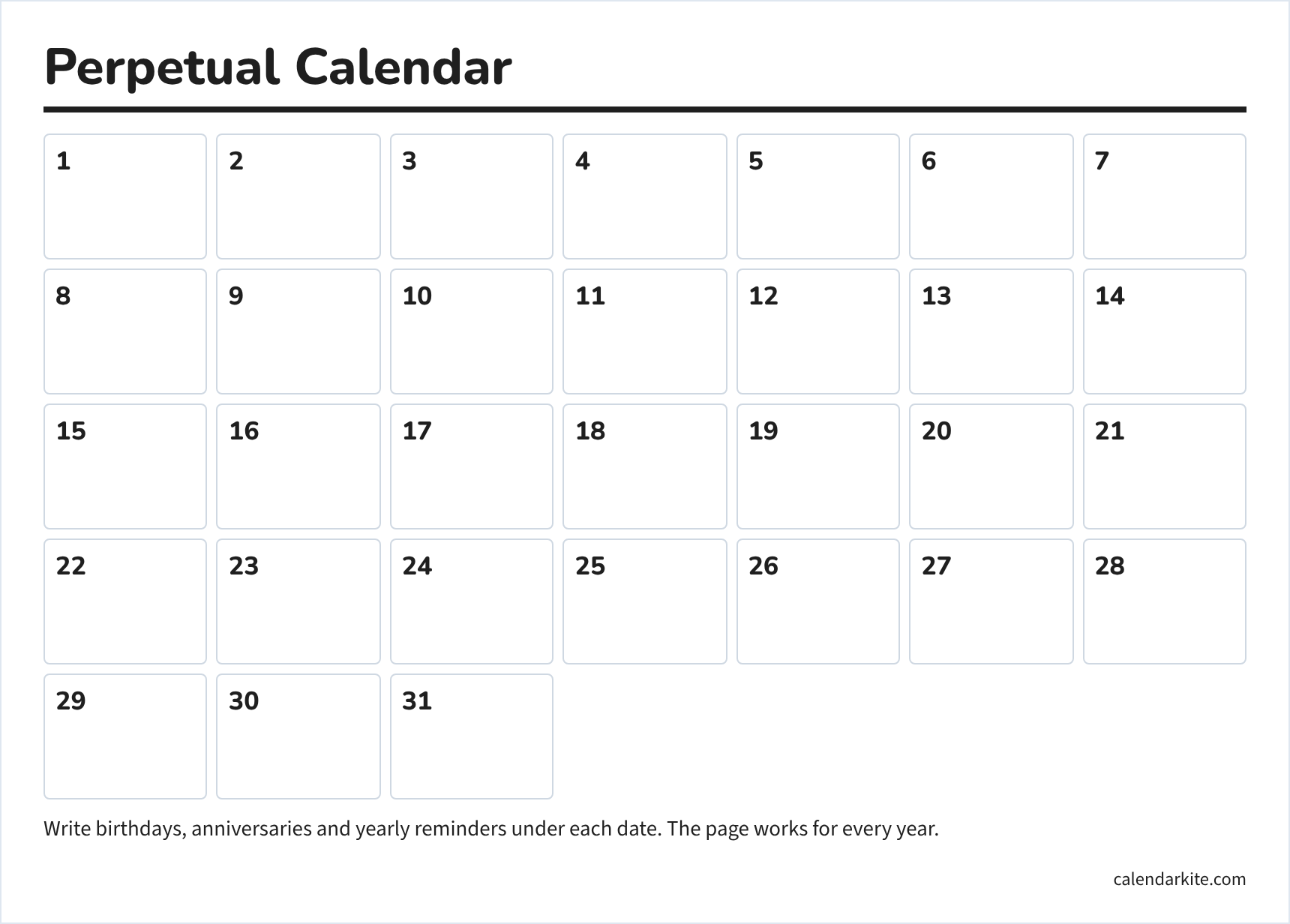
This is the one I suggest for a birthday and anniversary list you will keep for years, since it uses very little ink. I test-print every page on my home inkjet, and these plain black lines stay crisp on both US Letter and A4.
Pink Perpetual Calendar
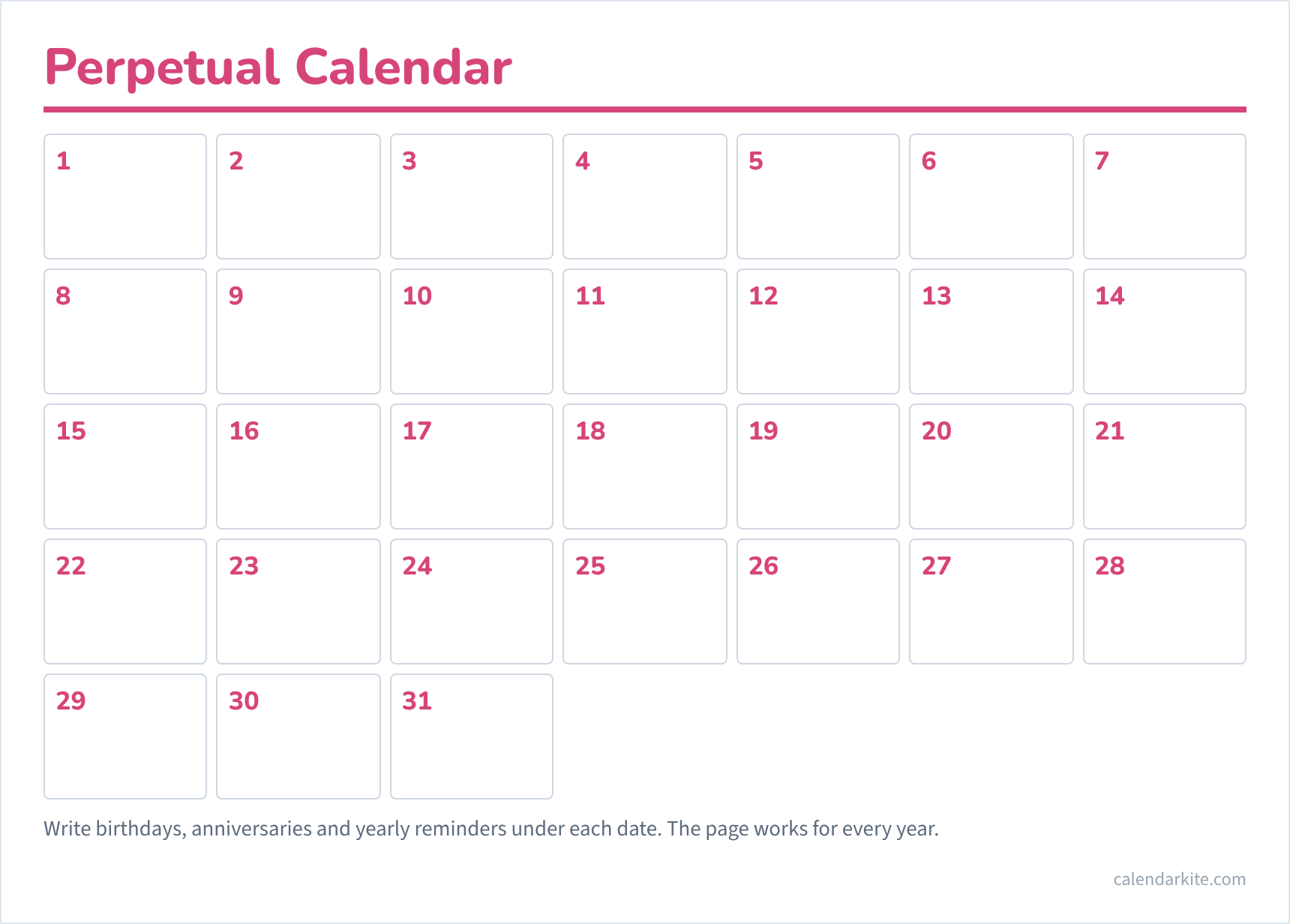
A soft pink perpetual calendar suits a bedroom wall or a home office desk, especially for tracking birthdays and monthly reminders. I like it for a gift list, because the gentle color keeps the grid readable without feeling loud.
Sage Green Perpetual Calendar
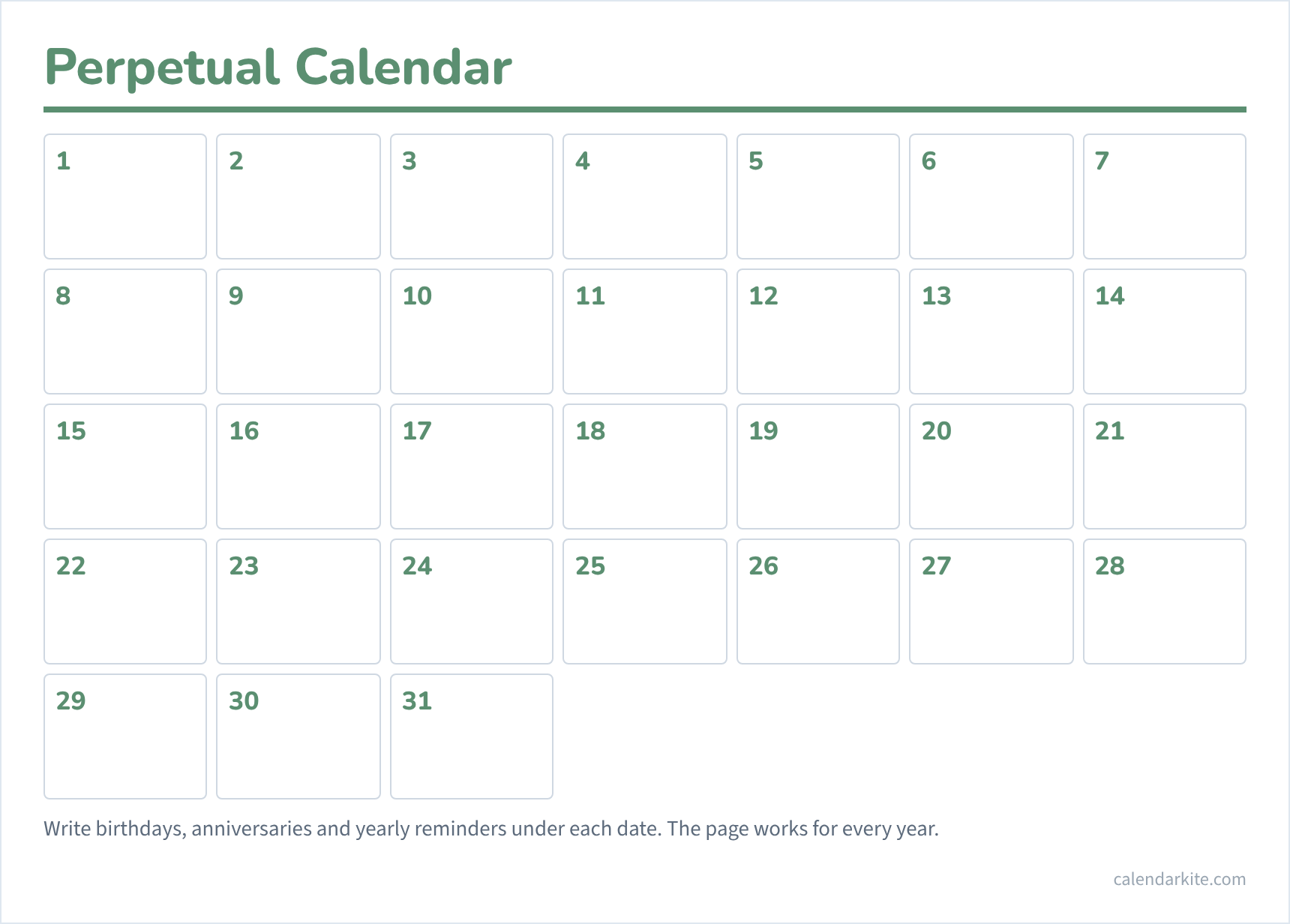
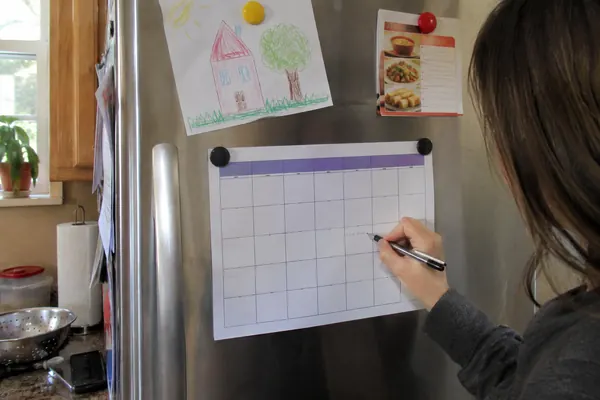
Sage green is calm enough for a kitchen, which is where I keep my own paper calendar on the fridge. It works well for a family birthday list or a recurring monthly bill schedule that you write in pencil and reuse every year.
Cute Perpetual Calendar
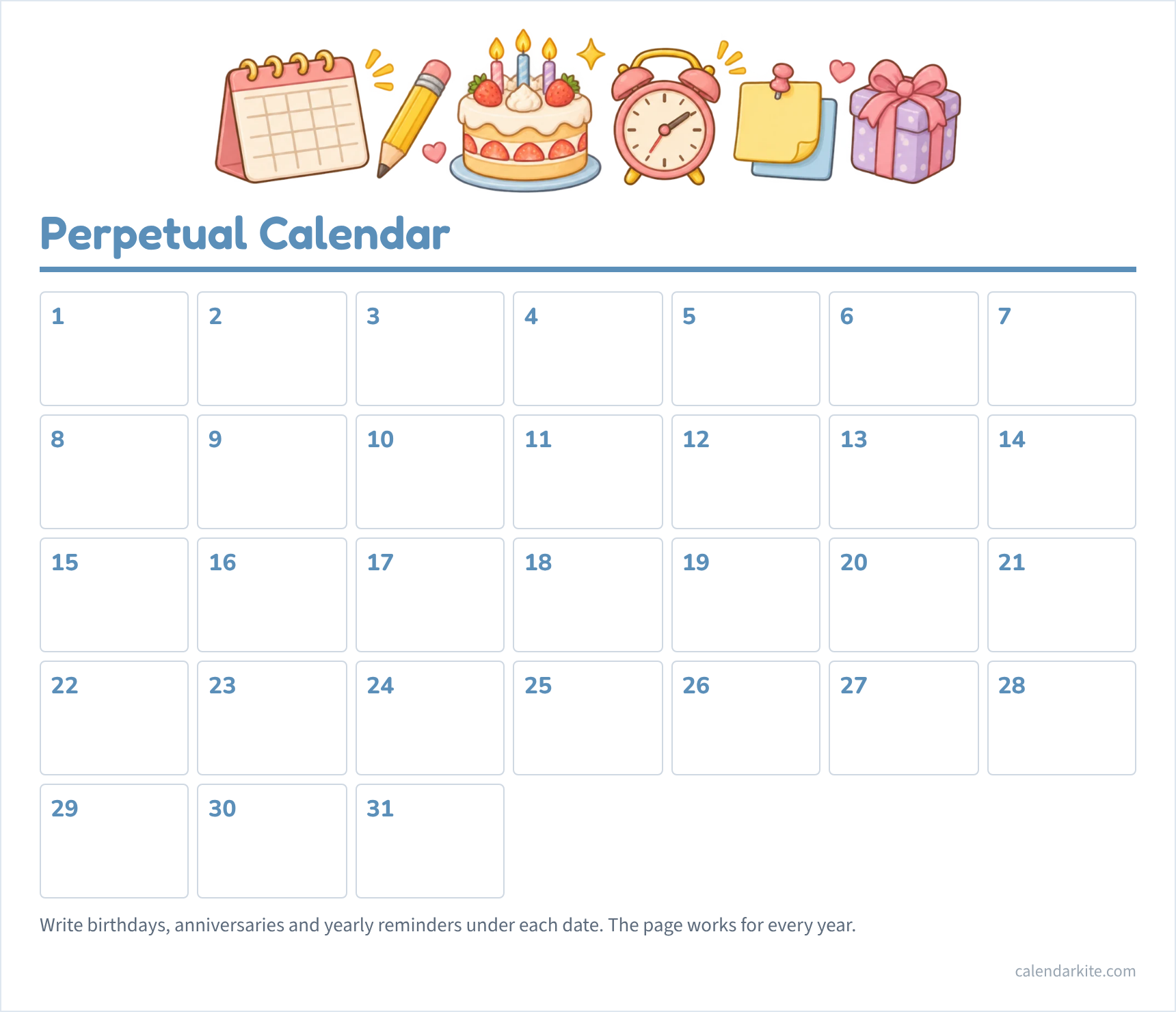
This pastel blue design with little hand-drawn illustrations suits a kids' room, a classroom wall or a cheerful desk. Use it to count down birthdays and school events, and leave the dates blank so you can reuse it each year.
Floral Perpetual Calendar
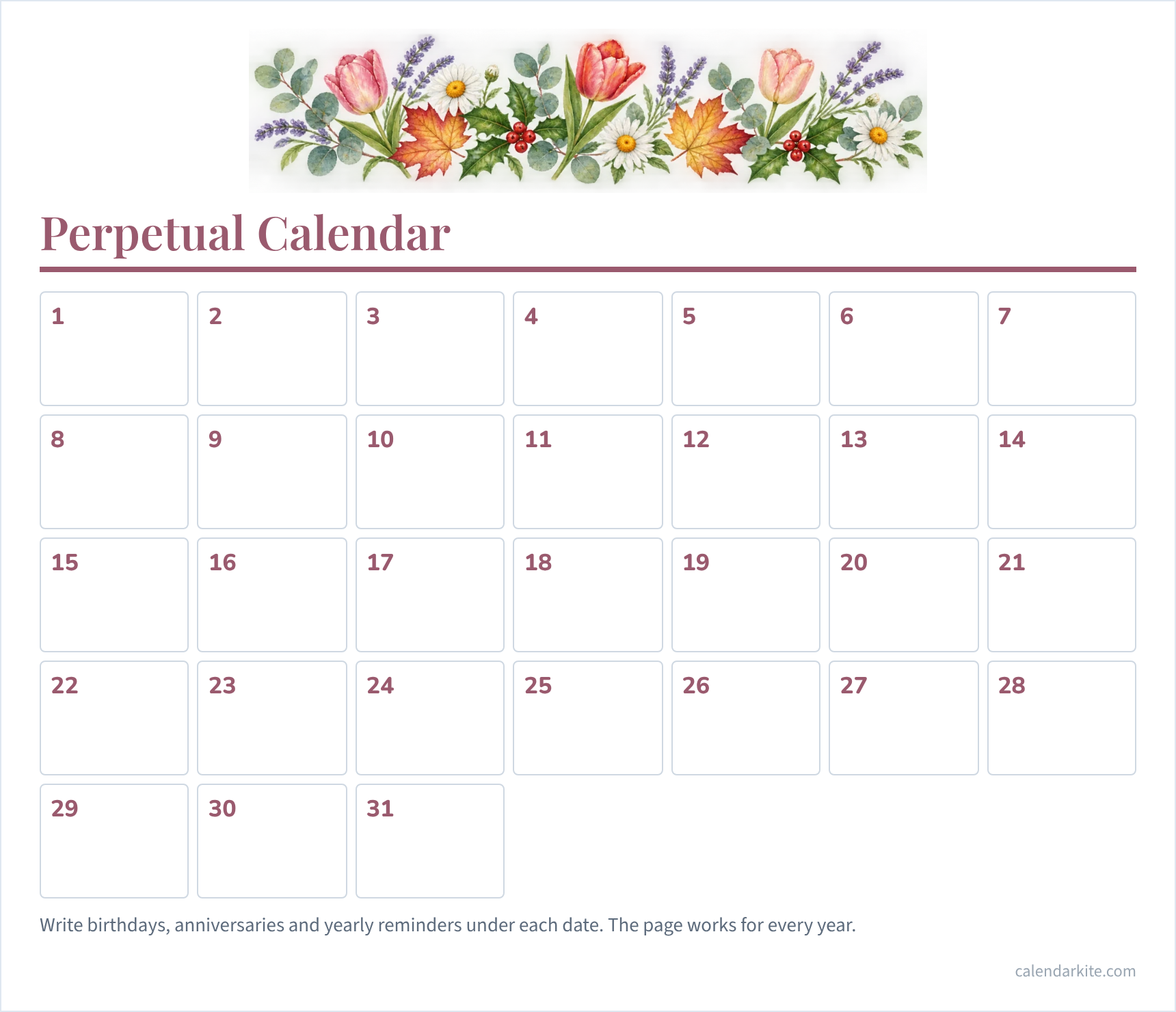
Watercolor flowers and elegant serif headings make this a lovely choice for a hallway or a gift for a new homeowner. I would fill it with anniversaries and birthdays in pen, since the mauve tones look best with dark ink.
Colorful Perpetual Calendar
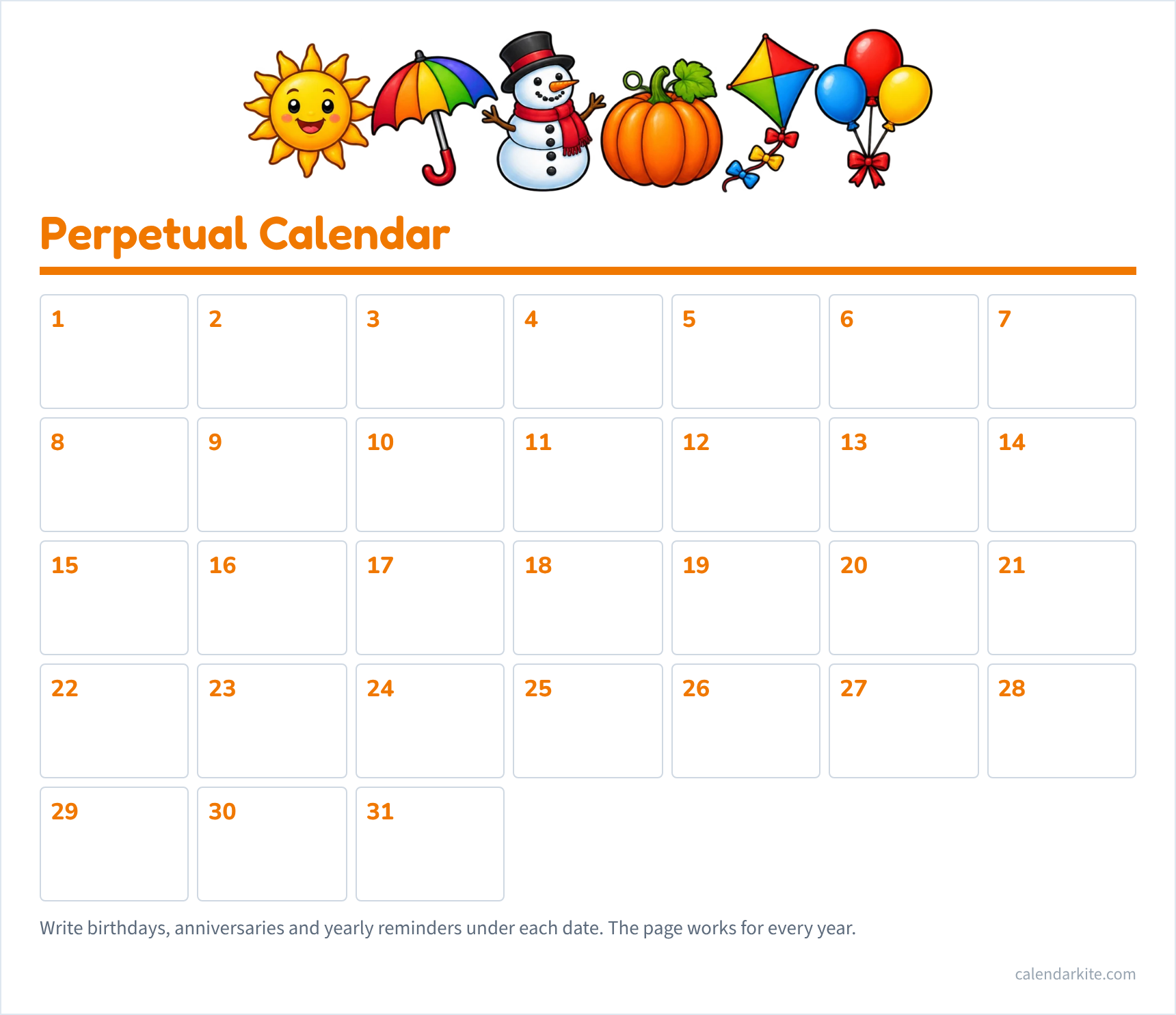
Bright orange and yellow with bold cartoon illustrations make this a fun pick for a family hallway or a playroom. Let your kids add their own birthdays and school events; I find children check a calendar far more when it is colorful.
Simple Minimalist Perpetual Calendar
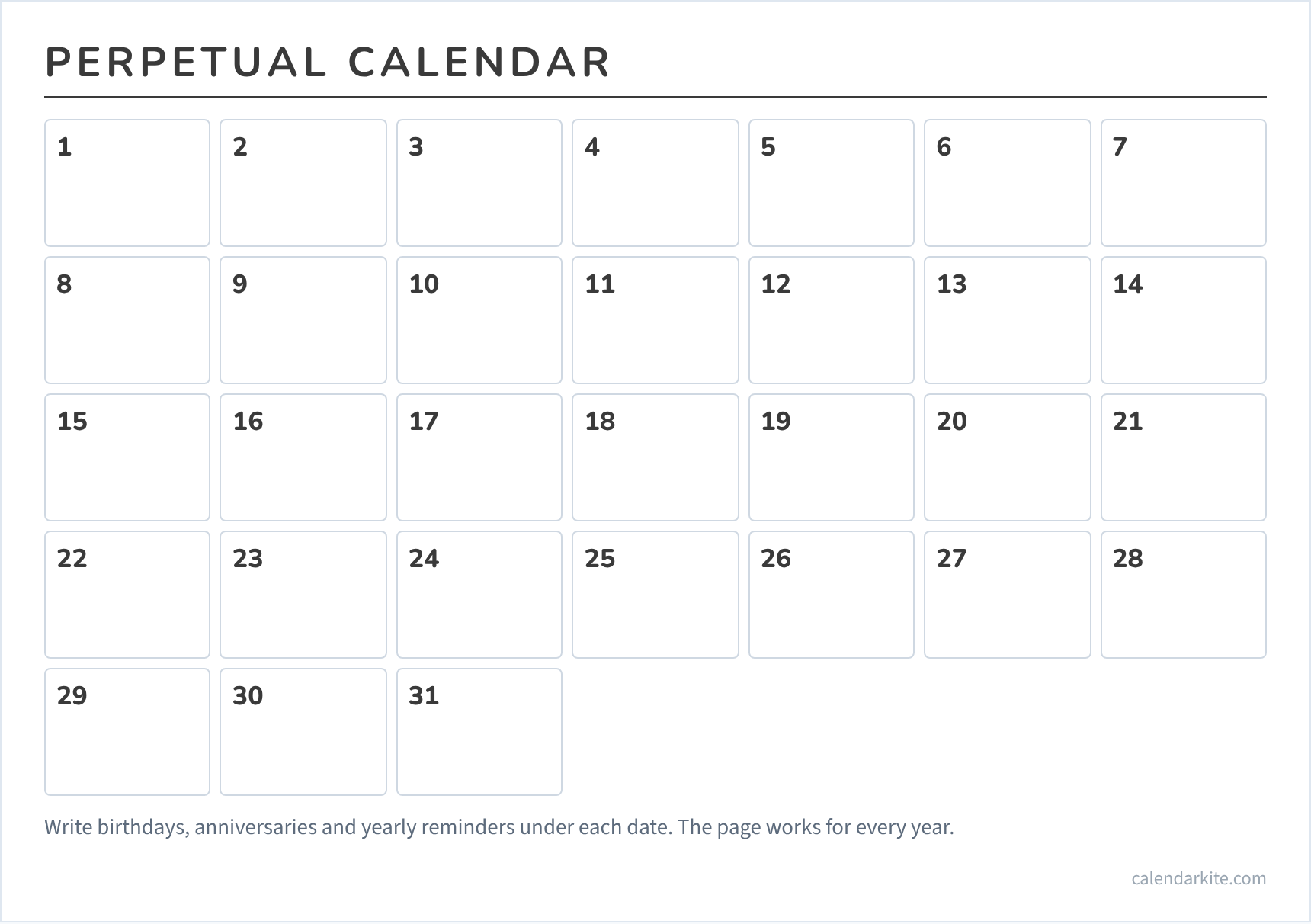
Thin gray lines and a light uppercase heading keep this minimalist version out of the way on a desk or planner insert. In the office I learned that less visual clutter means people actually read the dates, so I kept the grid very quiet.
Aesthetic Perpetual Calendar
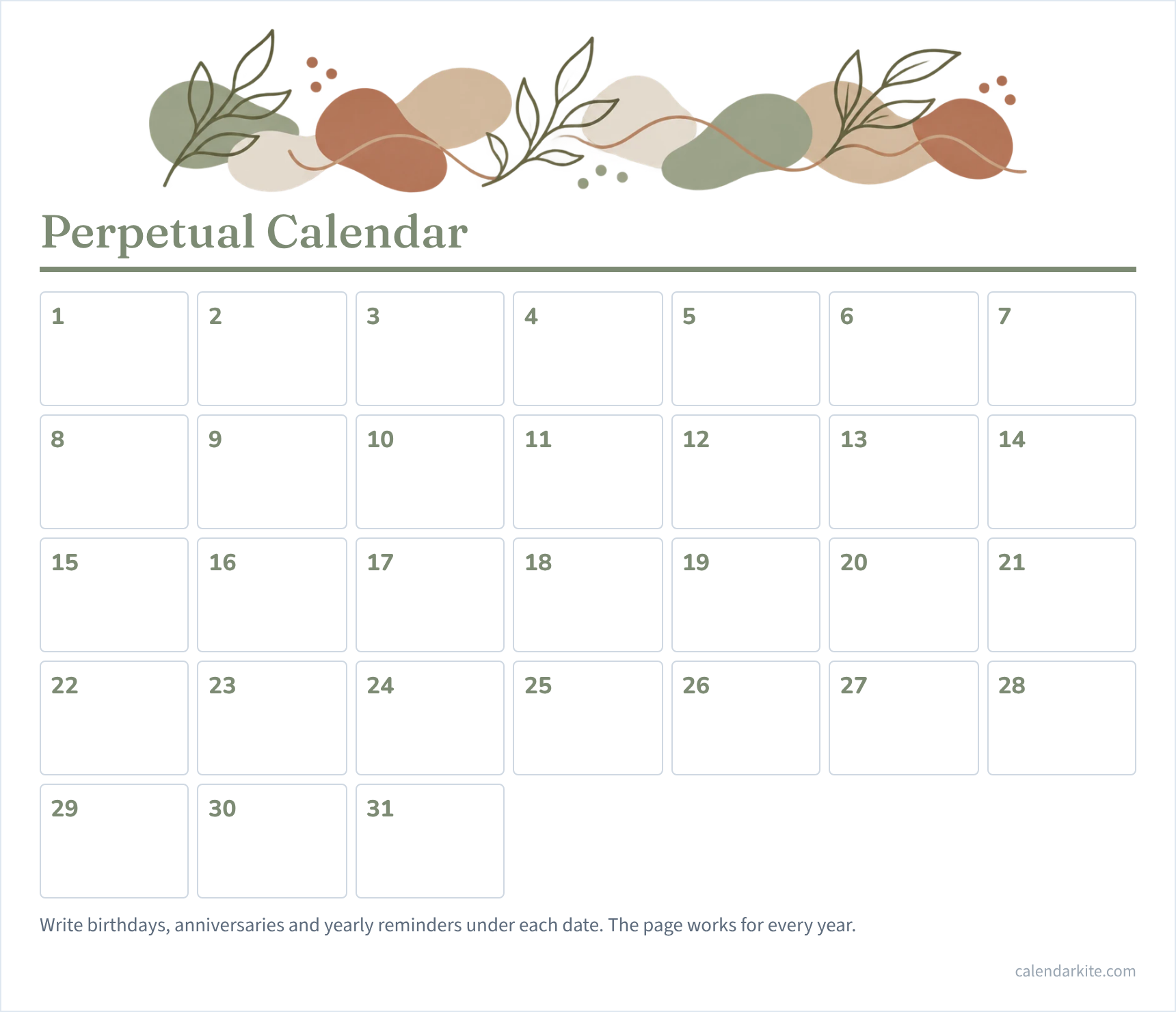
Muted sage, sand and terracotta with soft line-art leaves suit a neutral home or a styled desk, and work well for a birthday tracker. I test-print it on US Letter and A4 so the soft leaf art stays light and never crowds the dates.
Vintage Perpetual Calendar
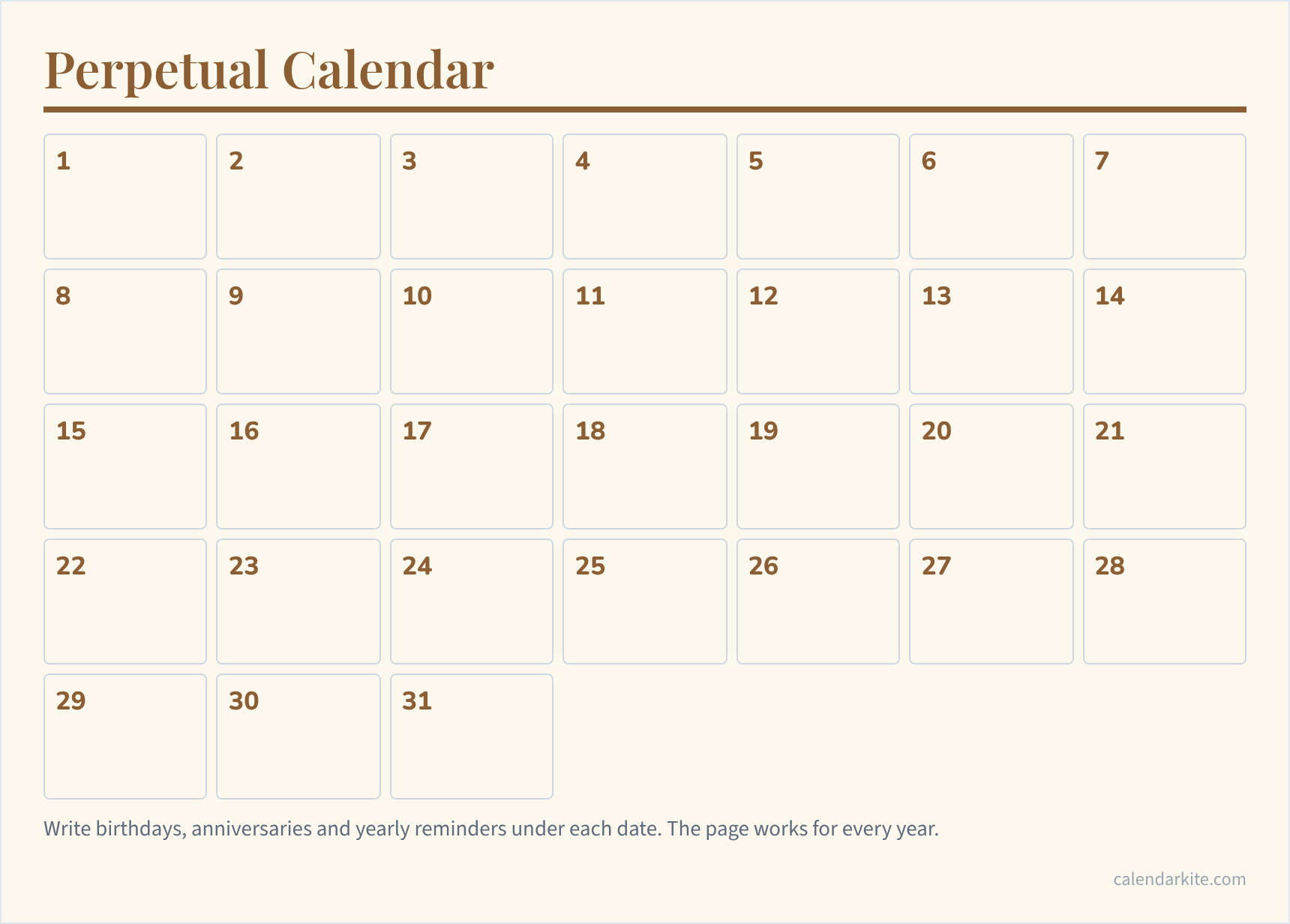
Cream paper tones and brown serif headings give this a nostalgic, old-fashioned look that suits a farmhouse kitchen or a study. It is ideal for a long-running family birthday and anniversary list that you update by hand.
Modern Perpetual Calendar
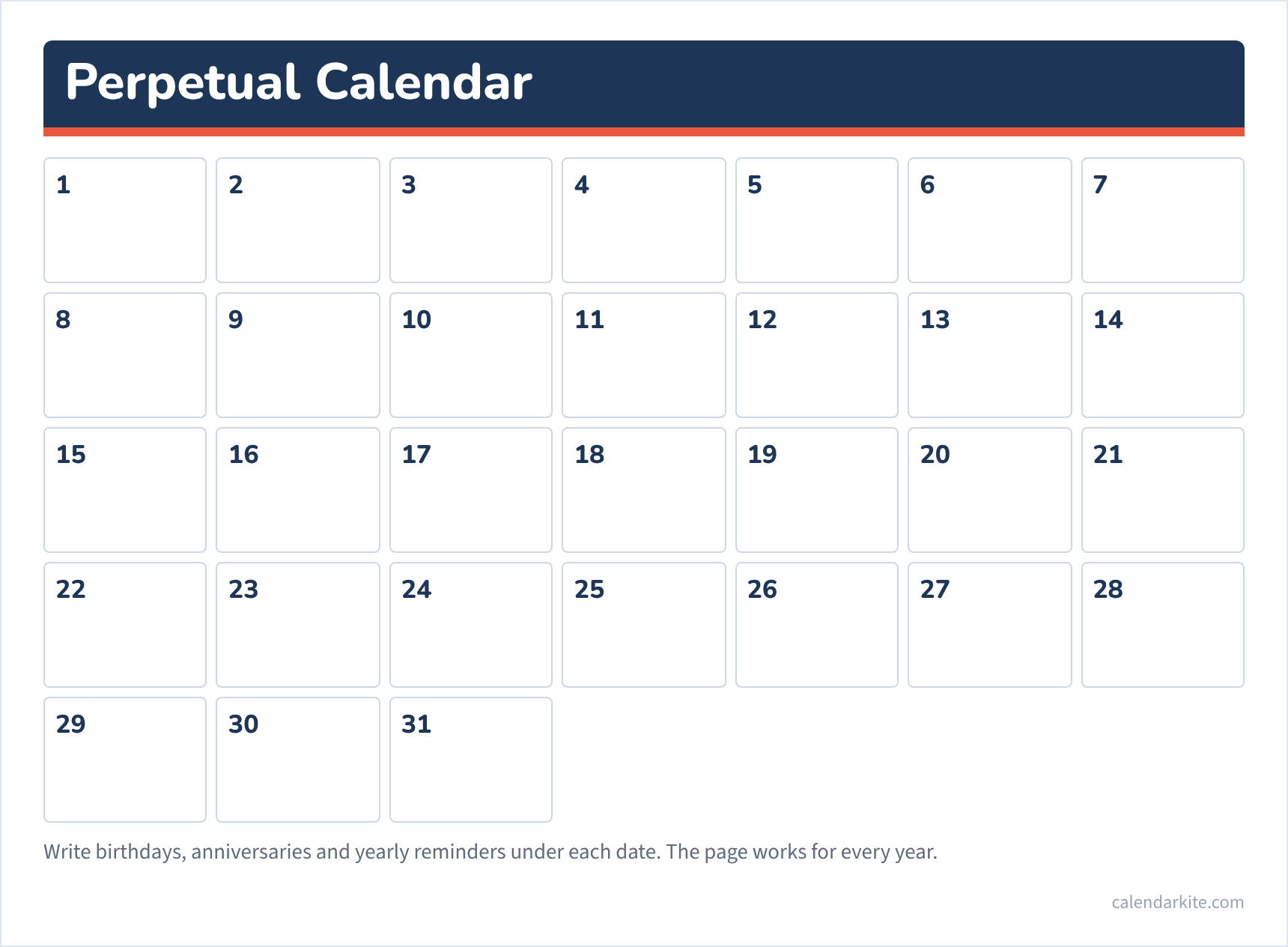
A navy header band with a coral accent gives this a modern, office-ready look for a desk or a shared workroom. Use it for recurring deadlines, staff birthdays and yearly renewals that you want visible at a glance.
I keep a paper calendar on the fridge and a planner on the kitchen counter, and the fridge one carries the dates that never move. After about ten years in office administration, I learned that the entries people forget are the repeating ones. A perpetual calendar is built for exactly those.
What a perpetual calendar is
A perpetual calendar is any calendar that can be used for more than one year. A normal wall calendar is finished once the year ends. A perpetual one is meant to be kept, which is why it suits dates that come back every year.
The term covers several different things. In print, it usually means an undated grid of months or days. On a desk, it can be blocks or rotating wheels that you turn to the current date. In watchmaking, it describes a mechanism that shows the correct date, accounting for month lengths and leap years. Most people searching for a printable want the first kind: a calendar they can fill in and keep using.
How a perpetual calendar works
The idea rests on repetition. Every year starts on one of seven weekdays and is either a common year or a leap year, so there are only 14 possible one-year calendars. Once you know which of the 14 a year matches, you can reuse the layout. Table-based versions give you a simple lookup for the weekday the first of each month falls on.
An undated calendar takes a simpler route. It leaves the weekdays off or lets you fill them in, so one sheet serves any year. Some versions show only month and day, never the year. That is why they work best for repeating events rather than one-off appointments.
How to use this perpetual calendar
Click a day box above and type. Your entry stays in place while you add more, and the notes area handles anything that does not belong to a single day. When you are happy, choose print, or download a PDF or PNG. Both downloads include what you typed. Federal holidays are already printed on the calendar, so you do not need to add them.
My own routine is simple. I type the fixed dates first, then print and write the changeable stuff in pencil. Typing the repeating items once saves me from rewriting them every month.
Try this: Open the calendar and type five dates you would be embarrassed to miss (two birthdays, one anniversary, one renewal, one yearly appointment). Download the PDF and put it where you walk past it daily.
If you want a plain month grid to go with it, the printable monthly calendar is a good companion, and the editable calendar 2027 lets you type into a dated year.
What to put on a perpetual calendar
Put things that repeat on the same date each year. Birthdays are the classic example, and a dedicated birthday calendar is worth having if your list is long. Other good candidates:
- Anniversaries and remembrance dates
- Yearly renewals, such as subscriptions, memberships and registrations
- Seasonal home jobs, like changing smoke detector batteries or servicing the heating
- School and family rhythms that return every year
Keep one-off appointments on a dated calendar or planner. In the office, I watched undated sheets fill up with meetings that were over by Friday, and the sheet became too cluttered to trust. A monthly planner is better for those.
Leap years and the February problem
The most common mistake I see is reusing an old calendar without checking February. The most common mistake is reusing an old calendar without checking for the leap day. A leap year adds a 29th day, and 2028 is one. The usual rule is every fourth year, except century years that are not divisible by 400, so 2100 will not be a leap year.
If your calendar has a fixed 28-day February, add a small note or a spare box so a leap day birthday does not vanish. The 2028 calendar is a quick way to check how that February looks.
Try this: Look at your own February today. Add a “29?” note beside the 28th, so you remember to check it every fourth year.
Printing tips for a calendar you keep
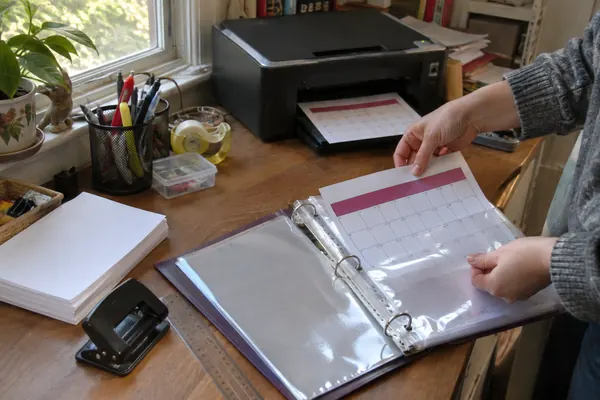
Because this one is meant to last, paper matters. I test-print every printable on my home inkjet on both US Letter and A4, and I choose “actual size” or “100%” so the boxes are not shrunk. Heavier paper, such as cardstock, holds up better on a fridge or wall. Heavy paper also feeds more easily if your printer allows it, so check the manual.
If you need a Monday start for a work-week layout, see the Monday start calendar. Pencil is better than pen for anything that might move, and a sticky note covers the rest. If an entry changes, edit the file, then reprint it.
Paper, digital and watch versions
Paper is easy to glance at and does not need charging. Digital versions can recalculate the whole year from a single number, so every weekday, weekend and month length updates. Your phone’s calendar app is effectively one, and a spreadsheet can do the same with a date formula.
Watch versions are the luxury cousin. A perpetual calendar watch is built to track changing month lengths and the normal four-year leap-year cycle automatically. That is a different thing from a printable, but it explains why the word turns up in so many searches. I like pairing paper and digital: paper for the family, phone alerts for anything time-sensitive.
Keeping it useful year after year
Review the calendar once a year, ideally when the new year’s calendar goes up. Delete dates that no longer apply, add new ones, and print a fresh copy. If you plan further ahead, the three year calendar shows several years at once.
A perpetual calendar only helps if it is where you will see it. Mine is on the fridge because that is where my family stops, including the dog, who has views on dinner times.
Common questions
What is a perpetual calendar?
A perpetual calendar is a calendar you can use for more than one year. It either leaves the year and weekdays off, lets you set them by hand, or works out the weekday for any year you pick.
How does a perpetual calendar work?
The Gregorian calendar repeats in a small set of patterns. Every year starts on one of seven weekdays and is either a common or a leap year, so there are only 14 possible yearly layouts, and a perpetual calendar uses that to cover many years.
Does a perpetual calendar handle leap years?
Only if it is built to. Mechanical and digital versions usually account for February 29, but a simple undated paper grid needs a 29th box or a note. Check February whenever a leap year comes around.
What is the difference between a perpetual calendar and a perennial calendar?
A perpetual calendar lets you find the right layout for any year. A perennial calendar is a reform idea where dates fall on the same weekdays every year, so no lookup is needed.
Can I type on this calendar before printing?
Yes. Click into the day boxes and notes area, type your entries, then print or download the calendar as a PDF or PNG. Your entries are included in the file.
What is a perpetual calendar best used for?
Dates that repeat every year, such as birthdays, anniversaries, renewals and seasonal home jobs. These stay the same, so you only write them once.
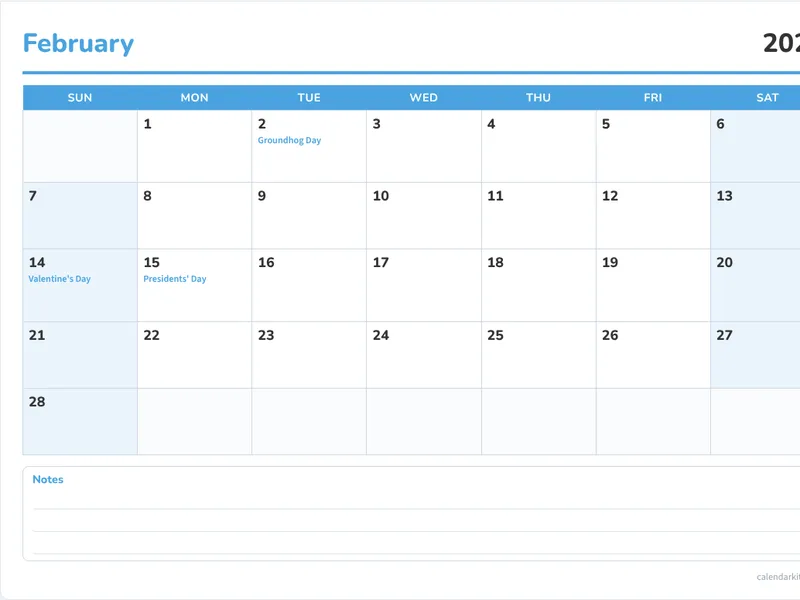 February 2027 Calendar (Free Printable)
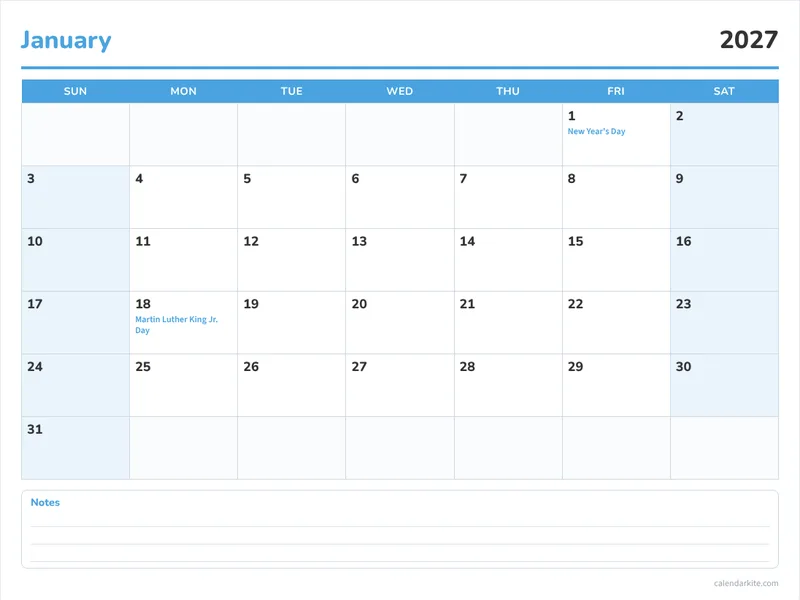 January 2027 Calendar (Free Printable)
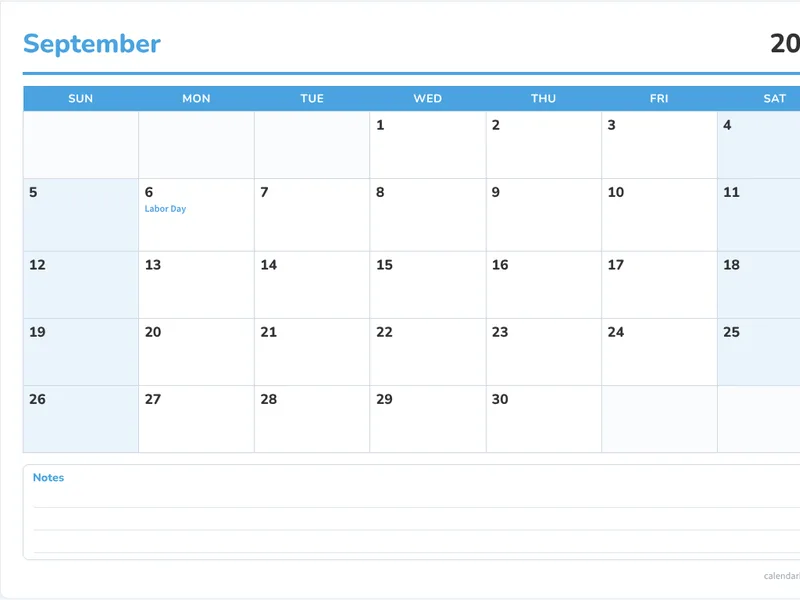 September 2027 Calendar (Free Printable)
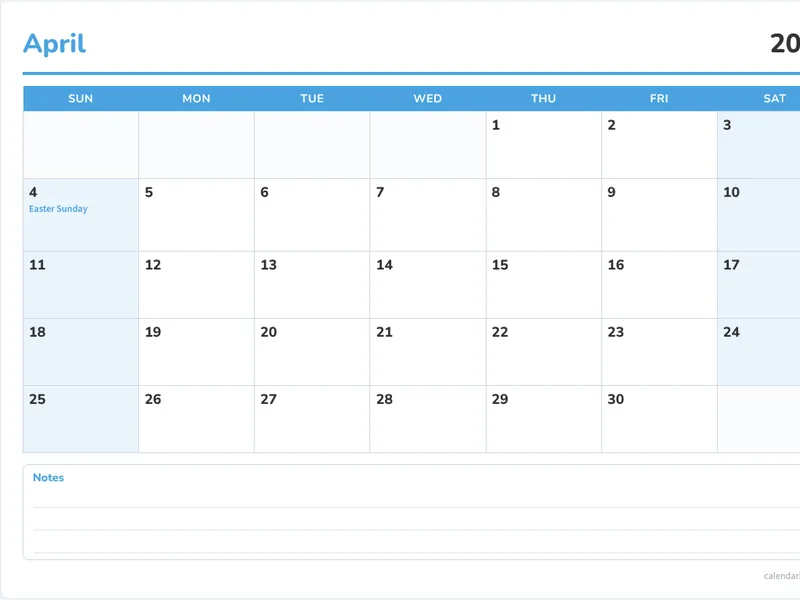 April 2027 Calendar (Free Printable)
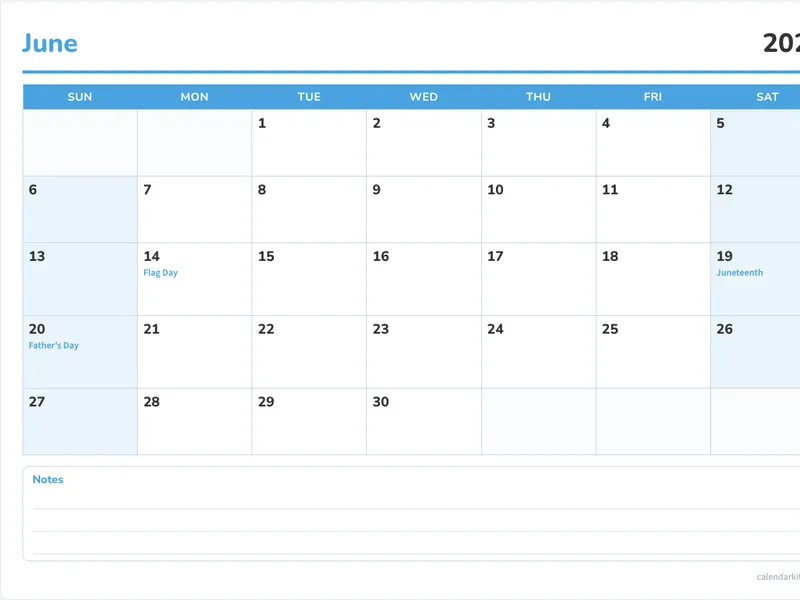 June 2027 Calendar (Free Printable)
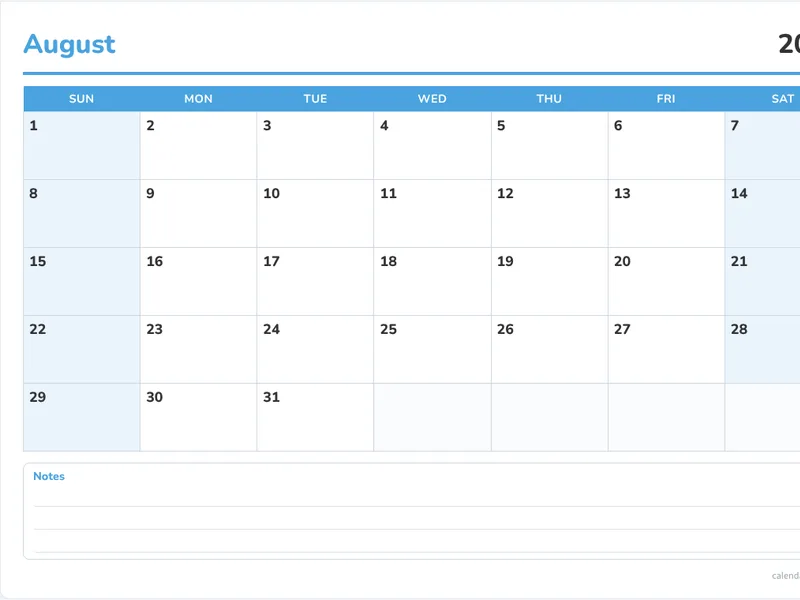 August 2027 Calendar (Free Printable)