
Six Week Calendar (Free Printable and Fillable)

A six week calendar shows 42 days in six rows of seven, so you can see a stretch of time that is longer than a single month without flipping pages. The calendar above is free, and you can type straight into the day boxes and notes, then print it or download it as a PDF or PNG with your entries included.
| Sun | Mon | Tue | Wed | Thu | Fri | Sat |
|---|---|---|---|---|---|---|
Free for personal, classroom and office use. Your entries are included in the print, PDF and PNG. Prints on US Letter and fits A4.
Black and White Six Week Calendar Printable
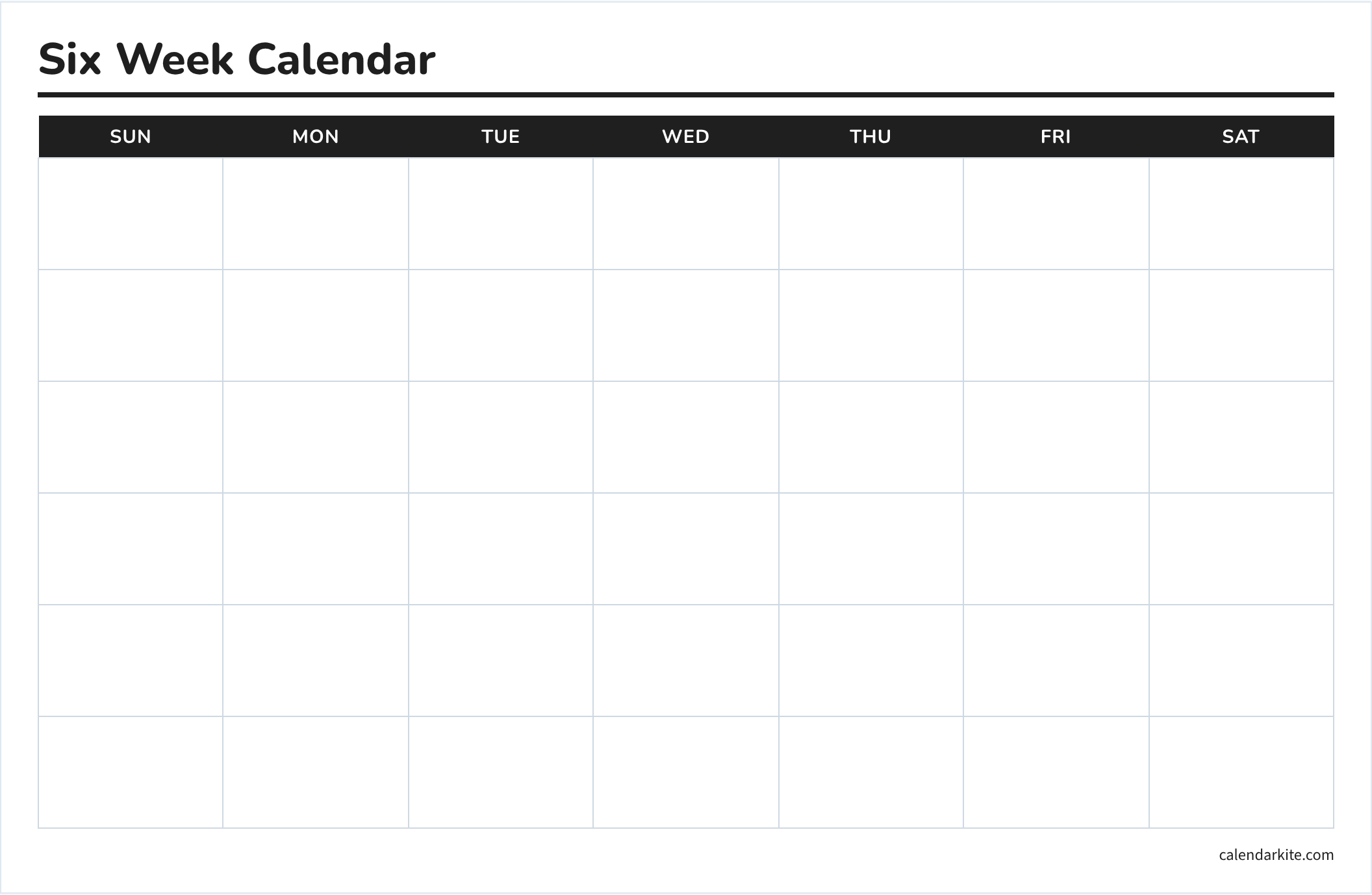
This is my go-to when I'm printing several copies, since plain black lines go easy on my home inkjet. It suits a six-week project plan or a school term block, and I test-print it on US Letter and A4 so nothing clips.
Pink Six Week Calendar
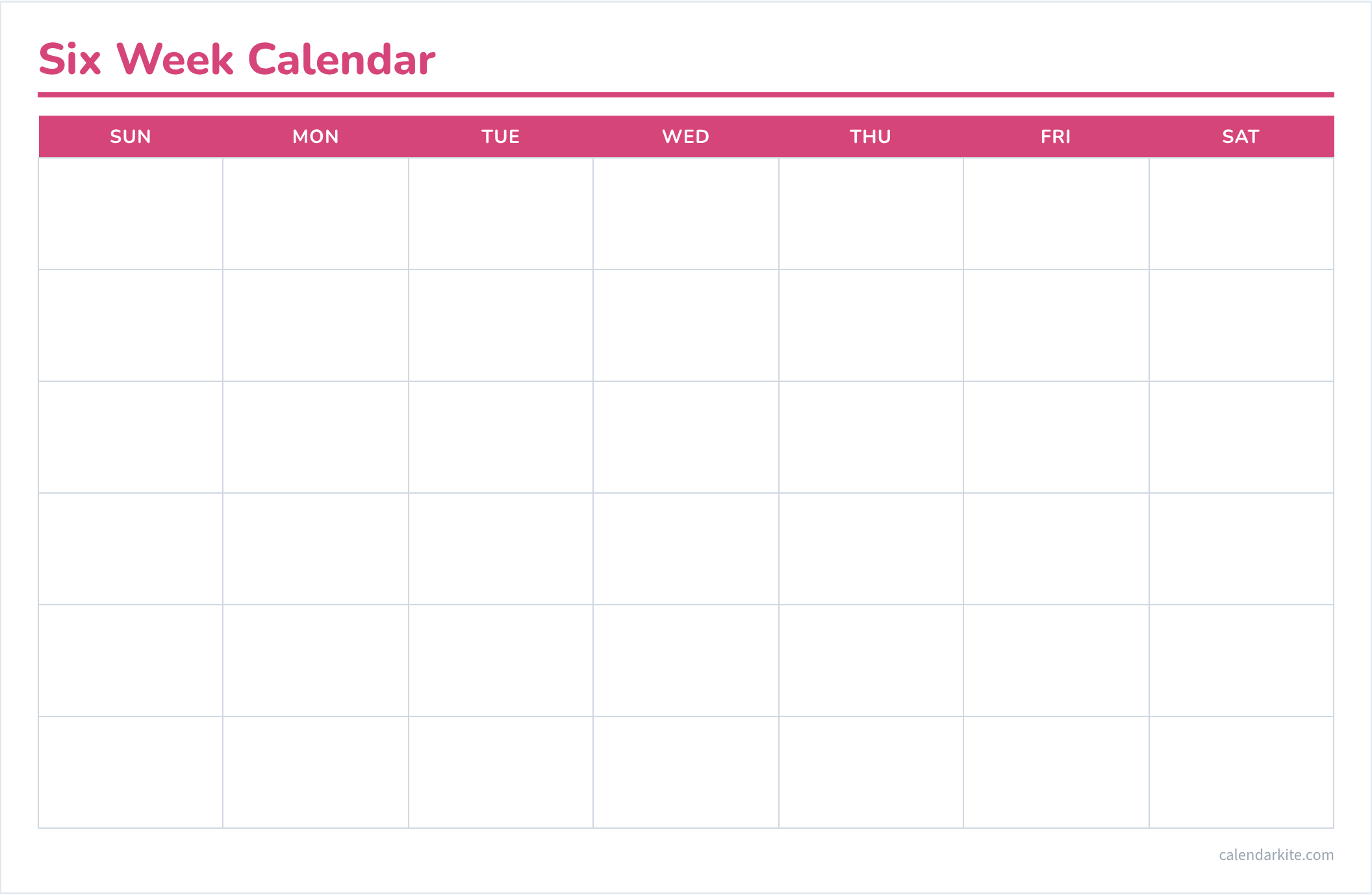
I like this soft pink version for a personal goal stretch, like a six-week fitness or study plan you want to see at a glance. It prints with a gentle tint, so pencil or pen notes stay easy to read in each box.
Sage Green Six Week Calendar
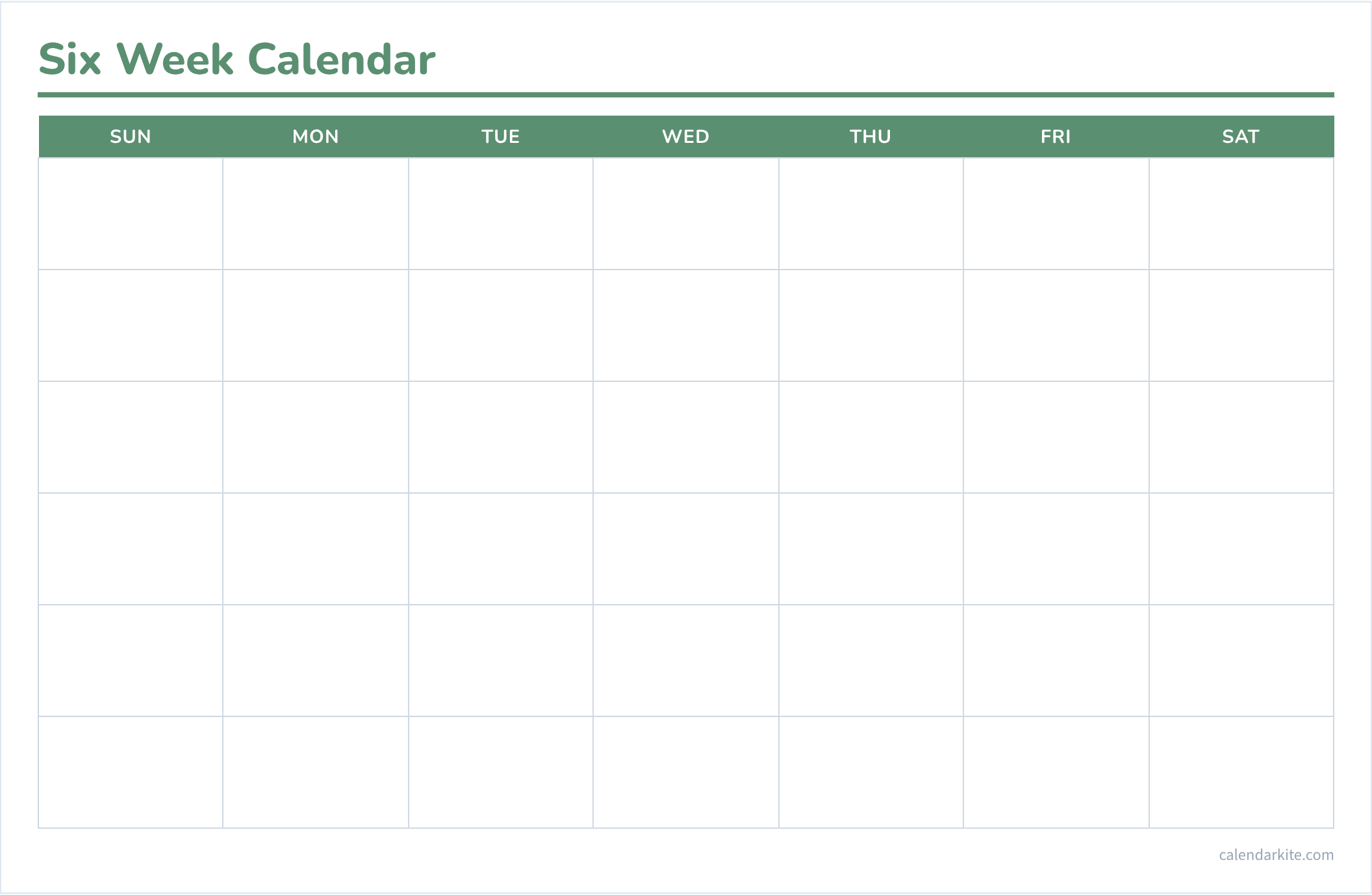
Sage green is calm without being loud, so I'd choose it for a home or work plan that stays on the wall for weeks. I keep a similar page beside my fridge calendar to map out a six-week school break.
Lavender Six Week Calendar
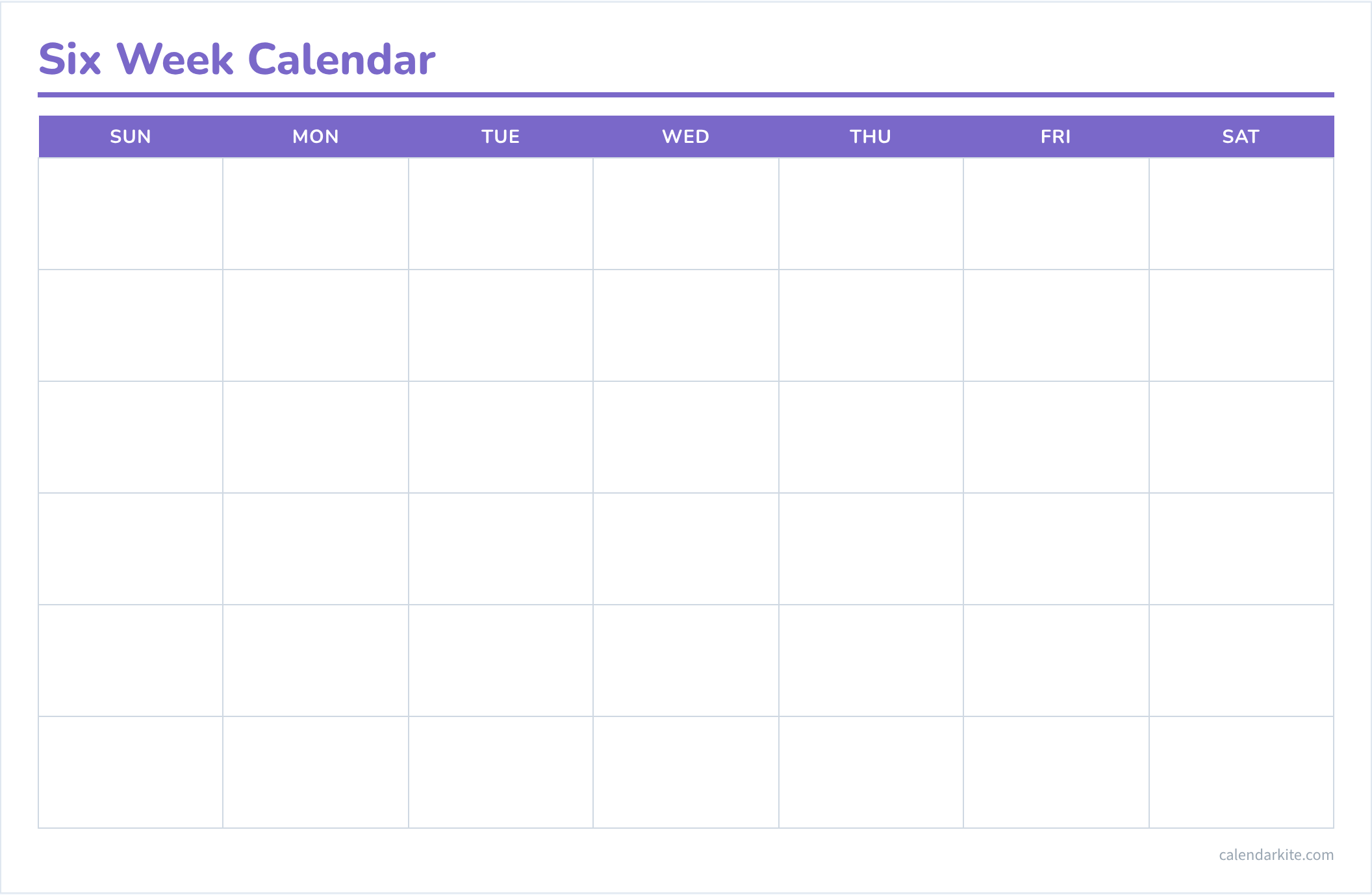
Lavender suits students and planners who like a cool, quiet palette for a six-week study stretch or exam run-up. I kept the date numbers dark enough to read at arm's length, a fix I made after my first test prints looked faint.
Cute Six Week Calendar
If you want a cheerful page for a six-week countdown, this pastel blue design with little illustrations along the top is a friendly choice. It works well for a summer break countdown, a school project, or a habit challenge you want to enjoy checking.
Floral Six Week Calendar
The watercolor flowers and elegant serif headings make this one good for gentle planning, like six weeks of wedding prep or a spring garden schedule. The headings stay easy to read, and there's still room in each box for short notes.
Colorful Six Week Calendar
Bright orange and yellow with bold cartoon pictures make this a fun pick for chore stretches, reading challenges or a six-week summer break. I'd hang it low enough that my own two kids can reach it and mark off days.
Minimalist Six Week Calendar
Thin gray lines and a light uppercase heading keep this layout out of the way, which suits work rotas, sprints or project phases. In the office I learned that the less clutter on a schedule, the more people actually trust it.
Aesthetic Six Week Calendar
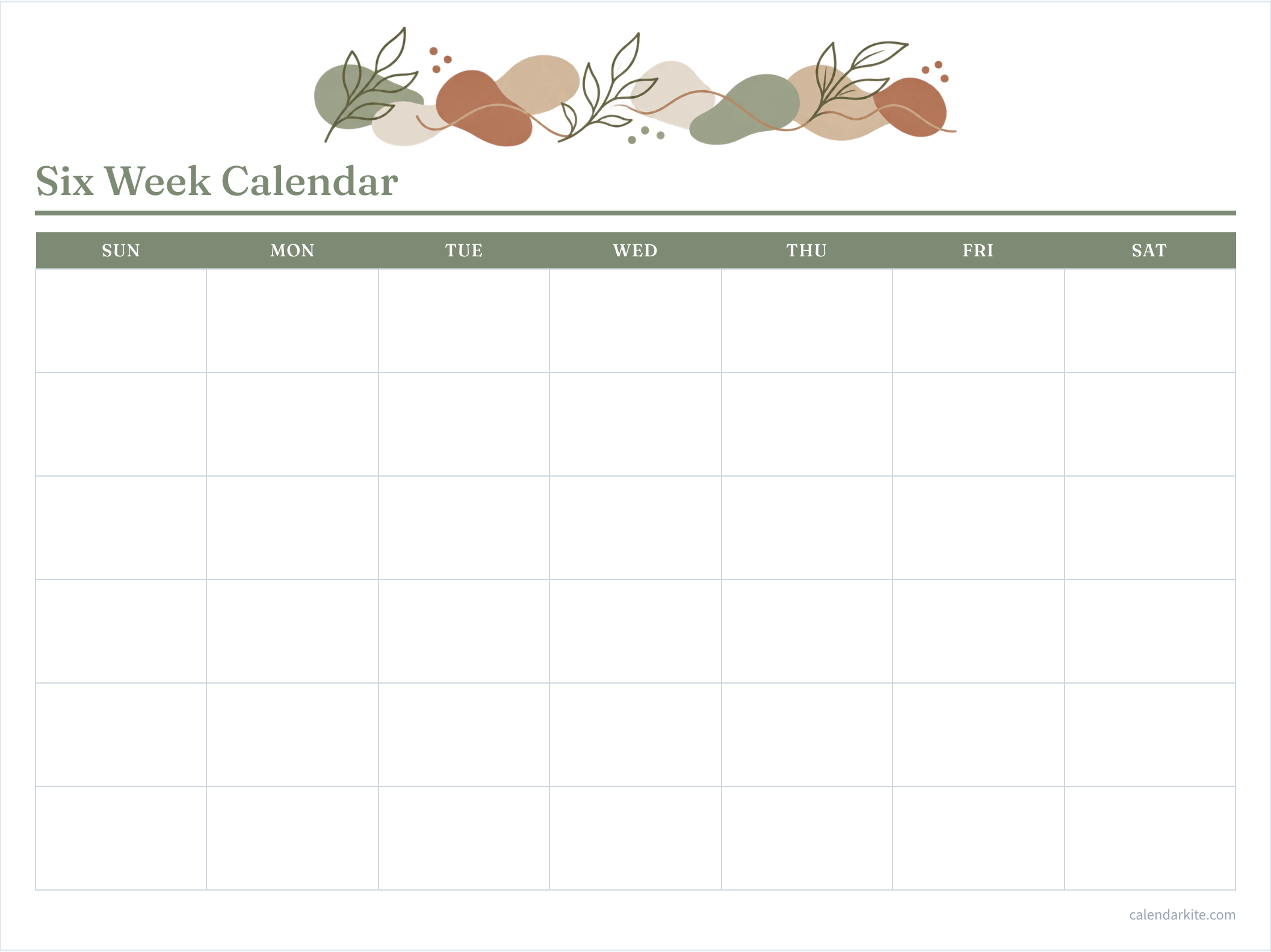
Muted sage, sand and terracotta with soft line-art leaves make this a good match for a desk or a bullet-journal style wall plan. I'd use it for a six-week habit tracker, adding dates and notes in pencil first.
Modern Six Week Calendar Template
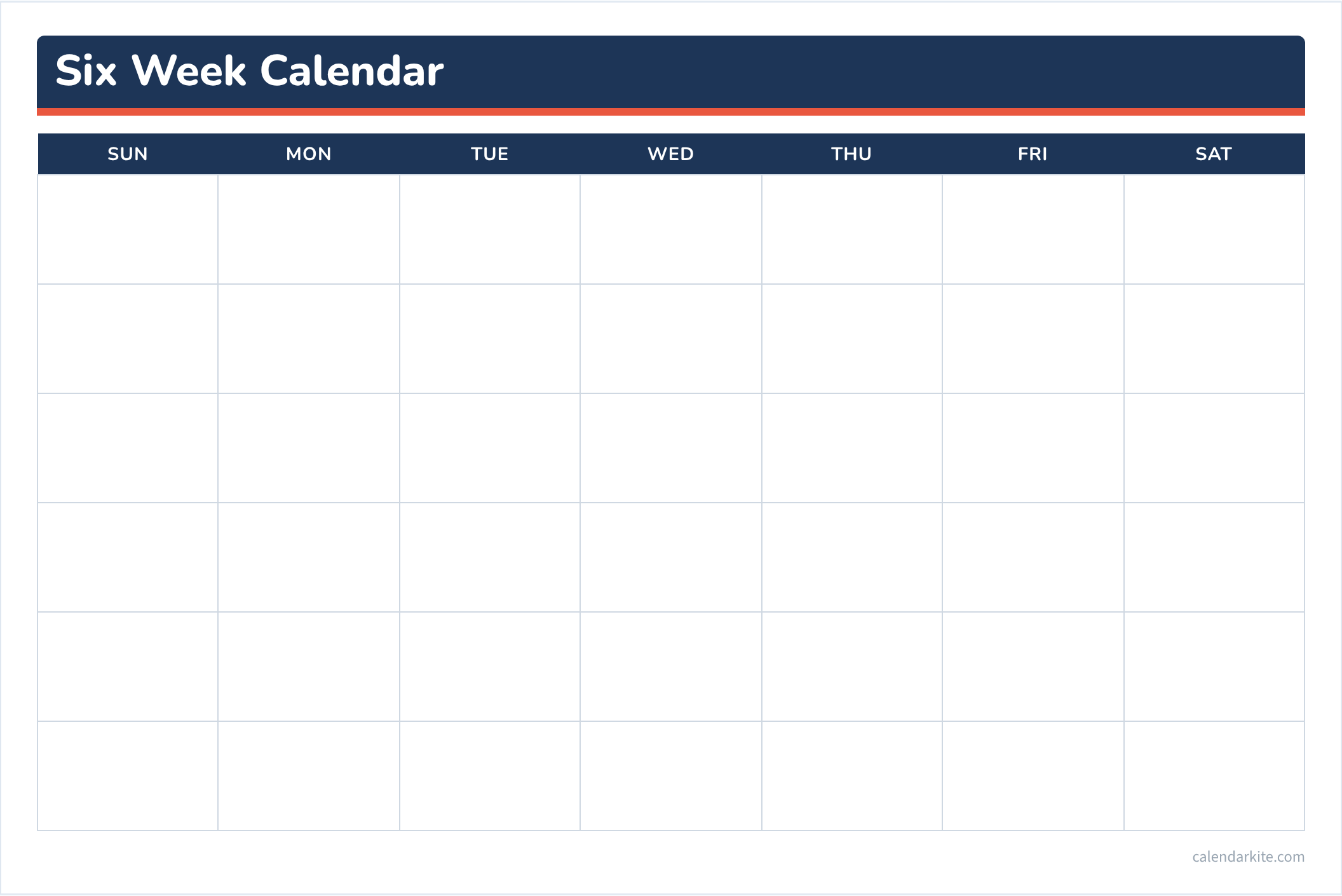
The navy header band and coral accent make this the clearest option for busy work plans, such as a product launch or a six-week training block. A common mistake I see is cramming too much in, so I'd keep one short note per day.
I use six-week blocks a lot. Back in office administration, a lot of what I scheduled (rotas, supply orders, review cycles) ran in chunks that never lined up neatly with the calendar month. A calendar that just keeps going across the month boundary was always easier to read than two separate pages.
How to use the calendar above
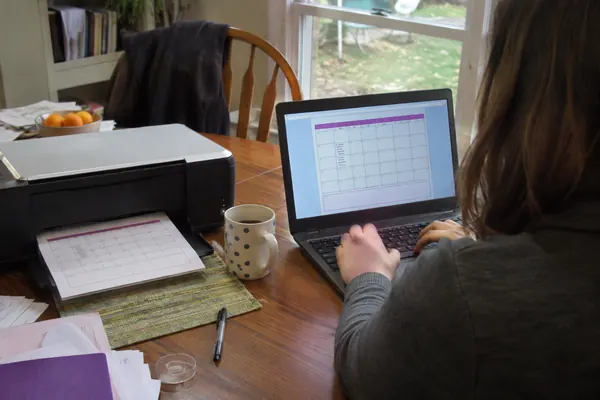
Click any day box and start typing. Short entries work best: a time and a few words, such as “3:30 dentist” or “report draft due”. The notes area is for the things that belong to the whole six weeks rather than one day, like a goal, a budget limit or a packing reminder.
When the page looks right, print it or download it. The PDF is the best choice if you want to print later on any paper size, and the PNG is handy for sending the page in a message or saving it to your phone as a lock screen. Your typed entries come with you either way. Federal holidays are already printed on the calendar, so you do not need to look them up and add them yourself.
Try this: Before you type anything else, enter the three fixed things in your next six weeks that cannot move (a trip, an exam, a deadline). Everything else gets planned around them.
What a six week calendar actually is
The phrase covers two slightly different things, and it helps to know which one you want. The first is a block of six consecutive weeks, starting wherever you like, used to plan a short project or routine. The second is the six-row grid that many monthly calendars use, which is where the search “calendar 6 weeks” often comes from.
The grid version exists because some months need it. A 30 or 31 day month that begins late in the week runs into a sixth row, so a template with only five rows would have nowhere to put the last day or two. If you have ever seen a month with one or two lonely dates at the bottom of the page, that is why.
The calendar on this page works for both uses. You can treat it as a month with room to spare, or as a plain six-week planning window that starts on whatever date matters to you. For a single month with its own page, my printable monthly calendar is the better fit.
Good reasons to plan in six weeks
Six weeks is a practical length. It is long enough to see how a habit or project is going, and short enough that every day is still on the page. These are the uses I see most often and the ones I would reach for myself:
- School grading periods, short courses and exam countdowns
- Project sprints and work deadlines that cross two months
- Training plans, such as building up to a race or a fitness challenge
- Travel prep, from booking through packing to the trip itself
- Moves, renovations and other jobs with several steps and several people
At home, my kids’ school year runs in blocks, and the fridge calendar is where those blocks get sorted out. A single month never showed me what was coming after the next big date, and six weeks does.
Setting up your first week
Start by choosing your first day. If you are planning a project, use the date you actually begin. If you are covering a school term or a season, start on the first day of the week that contains the start date, so the first row is complete.
Next, add the dates that are already fixed, then the end date. Put the finish line at the bottom of the grid in the notes area so it is always visible, and work backwards from it. Most people plan forward from day one and then run out of room in week six.
Last, give each week a single purpose. Week one might be research, week two ordering, week three building. Write that in the notes area or at the start of each row. I made this change on my own planner years ago, and it stopped me filling every box with small tasks and losing track of the larger steps.
Try this: Write one word for each week (for example “plan”, “draft”, “edit”, “test”, “fix”, “finish”), then check that your day-box entries match that word.
Sunday start or Monday start
Most US calendars start the week on Sunday, and that is the layout many people already read without thinking. If your working week runs Monday to Friday, though, a Monday start keeps the weekend together on the right side, which makes a busy week much easier to read at a glance.
Pick the start that matches how you already think about your week, and stick with it for all six weeks. Switching halfway through is a common mistake and it causes more missed appointments than you would expect. If you prefer the Monday layout, I have a separate Monday start calendar you can use alongside this one.
Printing tips for Letter and A4
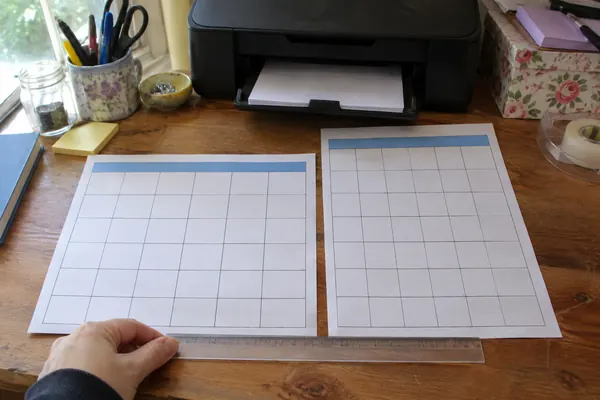
I test-print every printable on my home inkjet, on both US Letter and A4, and the settings matter more than the paper. In your print dialog, choose the paper size that matches what is in the tray, and set scaling to fit to page rather than actual size. This stops the bottom row from being cut off, which is the most common printing problem I see with calendar grids.
Print in landscape if you write a lot in each box, since the extra width gives you longer lines. Use standard weight paper for a planning page you will carry around, and a slightly heavier paper if you plan to pin or tape it to a wall. Ordinary inkjet ink can bleed through thin paper if you write with a felt pen, so I use a fine ballpoint or gel pen for anything handwritten.
If you type your entries first, check the print preview before you print. Long text can run past the edge of a small box, so shorten it or move the detail into the notes area.
Keeping it useful for all six weeks
A calendar only works if you look at it. I keep a paper calendar on the fridge and a planner on the kitchen counter, and the rule that works for me is to check them at the same time every day, usually while the kettle is on. Pick a similar anchor for yours.
Cross off each day as it ends. It sounds trivial, but it shows you exactly where you are in the six weeks and makes the remaining time feel real. If a task slips, move it to a specific new day instead of leaving it floating, and write the new date down right away.
At the end of week three, take two minutes to look at what is left. Half the time is a good moment to adjust, because you still have enough room to fix things.
When another layout fits better
Six weeks is not right for everything. For a fortnight, such as a school break or a short sprint, the printable 2 week calendar has bigger boxes and less to scan. For a view over a full season, the three month calendar shows more at once, though with smaller boxes.
If what you really want is to build a routine, pair this calendar with a habit tracker and use the six-week grid for appointments and deadlines. For detailed day-by-day planning inside one week, the weekly calendar printable gives you more space. And if you are looking further ahead than six weeks, the full 2027 calendar shows every month.
Try this: Print this page and a weekly calendar side by side. Put the big dates on the six-week page, and the daily detail on the weekly one.
Common questions
How many days are in a six week calendar?
Six weeks is 42 days. That is six rows of seven days, which is also the largest grid a normal monthly calendar ever needs.
Can I type on the calendar before I print it?
Yes. Click into any day box or the notes area, type your appointments, then print the page or download it as a PDF or PNG with your entries included.
What is the difference between a 6 week calendar and a monthly calendar?
A monthly calendar stops at the end of the month, so the last days of one month and the first days of the next sit on separate pages. A six week calendar runs as one continuous block, which suits plans that cross a month boundary.
Why do some months show six rows on a calendar?
A month needs six rows when it starts late in the week and has 30 or 31 days. The days then spill into a sixth row, which is why many monthly templates are built with six rows.
Is a six week calendar good for school terms or projects?
It is a good fit for grading periods, short courses, project sprints and training plans. Six weeks is long enough to see progress and short enough to keep every day visible.
Does the calendar work on A4 paper?
Yes. I test-print on both US Letter and A4, and the grid scales to either size. Choose the matching paper size in your print dialog and leave scaling on fit to page.
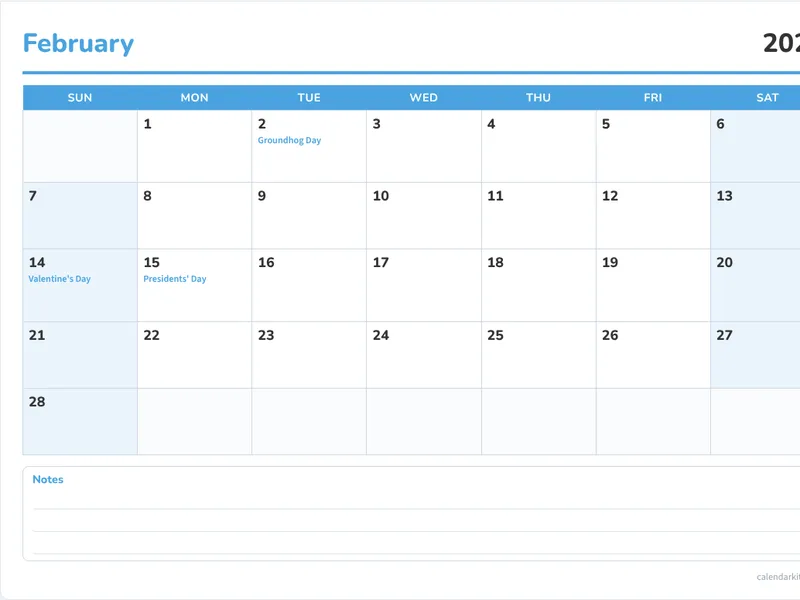 February 2027 Calendar (Free Printable)
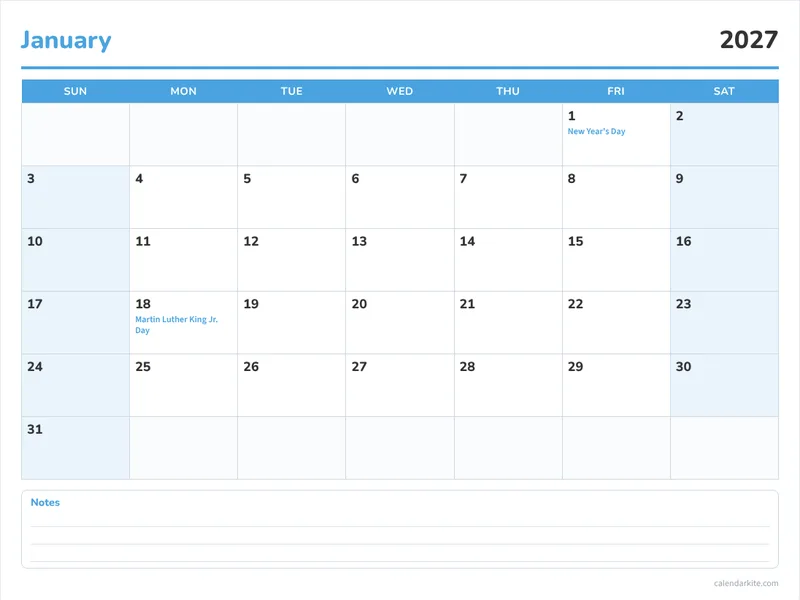 January 2027 Calendar (Free Printable)
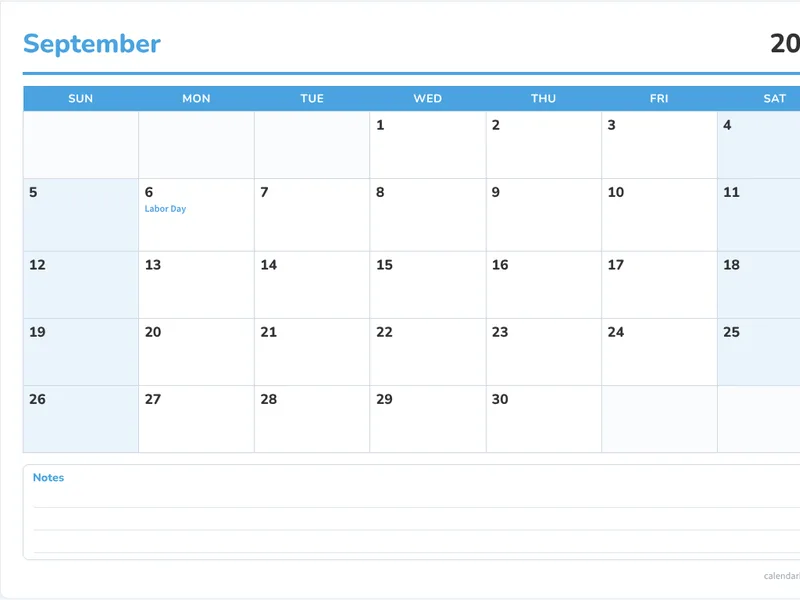 September 2027 Calendar (Free Printable)
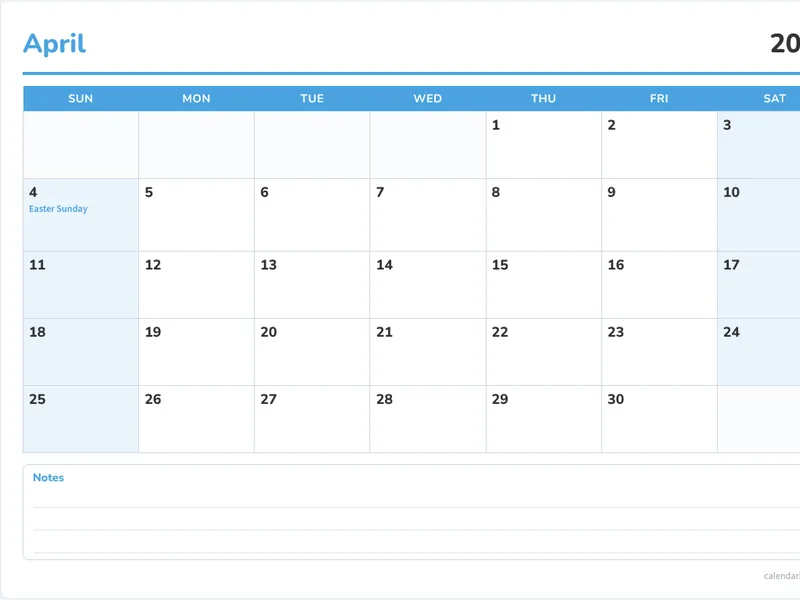 April 2027 Calendar (Free Printable)
 June 2027 Calendar (Free Printable)
 August 2027 Calendar (Free Printable)