
Camping Checklist Printable: Free One-Page Packing List
A camping checklist printable gives you one page to pack from, sorted into the groups you actually think in: shelter, kitchen, food, clothing, safety, and personal items. The sheet on this page fits a single US Letter page, covers about 60 items for a typical weekend car camping trip, and adds two things most lists skip: a “before you leave” block and a “break camp” block. Print it, tick boxes as items go into the car, and write anything specific to your trip in the blank rows.
Before you leave
- Reservation and site number
- Fire rules and burn ban checked
- Forecast checked for each night
- Plan shared with someone at home
- Gas, tires, and spare checked
- Cash or card for fees and firewood
Shelter and sleep
- Tent, poles, and stakes (count them)
- Footprint or ground tarp
- Rainfly and guylines
- Mallet
- Sleeping bags rated for the night low
- Sleeping pads or air beds
- Pump and patch kit
- Pillows and extra blanket
Camp kitchen
- Stove and fuel
- Lighter and waterproof matches
- Pots, pan, and kettle
- Spatula, tongs, and sharp knife
- Plates, bowls, and mugs
- Utensils for everyone
- Cooler with ice or frozen jugs
- Dish tub, soap, and sponge
- Trash bags and recycling bag
- Can opener and bottle opener
Food and water
- Meals packed by day
- Breakfast items and coffee
- Snacks and trail mix
- Oil, salt, pepper, and spices
- Water jug (1 gallon per person per day)
- Water filter or tablets
- Reusable water bottles
Clothing
- Base layers
- Warm fleece or puffy jacket
- Rain jacket
- Extra socks
- Camp shoes or sandals
- Sturdy walking shoes
- Sun hat and warm beanie
- Sleepwear
Safety and tools
- First aid kit
- Headlamp for each person
- Spare batteries
- Lantern
- Multi-tool
- Duct tape and cord
- Bug spray and sunscreen
- Offline map and whistle
- Power bank and cables
Personal items
- Toothbrush and toothpaste
- Toilet paper and trowel
- Hand sanitizer and wipes
- Quick-dry towel
- Medications
- Phone, wallet, and ID
Break camp
- Fire out and cold to the touch
- All trash packed out
- Site walked for stakes and litter
- Tent dried or hung at home
- Borrowed gear listed for return
Tick each box once when packed and again when the car is loaded.
Free for personal, classroom and office use. Prints on US Letter and fits A4.
It works as a camping packing checklist for first-timers and as a quick sanity check for people who camp every month. The goal is simple: you arrive at the site with everything you need and leave with everything you brought.
How to use this camping checklist

Start by printing a fresh copy for each trip, then fill in the campsite, dates, and who is doing the packing at the top. Read down the whole sheet once and cross out anything that does not apply. No campfire allowed? Strike the firewood line. Staying in a cabin tent with beds? Strike the pads and pump. A sheet you have already edited is faster to use than a blank one.
Then pack in this order:
- Do the “before you leave” items a week out, while there is still time to fix problems.
- Gather gear group by group, ticking each box as the item lands in a bin or bag.
- Use the blank rows to add trip-specific items such as fishing licenses, a kayak paddle, or a child’s comfort toy.
- Keep the sheet in the car, and do the “break camp” block on your last morning.
Use a pencil or a pen, not a highlighter. You will want to tick twice in some sections, and ink that bleeds through makes the second pass hard to read.
Try this: Print two copies. Use one as your packing sheet and tape the other inside the lid of your main gear bin. Next trip, the bin carries its own list.
What the printable covers, group by group
The eight groups on the sheet follow the order you will use them at camp. Before you leave holds the logistics that can cancel a trip if missed: the reservation, fire rules, forecast, and someone at home who knows where you are. Shelter and sleep lists the tent with its poles, stakes, footprint, and rainfly, plus sleeping bags, pads, and a pump. Sleep gear is where comfort is won or lost, so it gets the most detail.
Camp kitchen is the longest group because cooking outdoors needs every small tool you take for granted at home: stove, fuel, lighter, pots, a sharp knife, a dish tub, trash bags, and an opener. Food and water is kept separate so you can pack meals by day rather than by cupboard. Clothing is built on layers, not outfits. Safety and tools covers light, first aid, repair, sun, bugs, and navigation, and personal items covers hygiene, medications, and ID.
The last group, break camp, is a short exit routine. Most checklists end when the car is packed. This one ends when the campsite is clean and the fire is cold, which is where many forgotten items and many fines come from.
Fill in “before you leave” a week ahead
Open the reservation and write the site number on the sheet. Check the campground’s page for fire restrictions, quiet hours, check-in and check-out times, and whether firewood has to be bought locally. Many areas ban moving firewood over long distances to stop the spread of insects, so buying a bundle near the site is both the rule and the lighter option.
Check the forecast for every night, not just the weekend overall. The overnight low decides what sleeping bag, pad, and layers you bring, and a wet night changes what you cook. Tell someone at home your campsite, your plan, and when you expect to be back. If the area has patchy signal, download an offline map to your phone before you leave the house.
Last, check the car: fuel, tire pressure, and a working spare. Bring cash or a card for camp fees, firewood, and ice. Some small campgrounds still run on an honor box and do not take cards.
Check it twice: once at home, once at camp
The most useful habit on this sheet is ticking each item two times. The first tick means the item is out of the cupboard and in a bin. The second means it is in the car. Items that live in two places, like headlamps and batteries, are exactly the ones that get left on a shelf, and the second tick catches them.
Draw a small dot in the box for the first pass and turn it into a full tick on the second. That way a half-finished sheet shows you instantly what is still on the garage floor. If you pack with a partner, split the groups and initial your sections so nobody assumes the other person has the stove.
The same idea applies on the way home. The “break camp” block is a five-line routine: fire cold, trash out, site walked, tent dried later, borrowed gear noted. Do it before you start the engine.
Try this: Tonight, set up your tent in the yard or living room and count the stakes, poles, and guylines against the sheet. Missing parts are cheap to replace this week and impossible to replace at a remote campsite.
Pack the car in the order you will unpack it
Good packing is partly about the list and partly about the loading. Put the things you need last at the bottom and the things you need first at the top. For most trips that means the tent and tarp go in last so they come out first, the kitchen bin and cooler sit within easy reach, and sleeping bags go in wherever they fit around the hard items.
Use two or three lidded bins with labels that match the sheet: kitchen, shelter and tools, and a bag for clothing. A bin that holds the whole camp kitchen, stocked and ready, cuts your packing time more than any other single change. After a trip, wash and restock it straight away so it is ready for the next one.
Keep a small day bag in the cabin of the car with the first aid kit, headlamps, water, snacks, a rain jacket, and the toilet paper. If you arrive after dark or in the rain, you will not want to dig through the trunk.
Adjust the list for your kind of trip
The sheet is built for a weekend of car camping, and a few edits turn it into the list you need. Cross out, add, and resize rather than hunting for a new list every time.
- Tent trip at a drive-in site: keep everything as printed and add a tarp for a dry cooking area.
- Backpacking: cut camp chairs, the cooler, and the big kitchen. Add a bear canister or hang kit where required, a lighter stove, and a water filter you can carry.
- RV or camper van: cross out the tent and pads. Add hoses, leveling blocks, a power adapter, and sewer supplies in the blank rows.
- Beach or lake: add sun shelter, water shoes, extra towels, and a dry bag for phones and keys.
- Backyard camping: keep the sleep, kitchen, and light sections and skip the safety and navigation lines.
If you tend to do the same type of trip, mark up one sheet exactly how you like it and photocopy that. A master list that matches how you camp is worth more than a longer one.
Camping with kids and pets
Children change the list less than you might expect, but the changes matter. Add a comfort item for each child, spare clothes for every day (they will find the mud), a small headlamp each, and one extra set of warm layers. Let older kids tick their own items off a copy of the sheet. It builds the habit, and a child who packed her own flashlight is much more likely to use it.
For babies and toddlers, add diapers and wipes in a sealed bag, a portable sleep setup that suits the temperature, a sun hat, and a quiet-time activity for the tent. Keep the first aid kit stocked with child-safe medicine and a thermometer.
For dogs, use the blank rows for a leash and stake line, a water bowl, food, waste bags, a towel, tick prevention, and proof of vaccinations if the campground asks for it. Check the rules first, since many sites limit where pets can go and how long they may be left alone.
Plan the food and the water
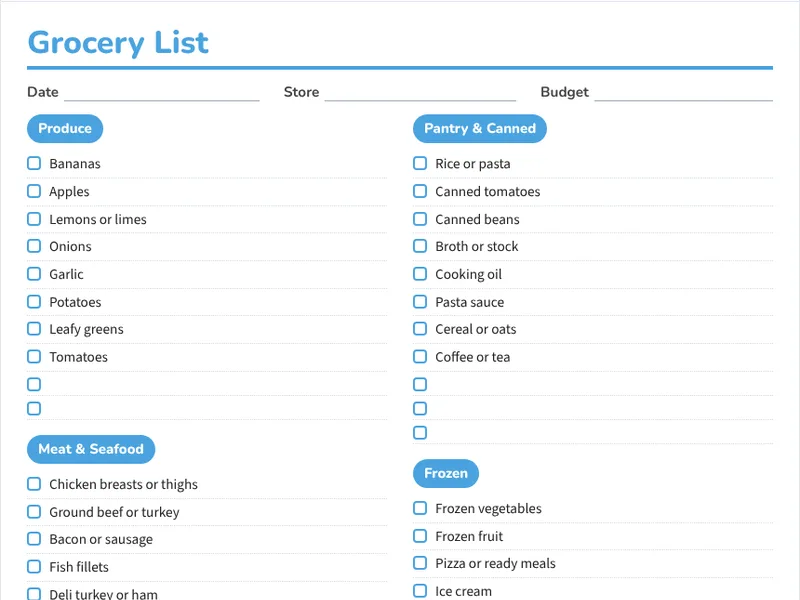
Camp meals go smoothly when you decide them before you shop. Write out each breakfast, lunch, dinner, and snack, then prep what you can at home: chop vegetables, marinate meat, pre-mix pancake batter, and freeze what will go in the cooler first. A plan on paper also stops you buying a week of food for a weekend. If you want a ready layout, the printable weekly meal planner works well for a long camping stretch, and a grocery list printable turns the menu into a shopping run.
Pack food by day in labeled bags or bins so Saturday’s dinner is not buried under Sunday’s breakfast. Keep raw meat at the bottom of the cooler, and use frozen water jugs instead of loose ice, since they melt slowly and double as drinking water. Use two coolers if you can: one for drinks that gets opened constantly and one for food that stays shut.
Water follows the rule of about 1 gallon per person per day for drinking, cooking, and washing up. Bring a filter or tablets as a backup, even at sites with a tap, because pumps break and taps get shut off.
The items people forget most
Everyone has a story about the trip with no can opener. The sheet is designed around the usual suspects, but it helps to know where mistakes concentrate.
- A lighter or matches, with a backup in a different bag
- Tent stakes, the mallet, and the rainfly
- Can opener, bottle opener, and a sharp knife
- Spare batteries and a charged power bank
- Pillows, which are easy to overlook and hard to replace
- Camp shoes, so you are not wearing wet boots all evening
- Trash bags and a way to carry out recycling
- Cash for firewood, ice, or the camp fee
For the cooking kit, a quick trick is to make one pot-and-pan meal at home using only the gear in your kitchen bin. Whatever you reach for and find missing goes onto the sheet. It takes twenty minutes and saves every trip afterward.
Try this: Write your own “forgot it last time” line in the blank row under camp kitchen. Next trip, you will not forget it again.
Adjust for season and weather
Temperature does more to your list than anything else. Pick a sleeping bag with a comfort rating at or below the expected overnight low, and add a warm pad, because the ground steals heat faster than the air does. In cool weather, pack a warm hat for sleeping, a thermos, and spare dry socks. In summer, add shade, extra water, a battery fan, and more insect protection.
Rain is manageable with the right setup: a tarp over the cooking area, a doormat or tray at the tent entrance for muddy shoes, and a rain jacket for each person. Pack clothes in a dry bag or sealed bags so one wet day does not soak everything.
For wind, bring extra guylines and heavier stakes, and pitch the tent with the door away from the wind. In fire season, check the daily fire danger and burn bans before you leave, and have a camp stove as a backup. Many places ban open fires entirely at times, and a stove still lets you cook hot food.
Leave no trace, and leave the site clean
The break-camp block on the sheet comes down to a few habits. Pack out every piece of trash, including food scraps, micro-trash like bottle caps, and anything left by a previous camper that you can safely carry. Wash dishes away from natural water, strain food bits into your trash, and use biodegradable soap in small amounts.
Put the fire out completely. Drown the embers with water, stir them, and add more water until the ashes are cold to the touch. A fire that looks out can still be hot underneath. Where you have a fire ring, use it, and keep your fire small.
Walk the site in a slow circle before you leave. Look for stakes, bent spoons, kids’ toys, and litter. Store food properly while camping, in a locked car or a bear box where provided, so you do not attract wildlife to the next campers.
Put your trip dates on a calendar

Good camping starts with a reservation, and popular campgrounds can book out months ahead. Mark the booking date, check-in and check-out days, and the day to start packing on a calendar. A July calendar or the summer calendar makes it easy to see which long weekends are free and which ones everyone else has also claimed.
If your trip has stops, such as a drive, a hike, and a campsite, an itinerary planner template helps you line up drive times, check-in windows, and meals. Add a line for the last place to buy ice or firewood before the campsite, since remote areas run out.
For group trips, share the plan early and decide who brings what. A shared checklist, with names beside each shared item, stops three people from bringing the same stove and nobody bringing the cooler.
Make one master list and keep it
After two or three trips, you will have a marked-up sheet that shows how you actually camp. Copy those edits onto a clean master and keep it with your gear. Add items that proved useful, cross out the ones you never touched, and note the amounts that worked, like four fuel canisters for a long weekend or two gallons of water for the kitchen.
Store gear so the list matches the shelves: one bin for the kitchen, one for tools and light, a stuff sack for sleeping gear. When you come home, restock consumables such as fuel, matches, wipes, and trash bags straight away, so the next trip starts with a short top-up rather than a scramble.
If you like to keep related lists together, the printable checklists hub has other one-page lists that follow the same layout, and the general checklist page offers a simple template for any trip or task.
Who this printable suits
This sheet suits first-time campers who want a clear, complete list without sorting through ten pages. It suits families who need a shared document the kids can tick off, and experienced campers who want a quick final check. It works for weekend car camping, festival camping, camping with friends, and as a base list for more specialized trips once you mark it up.
It is less suited to long wilderness expeditions, where gear is counted in grams and the list needs to be specific to your route and weather. In that case, treat it as a starting point and rebuild the weight-critical groups on your own.
Printing and saving tips
Use the Print button for a quick copy at home, or Download PDF to save the file to your phone or computer. Print at 100 percent on US Letter paper. If your printer trims the edges, choose “Fit to page” in the print settings. A sturdier paper, such as 24 lb or card stock, survives the damp car and the campsite table much better than basic copy paper.
For a reusable copy, slide the sheet into a clear sleeve or laminate it, and tick with a dry-erase marker. Then wipe it clean after each trip and your list lasts all season. Keep a few spare printed copies in your gear bin so there is always one ready when a last-minute trip comes up.
Finally, store the PDF where you can reach it from your phone. A photo of your completed sheet is also a handy record of what you brought, which helps when you are unsure whether the stove stayed in the garage.
Common questions
What should be on a basic camping checklist?
A basic list covers shelter, sleep gear, a camp kitchen, food and water, clothing, safety tools, personal items, and a break-camp check. If you can sleep warm, cook, see after dark, and treat a blister, you are covered. Everything else is comfort.
How do I make a camping checklist for my own trip?
Print the sheet, cross out anything that does not apply, and write extras in the blank rows. Keep that marked-up copy as your master list and reprint it for each trip, adjusting for weather and group size.
What do people forget most often when camping?
Tent stakes or a mallet, a lighter, a can opener, extra batteries, and a way to pay for firewood or fees. Pillows, camp shoes, and a trash bag also go missing often. Counting stakes and checking the cooking kit at home catches most of these.
How much water do I need per person for camping?
Plan on about 1 gallon (roughly 4 litres) per person per day for drinking, cooking, and washing up. Bring more in hot weather or if you will hike. If your campsite has a tap, you can carry less and refill.
Can I use this checklist for backpacking or RV trips?
Yes, with edits. For backpacking, cut anything heavy or bulky, such as camp chairs and the full kitchen. For an RV, cross out the tent section and add hoses, leveling blocks, and electrical adapters in the blank rows.
Should I check my camping gear before the trip?
Yes, a few days ahead. Set up the tent in the yard, test the stove and lantern, and check that sleeping pads hold air overnight. Gear that fails at home is easy to fix, and gear that fails at the campsite ruins the evening.
 Grocery List Printable