
Free Chore Charts for Preschoolers

A good chore chart for a preschooler is short, visual and tied to things your child already does each day. The free chart on this page is a one-page weekly grid with ten job rows and seven day circles per row. You type in the jobs, add your child’s name, print it, and let them color in a circle each time a job is done.
| My job | 1 | 2 | 3 | 4 | 5 | 6 | 7 |
|---|---|---|---|---|---|---|---|
| Get dressed | |||||||
| Brush teeth (morning) | |||||||
| Breakfast bowl to the counter | |||||||
| Toys in the bin | |||||||
| Help set the table | |||||||
| Feed the pet | |||||||
| Dirty clothes in the hamper | |||||||
| Books back on the shelf | |||||||
Two or three jobs is plenty. Color in a circle or add a sticker for each job done. Use the last two rows for your own jobs.
Free for personal, classroom and office use. Your entries are included in the print, PDF and PNG. Prints on US Letter and fits A4.
Black and White Preschool Chore Chart Printable
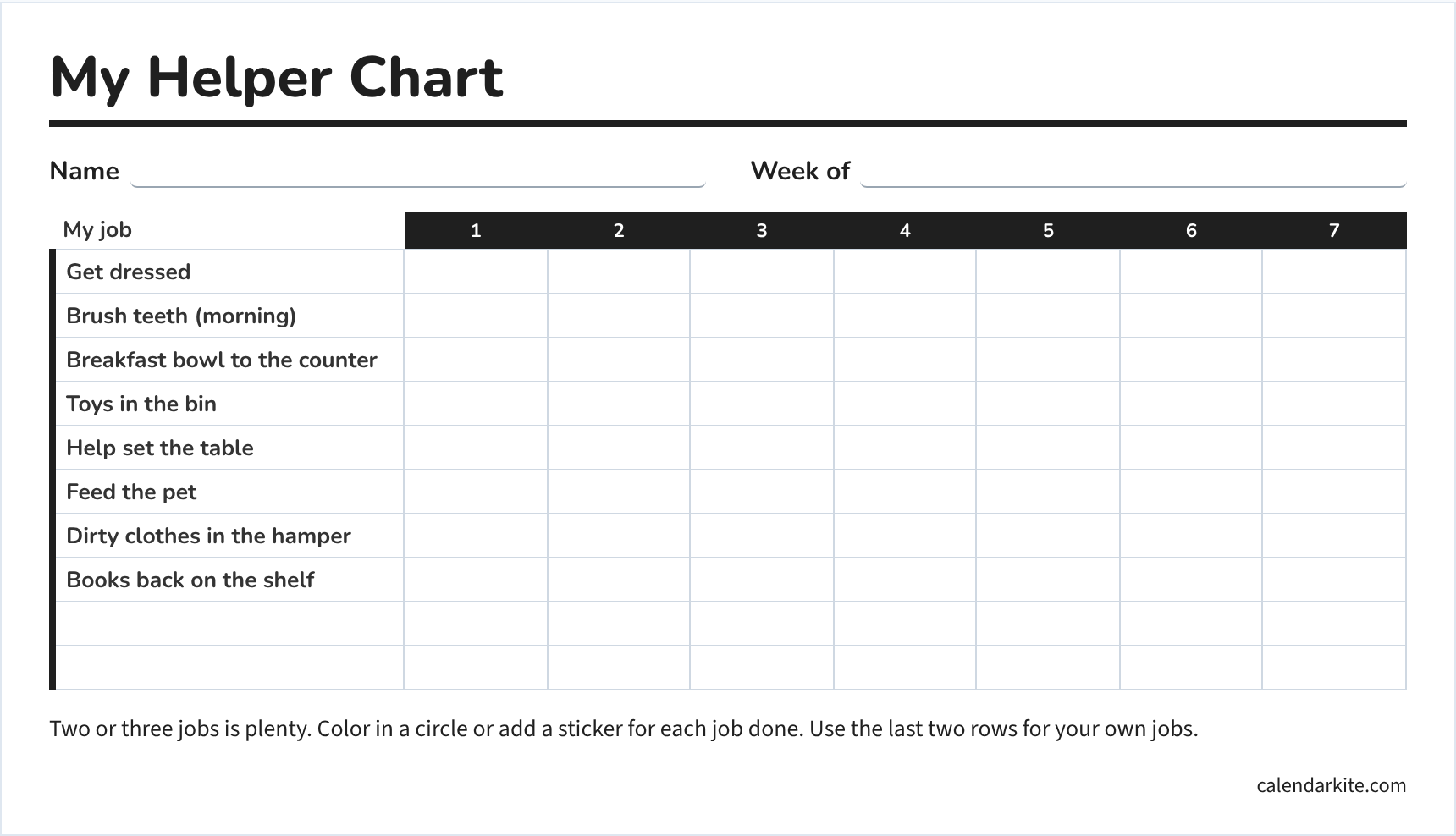
This ink-saving version suits families who print often and want a chart that still looks clear on plain paper. I test-print every page on my home inkjet, and plain black lines stay readable even in draft mode.
Pink Chore Chart for Preschoolers
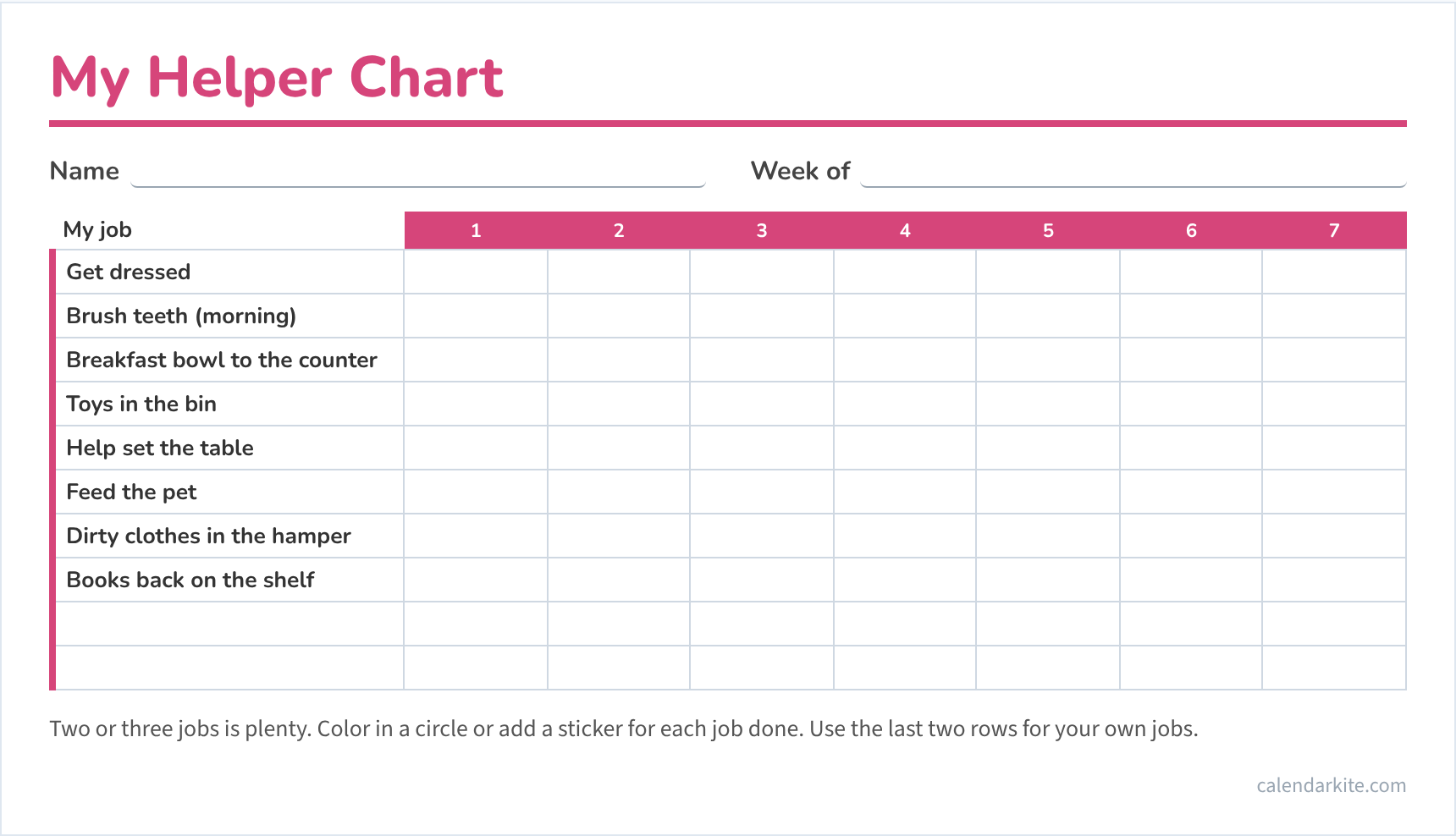
I like this soft pink chart for preschoolers who love a gentle, sweet look and need just two or three jobs like putting toys away. Print it, tape it at child height, and let them tick off each task with a sticker.
Sage Green Preschool Chore Chart
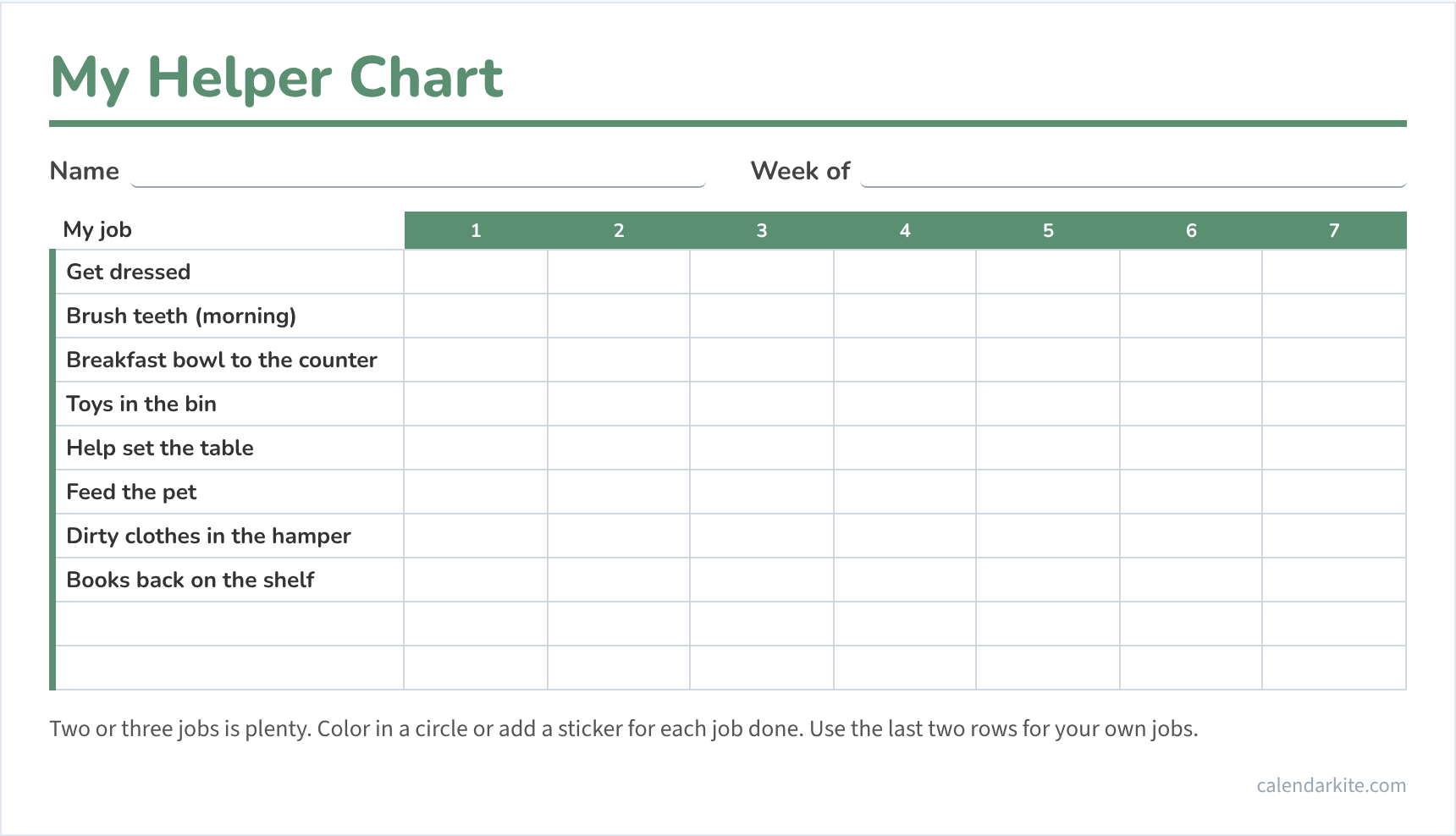
Sage green is calm and works well on a kitchen wall, which is where my own paper calendar lives by the fridge. Choose it when you want a chart that blends into your home and covers a simple morning routine.
Lavender Chore Chart for Preschoolers
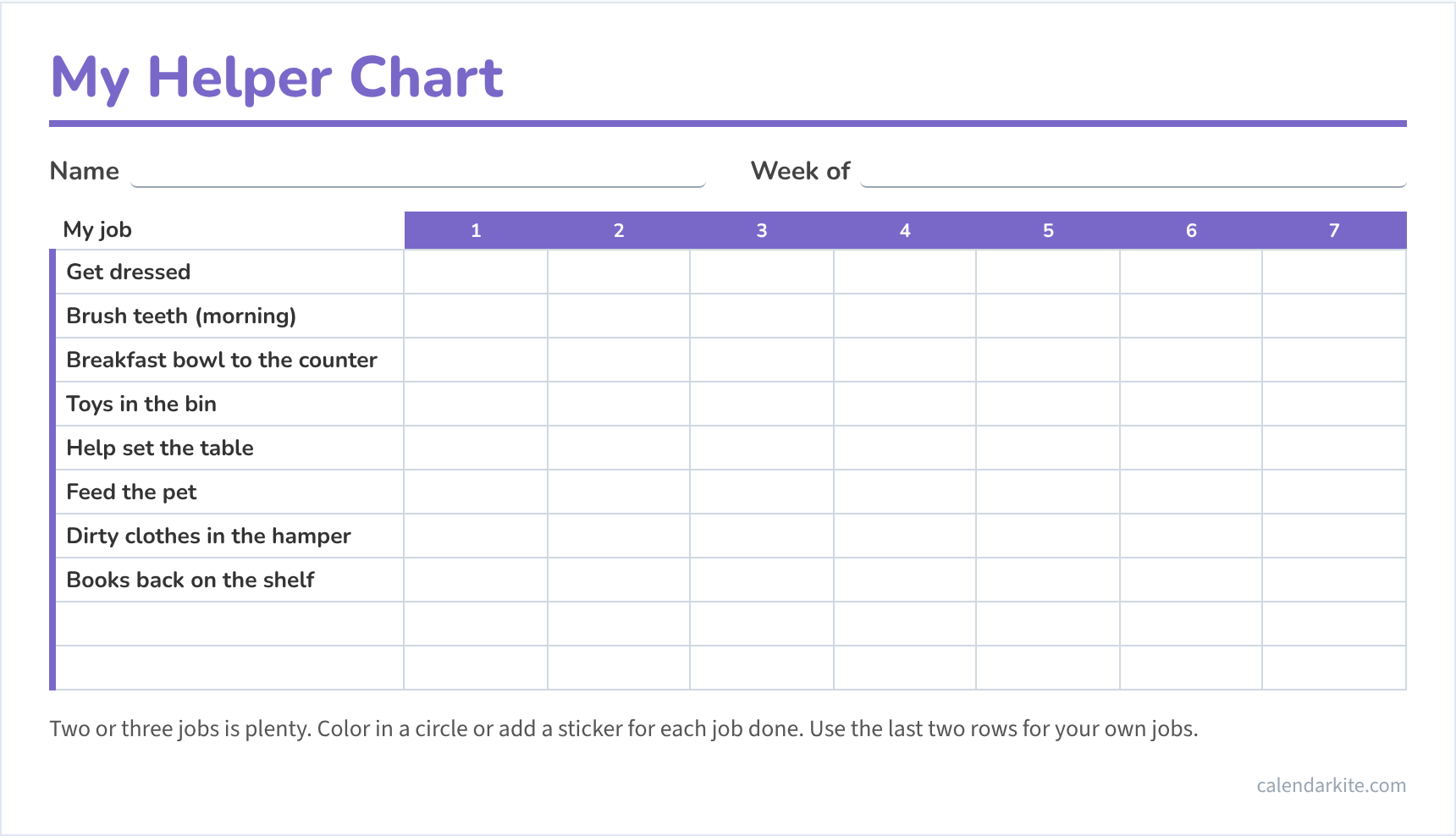
This lavender chart suits a preschooler who likes purple and a calm bedtime routine. Use it for evening jobs such as putting pajamas in the hamper, and keep tasks few, since in the office I learned long lists simply get ignored.
Cute Preschool Chore Chart Free Printable
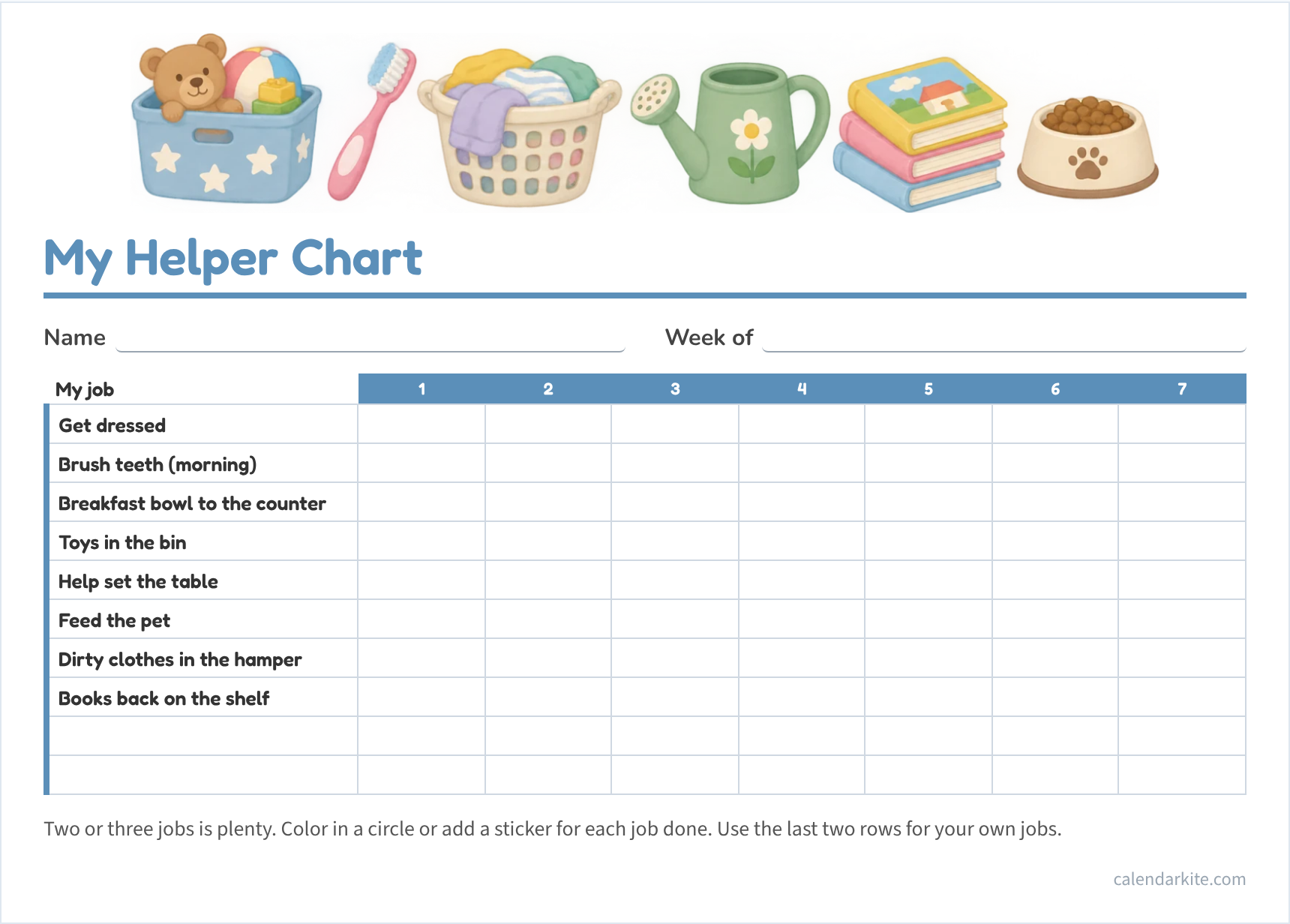
The pastel blue design with little illustrations at the top is my pick for younger preschoolers who respond to pictures more than words. It works well for a first chart with three tasks, like feeding the dog or tidying books.
Floral Preschool Chore Chart Printable
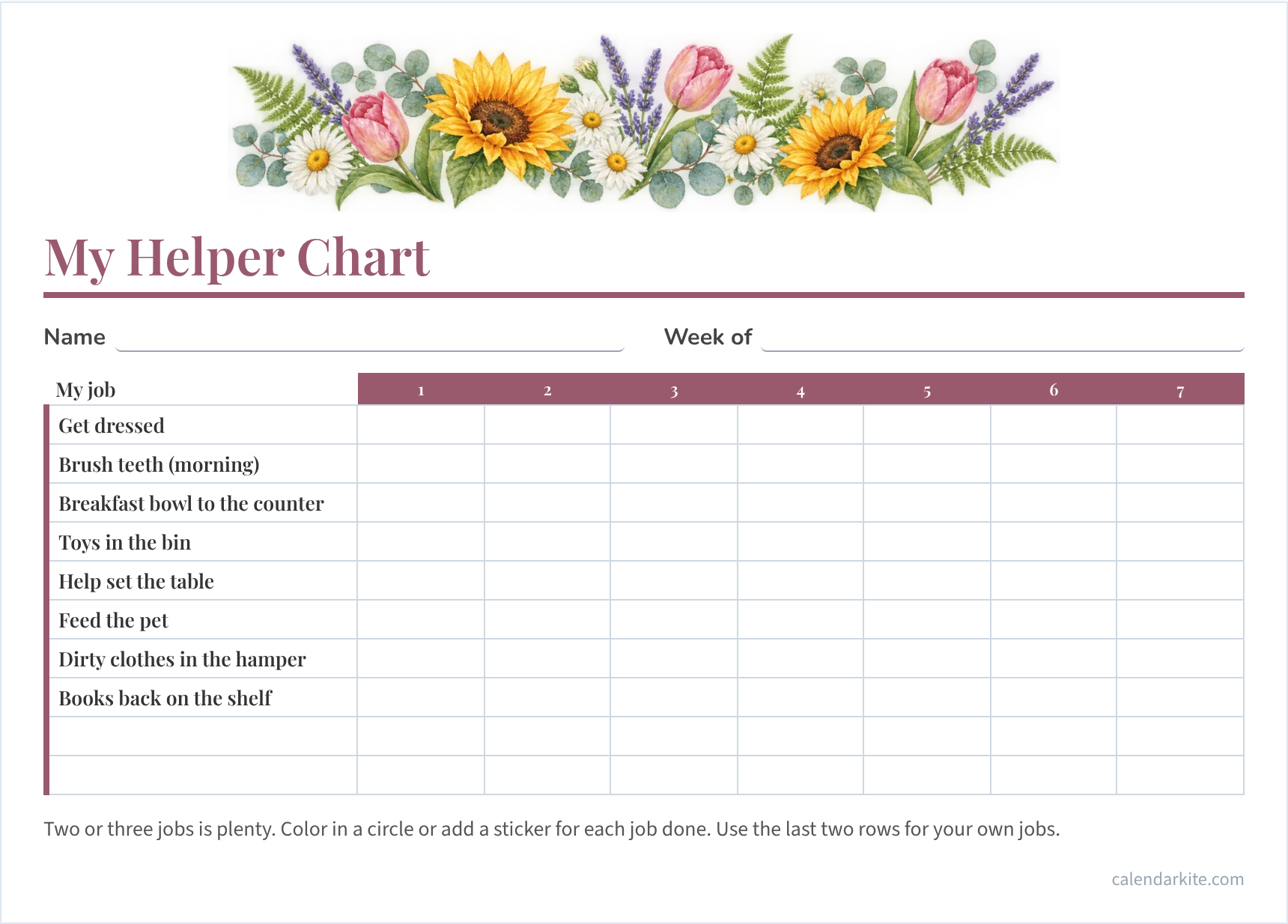
Watercolor flowers and an elegant serif heading give this one a grown-up feel, so it suits parents who want a chart that looks nice on display. I keep my planner on the kitchen counter, and a chart like this sits well beside it.
Colorful Chore Chart for Preschoolers
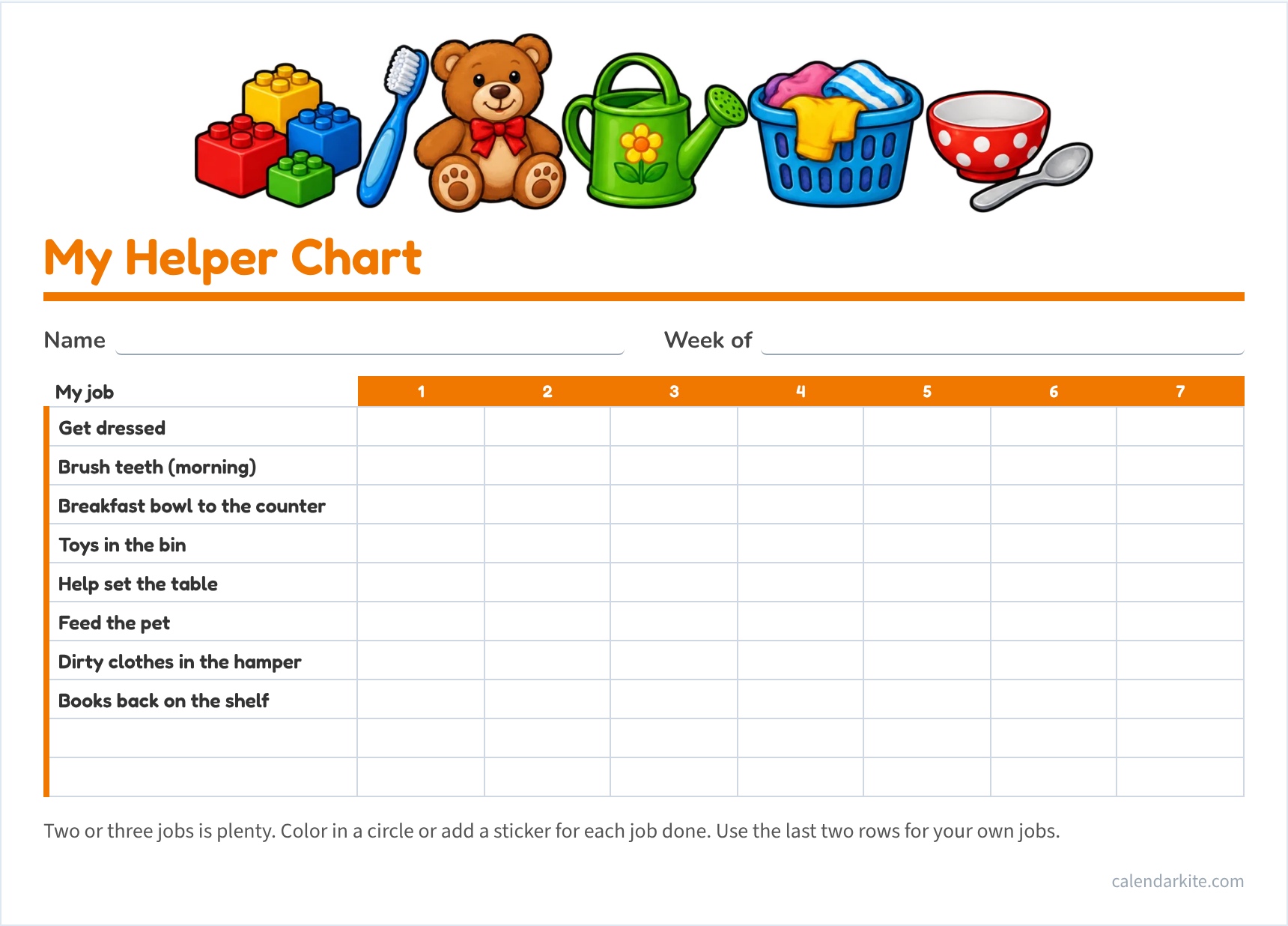
Bright orange and yellow with bold cartoon pictures make this the most playful option for energetic four-year-olds. Pick it when your child needs pictures to know the task, and let them color or stamp each finished day.
Simple Preschool Chore Chart Printable
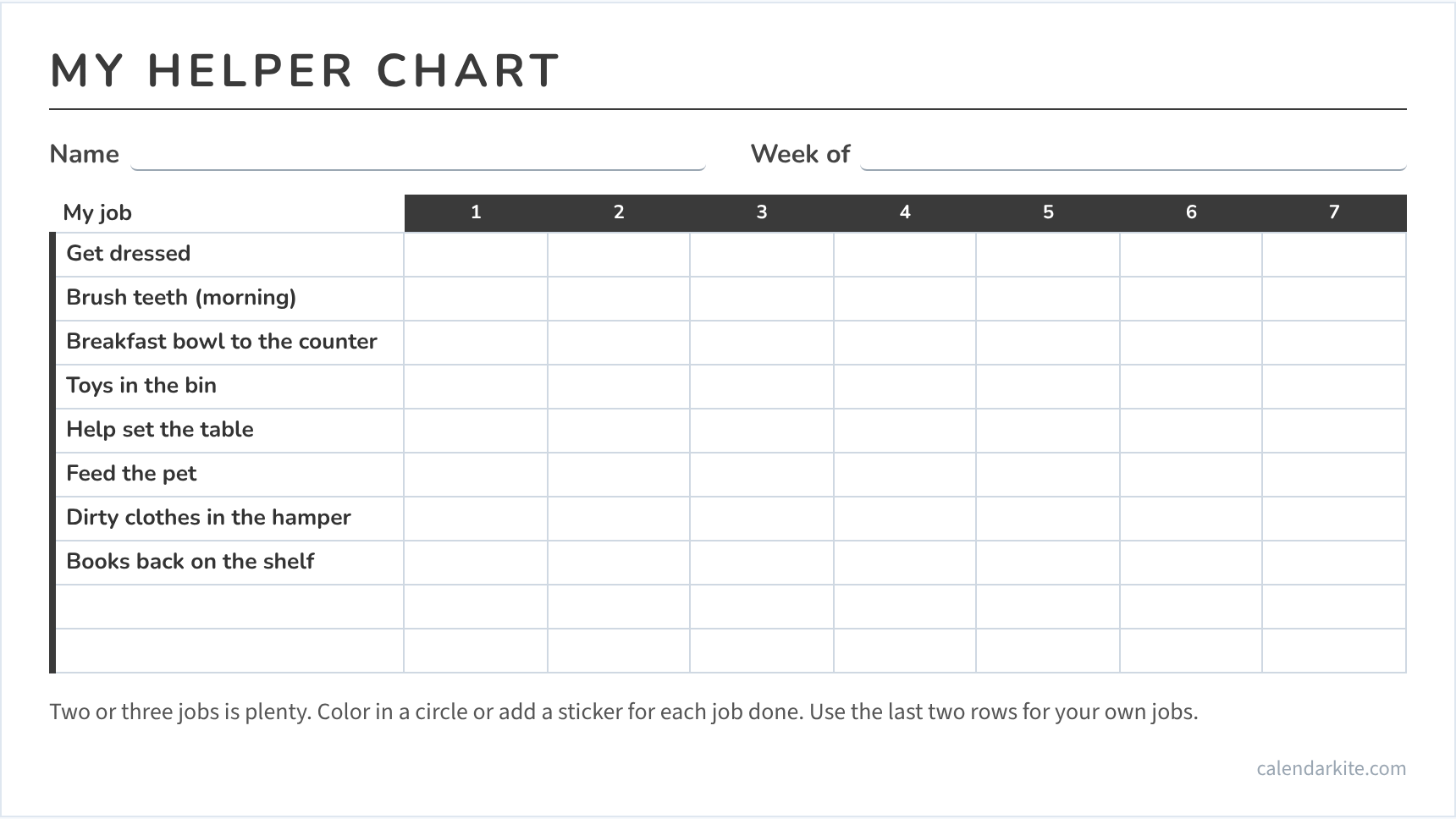
Thin gray lines and a light uppercase heading suit parents who prefer a quiet, uncluttered page. A mistake I see often is cramming too many rows in, so I kept the spacing generous enough for a preschooler's big handwriting or stickers.
Aesthetic Chore Chart for Preschoolers
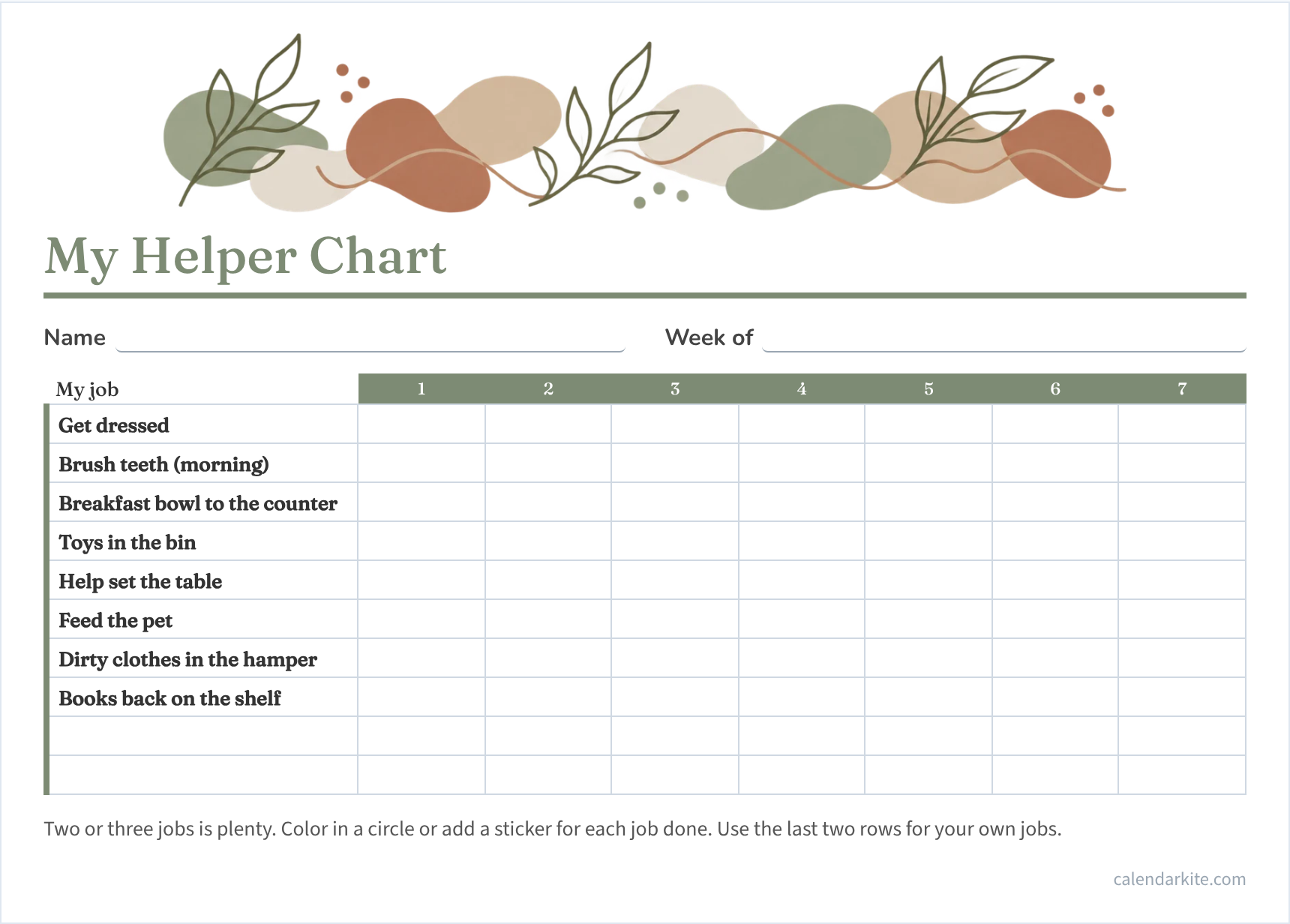
Muted sage, sand and terracotta with soft leaf line art suit parents who want a chart that matches a neutral home. It works well as a weekly routine for older preschoolers who can already follow three or four jobs.
Modern Preschool Chore Chart Printable
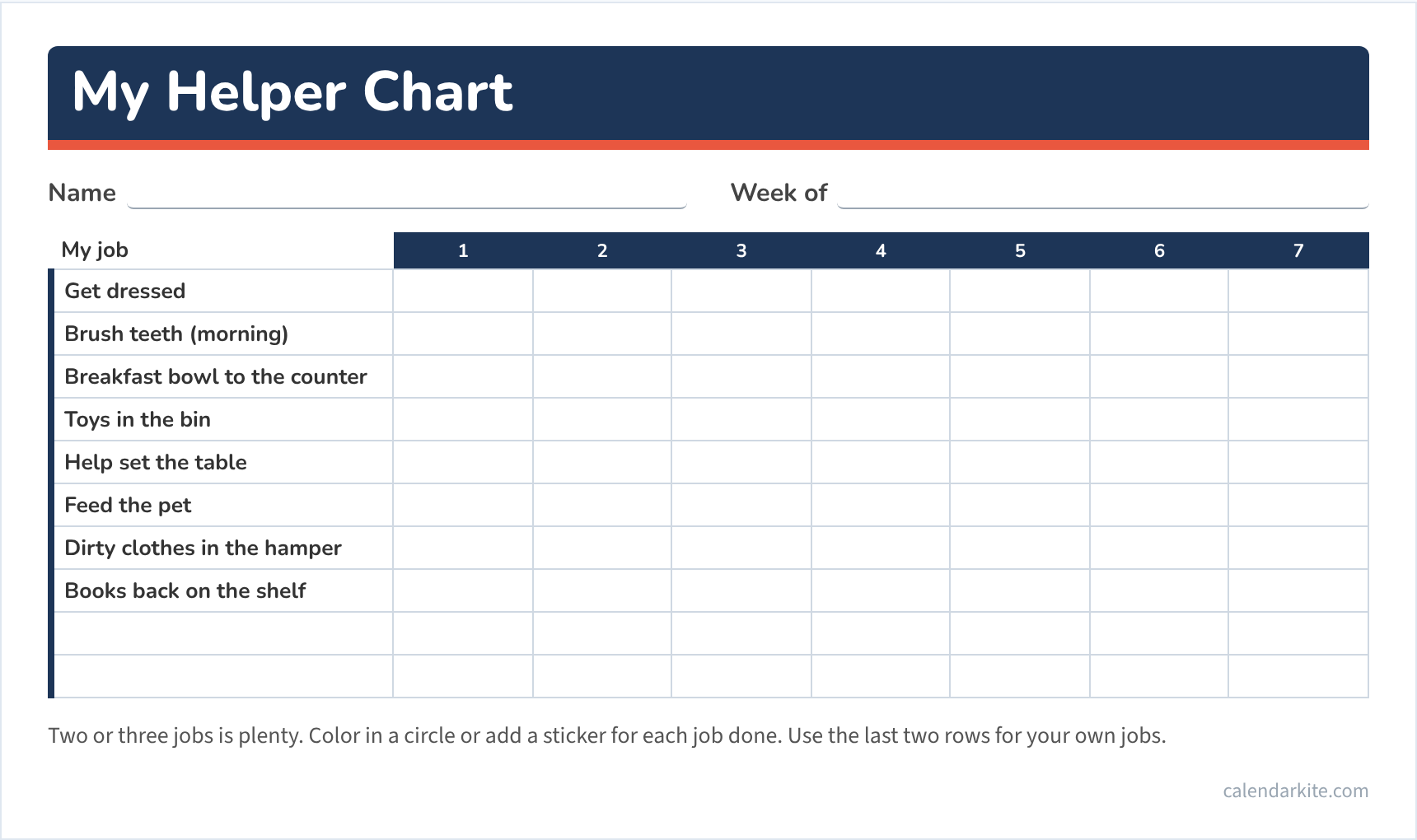
The navy header band with a coral accent gives a clear, modern look that is easy to spot from across the room. Choose it for a shared chart where siblings or a preschooler and a toddler each have their own jobs.
I have kept the layout plain on purpose. A three- or four-year-old does not need a busy design, they need to see at a glance what is theirs and where to mark it. The first eight jobs are already filled in, and the last two rows are blank for whatever your household needs.
What a good chore chart for preschoolers looks like
Preschoolers are not tiny school-agers. They cannot read a list, they lose interest fast, and they care far more about doing something with you than about a tidy result. So the chart needs to be small, concrete and quick to finish.
Three things matter most. The jobs are one step each (“toys in the bin”, not “clean your room”). There are only a few of them. And marking progress is a physical, satisfying act, like coloring a circle or pressing a sticker. Everything on this sheet is built around those three points.
In my office years I learned that a schedule people ignore is worse than no schedule, because it teaches everyone to look past it. A chart on the fridge works the same way. If the first week feels easy and a bit fun, it has a chance of lasting. If it feels like a to-do list for a tiny employee, it will not.
How to use the printable chart
Fill it in right on the page before you print. Type your child’s name and the week in the two fields at the top, then click any job label to rename it. Tap the day circles if you want to pre-mark days you already know will be skipped, such as a day with Grandma. Your edits save in your browser, so you can come back and adjust the jobs during the week, then print a fresh copy.
If you would rather write by hand, use the blank PDF download. It prints the same layout with empty rows, and you can fill it in with a pen at the kitchen table with your child watching.
Each row is one job, each column is one day. When a job is done, your child colors in the circle or you add a sticker. At the end of the week, count the filled circles together. That is the whole system.
Filling it in step by step
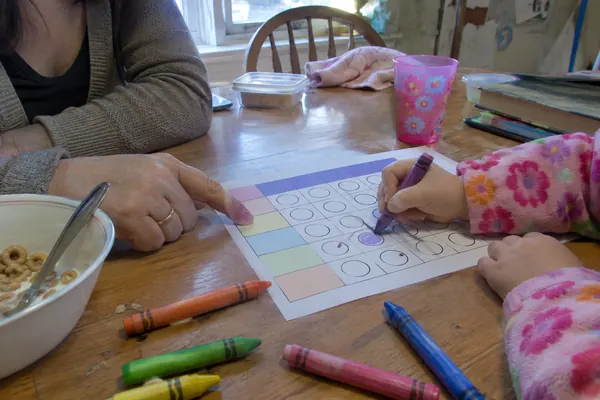
I suggest doing this with your child, not for them. A preschooler who helped choose the jobs is far more likely to claim them.
- Choose two or three jobs for the week, no more. Rename the rows to match, or keep the ones provided.
- Cross out or delete any prefilled rows you will not use, so the chart does not look like a lot of work.
- Say each job out loud and show your child what “done” looks like. Do it once together.
- Hang the printed chart at your child’s eye level and keep a crayon or sticker sheet beside it.
- At the end of each day, check in and mark the circles together.
Try this: Before you print, spend two minutes picking jobs with your child. Offer two choices for each slot (“Do you want to feed the dog or water the plant?”). Choosing makes the job feel like theirs.
Who this chart suits
The chart is aimed at ages 3 to 5, with the sweet spot at 4. Three-year-olds can use it as long as you are right beside them. They will do the job as a game and need you to mark the circle. By four, many children can finish a familiar job with a reminder, and by five they often want to mark the chart themselves.
It also suits busy families who do not want a complicated system. One sheet, one week, one glance. Children in daycare or preschool can use it for the part of the day at home, usually mornings and evenings, and parents sharing custody can print one copy for each house so the routine stays the same.
If your child is closer to six, with a few more skills and an interest in reading, take a look at the chore chart for kindergarteners, which expects a bit more independence.
Chores a preschooler can really do
Preschoolers can do more than most of us expect, as long as the job is small and the tools fit their hands. For 4 and 5 year olds, typical suggestions include setting the table, helping prepare meals with supervision, and putting clean clothes into piles for each family member.
Here are jobs I would pick from, all one-step or close to it:
- Put toys in a bin or basket
- Put dirty clothes in the hamper
- Carry an unbreakable plate or cup to the counter
- Help set the table (napkins first, then spoons)
- Feed the pet, with you measuring the food
- Water a plant with a small cup
- Match clean socks
- Put books back on a low shelf
- Wipe a spill with a small cloth
- Get dressed, with clothes laid out the night before
Skip anything involving heat, sharp edges, cleaning chemicals or heavy carrying. Chores here are about contribution, not a spotless house. At this age, the habit and the feeling of contributing matter more than a clean result.
How many chores is enough
Start with two or three a day. One source I like puts it simply: begin with two or three daily tasks for a preschooler and build from there. I agree, and I would add that starting with one is fine, too.
Another rule of thumb you may hear is a child’s age in minutes per day. By that measure, a five-year-old would do about five to ten minutes of work. Treat that as a ceiling, not a target. On a day when your child is tired or sick, drop to one job and still mark the circle.
The chart has ten rows because families differ, and because I wanted you to be able to swap jobs through the week without reprinting. Having ten rows does not mean ten jobs. At home, I leave most of them blank.
Choosing the right time of day
Jobs stick best when they are attached to something that already happens. Toys in the bin before bath. Dirty clothes in the hamper at bedtime. Napkins on the table before dinner. The routine does the reminding so you do not have to.
That is why the prefilled jobs on the chart follow the day: getting dressed and brushing teeth in the morning, the table and the pet around meals, and clothes and books at night. If you want to build a full routine, pair this sheet with a morning routine chart so the early part of the day has its own steps.
Avoid chores when your child is hungry or tired. The late-afternoon slump is a bad time to ask for a tidy-up, and I learned that the hard way with my own two kids. Right after a snack, or right before a favorite activity, goes much better.
Try this: Pick one “anchor moment” in your day, such as right after dinner. Attach one chore to it for a full week and ignore the rest of the chart. Add a second only when the first needs no reminder.
Making it work for a child who cannot read
Most preschoolers cannot read the job labels yet, and that is fine. The chart is a prompt for you both. Point to the row, read the job aloud, and let your child do the marking.
If you want pictures, you can draw a quick stick figure or tiny symbol beside each job after printing. Even a rough sketch of a toy bin does the work. You can also type a short, clear label, like “Toys in the bin”, since young children quickly learn the shape of words they hear again and again.
Keep the wording identical from day to day. “Tidy up” means nothing to a three-year-old, but “blocks in the blue box” does. Specific words give a child a clear finish line.
Rewards and stickers
Colored circles are the first reward. Many children are happy with that alone. If yours wants more, add a sticker on top of the circle or let them choose a stamp.
Keep the reward fast and small. A preschooler cannot wait a month for a prize, so a weekly treat is already stretching it. Praise, a few minutes of a game with you, or choosing the bedtime book all work well. At this age, praise, time with you and a small point-based reward do the job.
I would avoid paying money for these jobs. Setting the table or feeding the dog is part of belonging to a family, and bundling it with payment can muddy that. Allowance charts come later, once children understand what money is.
When your preschooler says no
Refusal is normal at three and four. It usually means the job is too big, the timing is wrong, or your child wants some control. A calm response beats a battle.
Try shrinking the job (“just the red cars”) or doing it together (“you hold the basket, I’ll drop in the toys”). Offer a choice between two jobs, or race a song. If the answer is still no, let it go for the day and mark nothing. Forcing it makes the chart something to resist.
One mistake I see often is turning the chart into a consequence. Taking away a sticker as punishment, or pointing at empty circles when a child is upset, quickly sours the whole thing. Keep the chart a place of progress only.
Variations you can try
The page gives you one flexible weekly format, but a few simple changes make it fit different homes.
- One-child focus: Use only three rows, and enlarge the circles by coloring them in thickly.
- Siblings: Print one sheet per child, so each has their own, and match the jobs to their age.
- Weekdays only: Leave the weekend circles blank, or use them for a single family job done together.
- Rotating jobs: Change the labels every Sunday to keep things interesting, since novelty helps young kids stay engaged.
- Routine focus: Fill the rows with morning and bedtime steps rather than chores.
For bathroom learning specifically, the potty training sticker chart is a better fit, with a layout designed around that one skill. If you want to look ahead to older kids, the weekly chore chart has more room for written jobs.
Doing chores alongside your child
Preschoolers copy what they see. If you tidy the kitchen while they put their cups away, the job feels like a team effort. If you send them off alone, it feels like a task.
I keep a paper calendar on the fridge and a planner on the counter, and the kids know both are “family things.” When the chore chart sits next to them, it reads the same way: part of how the house runs. Our dog’s bowl is the favorite job, and it works because I stand beside my youngest while she pours.
Expect help, not results. The bed will look lumpy, the plant may drown a bit, and the socks will not be matched perfectly. Thank your child for what they did, and quietly fix the rest later, out of sight if you can. Correcting a four-year-old’s work in front of them is a quick way to end the chore.
Printing and displaying the chart
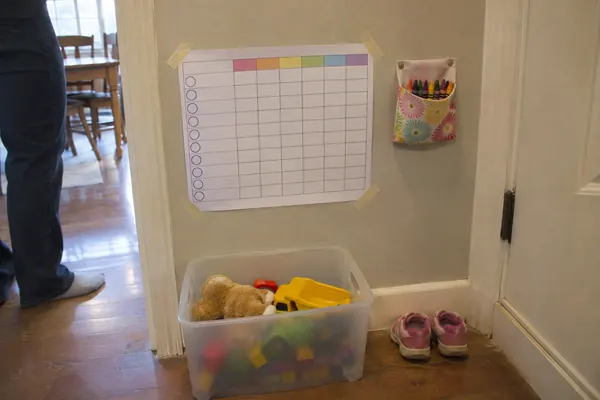
Print on standard US Letter or A4 paper. I test every printable on my home inkjet at both sizes, and this grid keeps a clear margin so nothing is cut off. A normal black-and-white print is fine, though a color-in circle is more fun with crayons.
Place the chart at your child’s eye level, near where the jobs happen: the kitchen for table jobs, the bedroom for clothes. Magnets on the fridge or painter’s tape on a door both work. If you plan to reuse it, slide the page into a plastic sleeve and mark it with a dry-erase marker, then wipe clean each week.
Print a few spare copies at the start. Preschoolers sometimes scribble outside the circles, and I would rather have a fresh sheet than a fuss. Use a weekly view like the weekly calendar printable alongside it if you want to see the family’s plans for the same days.
Safety and supervision
Preschoolers need an adult nearby for almost every chore. Keep cleaning products capped and out of reach, and avoid the stove, oven and hot surfaces entirely. Use unbreakable plates and cups for carrying jobs, and a stable step stool only with you right there.
Choose tools that fit small hands: a child-sized cloth, a small watering cup, a lightweight basket. Heavy or awkward items lead to spills and discouragement.
If a job involves a pet, you measure the food and stay close. Pets can be unpredictable, and a bowl on the floor is enough of a job for a four-year-old.
When to move on to the next chart
Most children outgrow this format around age 5 or 6, when they begin reading and want more responsibility. Signs they are ready: they remember jobs without reminders, they ask to mark the chart themselves, or the circles feel too easy.
At that point, a chart with written jobs and a few more tasks makes sense. The next steps are the kindergarten chart linked above, then eventually a simple household schedule. Parents who want a shared plan for the whole house can look at the chore chart for adults and split the load so the kids’ jobs fit within a fair family system.
Try this: At the end of week two, sit down with your child and look at the filled circles together. Ask which job was their favorite, and which one they would like to swap. Change one row on the sheet, and print a new copy.
Common mistakes to avoid
A few patterns come up again and again, in offices and in homes alike. A system that is too ambitious at the start falls apart within days, and the fix is nearly always to do less.
- Listing too many jobs, so the chart feels like a burden
- Using vague wording like “be tidy” or “help out”
- Rewarding with money or a big prize far in the future
- Skipping the demonstration and expecting a child to guess
- Letting the chart disappear for weeks, then restarting with a full list
If you slip, start again on Monday with one job. A fresh sheet costs nothing, and a preschooler will not remember the gap.
Common questions
What age should a child start using a chore chart?
Most children are ready around age 3 or 4, once they enjoy helping and can follow a one-step request. Before that, a chart is more for you than for them. Start with picture-sized jobs like putting toys in a bin and add from there.
How many chores should a preschooler have?
Two or three a day is a good starting point. The chart has room for more, but you do not need to fill it. A short list a child finishes beats a long one they abandon by Wednesday.
Should preschoolers be paid or rewarded for chores?
Money is usually too abstract at this age. Praise, a sticker, or a few minutes of your full attention work better because the reward comes right away. Keep rewards small so the chore itself does not feel like a trade.
My preschooler cannot read. Will the chart still work?
Yes. Read each job aloud together, and let your child color in the circle or place a sticker when it is done. You can also draw a tiny picture next to each job, since you can edit the labels before printing.
Can I change the chores on the chart?
Yes. Every job label on the page is editable, and two rows are left empty for your own. Type in your child's jobs, add their name and the week, and print.
How often should I reprint the chart?
Print one fresh sheet each week, so every Monday starts with empty circles. If your child loves the same set of jobs, you can keep the same labels and just reprint.
More free charts
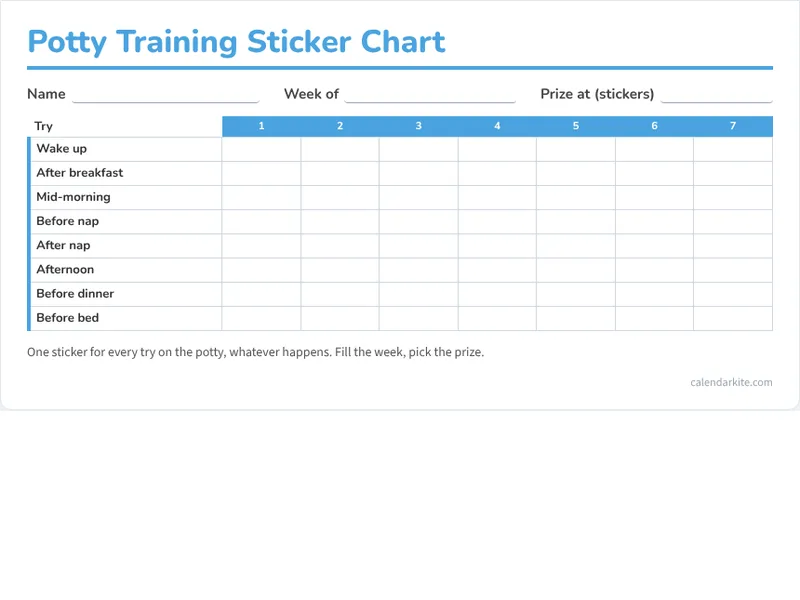 Potty Training Sticker Chart (Free Printable)
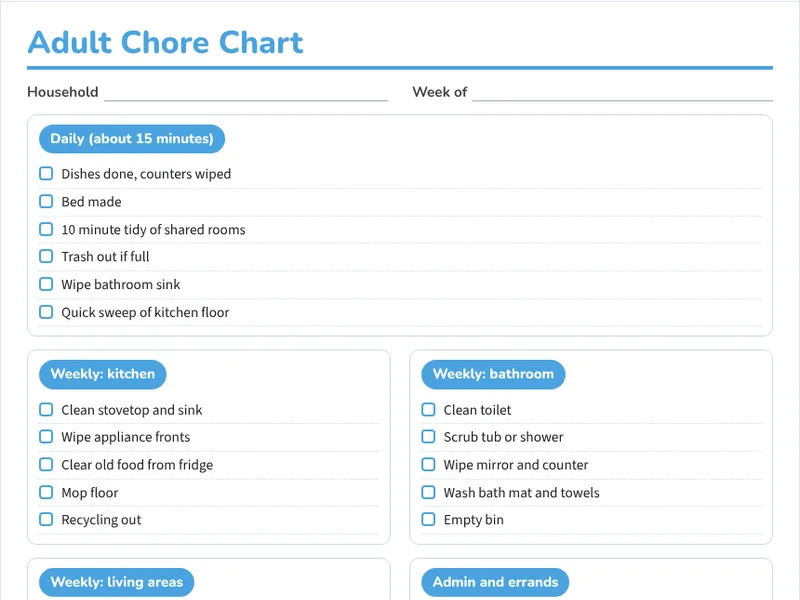 Chore Chart for Adults: Free Printable Weekly Chart
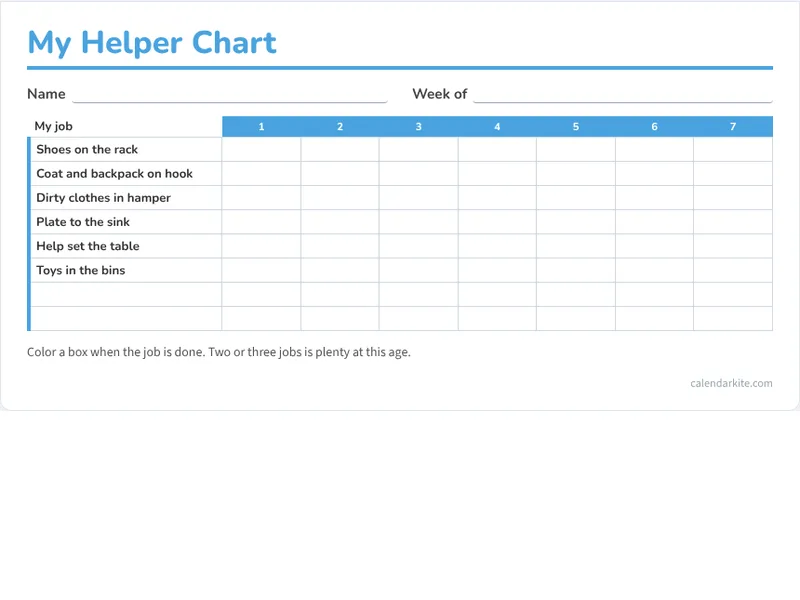 Chore Chart for Kindergarteners: Free Printable Weekly Sheet
 Body Measurement Chart: Free Printable 12 Week Tracker
 Hundreds Chart Printable: Free 1-100 Chart to Fill In and Print
 T Chart Example (Free Printable T Chart With Scoring)