
Potty Training Sticker Chart (Free Printable)

A potty training sticker chart is a one-page grid where your child puts a sticker on each try on the potty, so they can see their progress and you can see the pattern of the day. The free chart on this page covers one week: seven days across, eight tries down, with a name line, a week-of line and a place to write the prize goal. You can type into it on screen, tick or tap the cells, then print it, or download a blank PDF and fill it in by hand.
| Try | 1 | 2 | 3 | 4 | 5 | 6 | 7 |
|---|---|---|---|---|---|---|---|
| Wake up | |||||||
| After breakfast | |||||||
| Mid-morning | |||||||
| Before nap | |||||||
| After nap | |||||||
| Afternoon | |||||||
| Before dinner | |||||||
| Before bed |
One sticker for every try on the potty, whatever happens. Fill the week, pick the prize.
Free for personal, classroom and office use. Your entries are included in the print, PDF and PNG. Prints on US Letter and fits A4.
Black and White Potty Training Sticker Chart
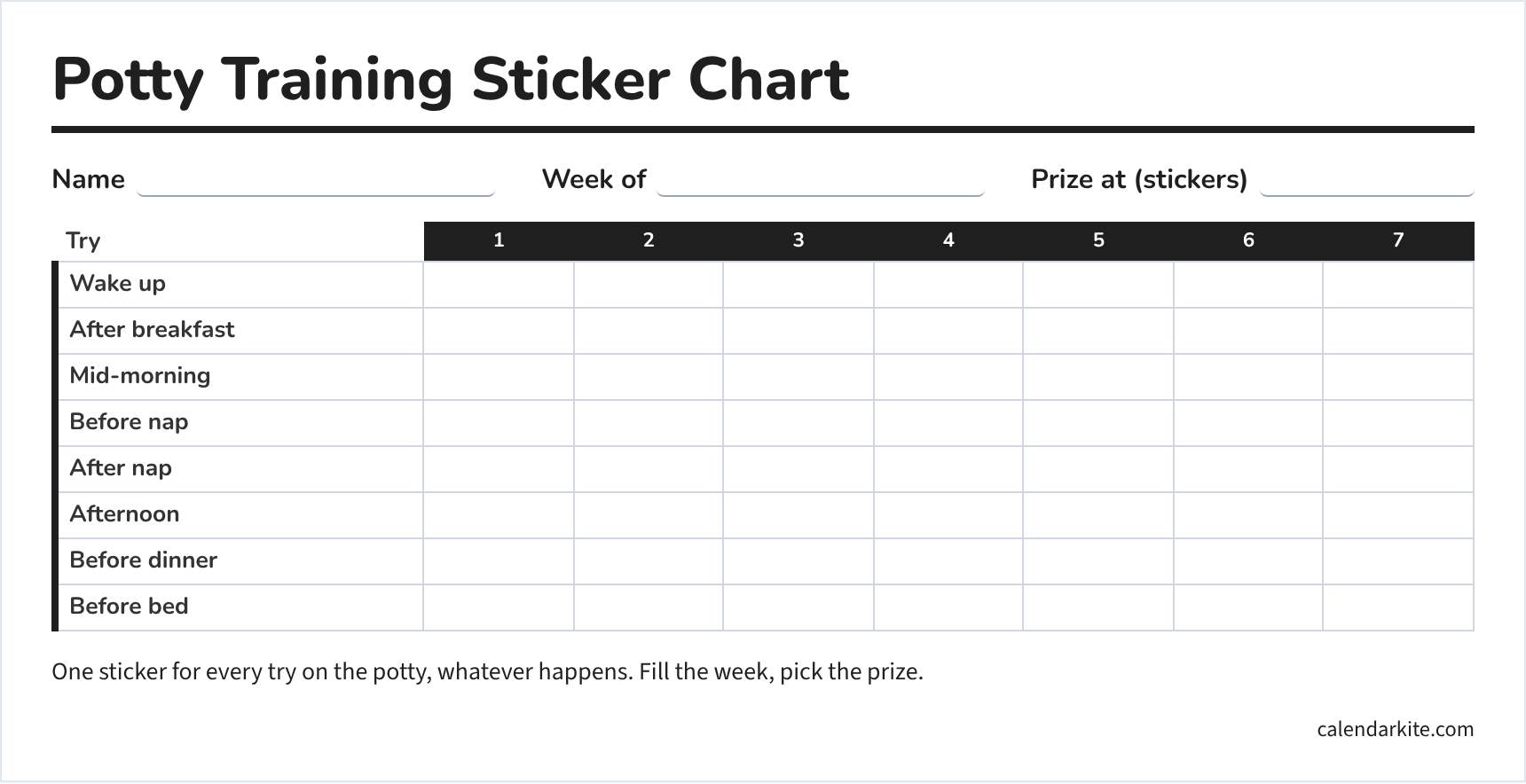
This is the one I'd print first, since plain black lines use very little ink and you can reprint a fresh copy whenever a chart fills up. I test-print every chart at home, and the sticker boxes stay crisp on US Letter and A4.
Pink Potty Training Sticker Chart
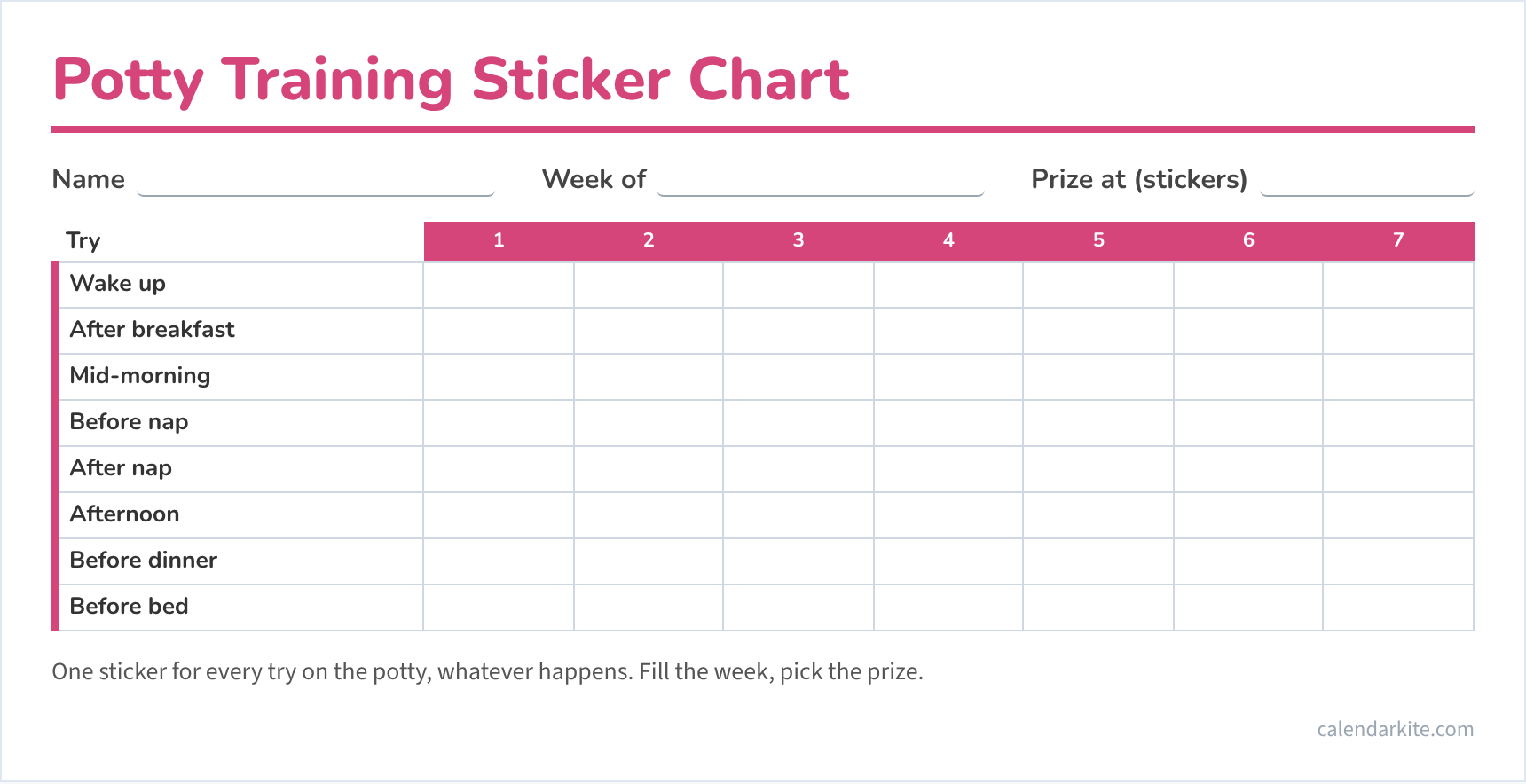
A soft pink chart suits a toddler who loves pastel colors and a parent who wants something pretty on the bathroom wall. Stick it at your child's eye level, since I learned in the office that anything hung too high simply stops getting looked at.
Sage Green Potty Training Sticker Chart
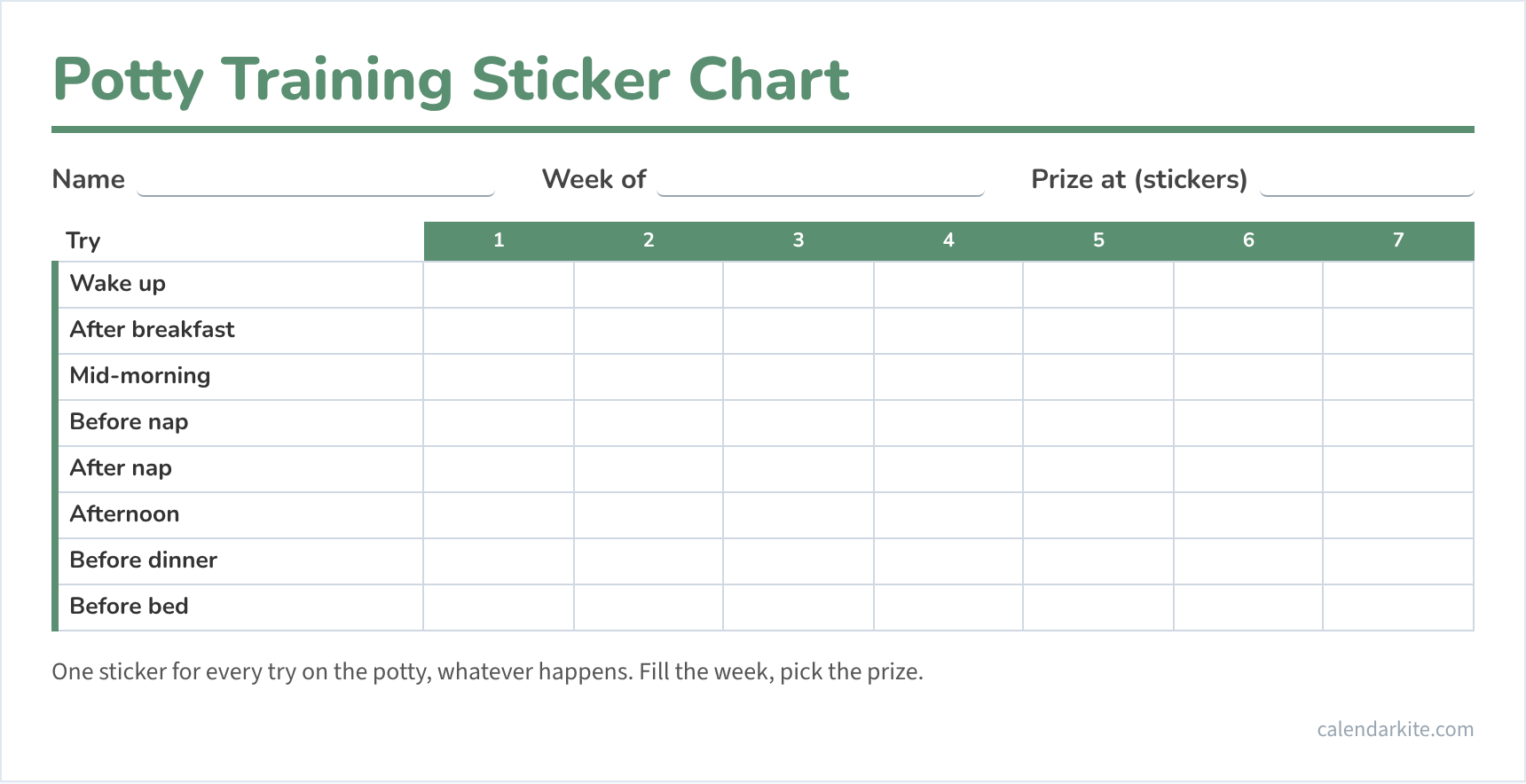
Sage green is calm and works well in a neutral bathroom or hallway where bright colors would clash. I keep my own paper calendar on the fridge, and this chart is subtle enough to sit beside something like it without shouting.
Lavender Potty Training Sticker Chart
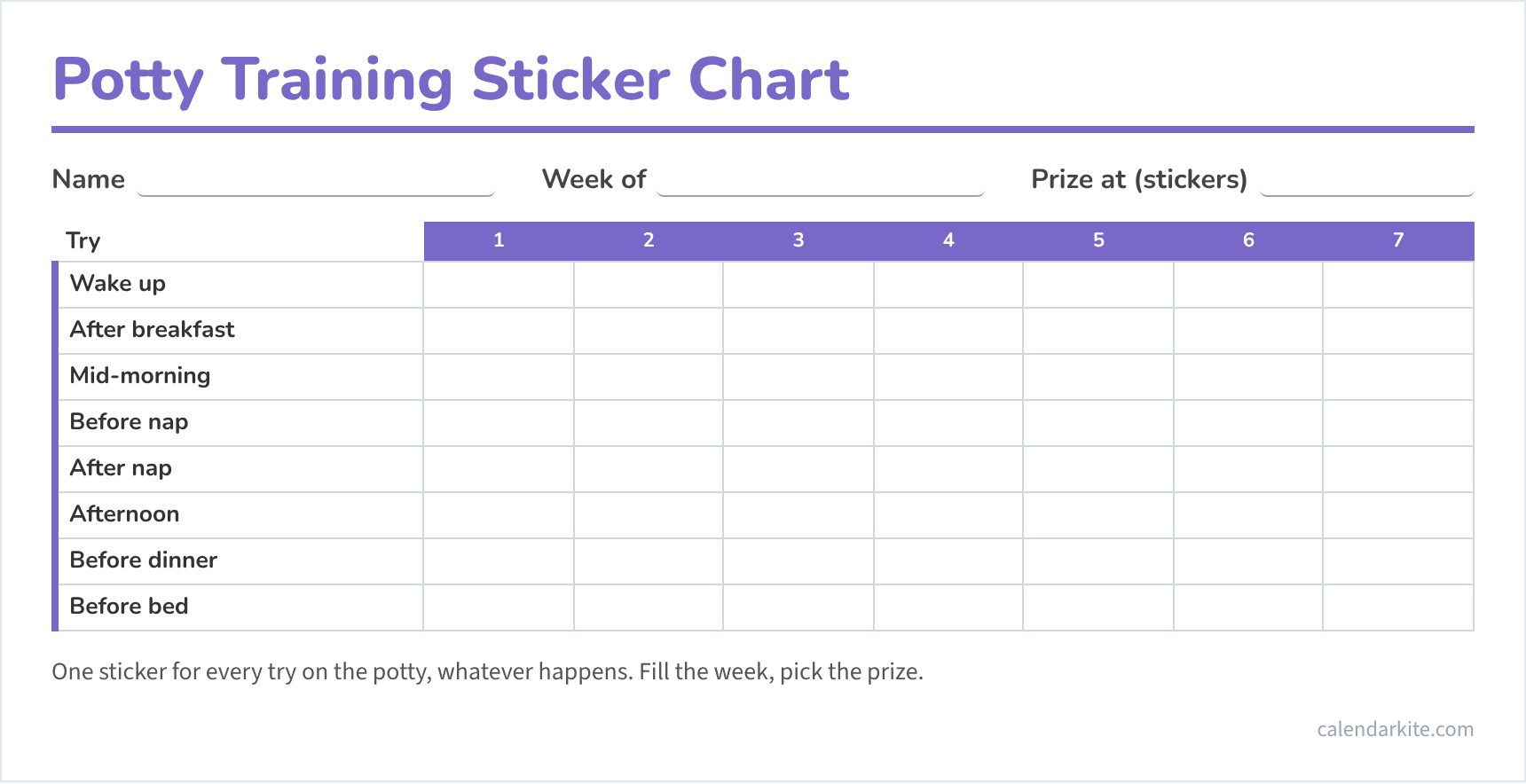
Lavender is a good pick if you want a gentle color that feels neutral for any child. Print it on US Letter or A4, then add a sticker after each successful trip so progress stays easy to see at a glance.
Cute Potty Training Sticker Chart
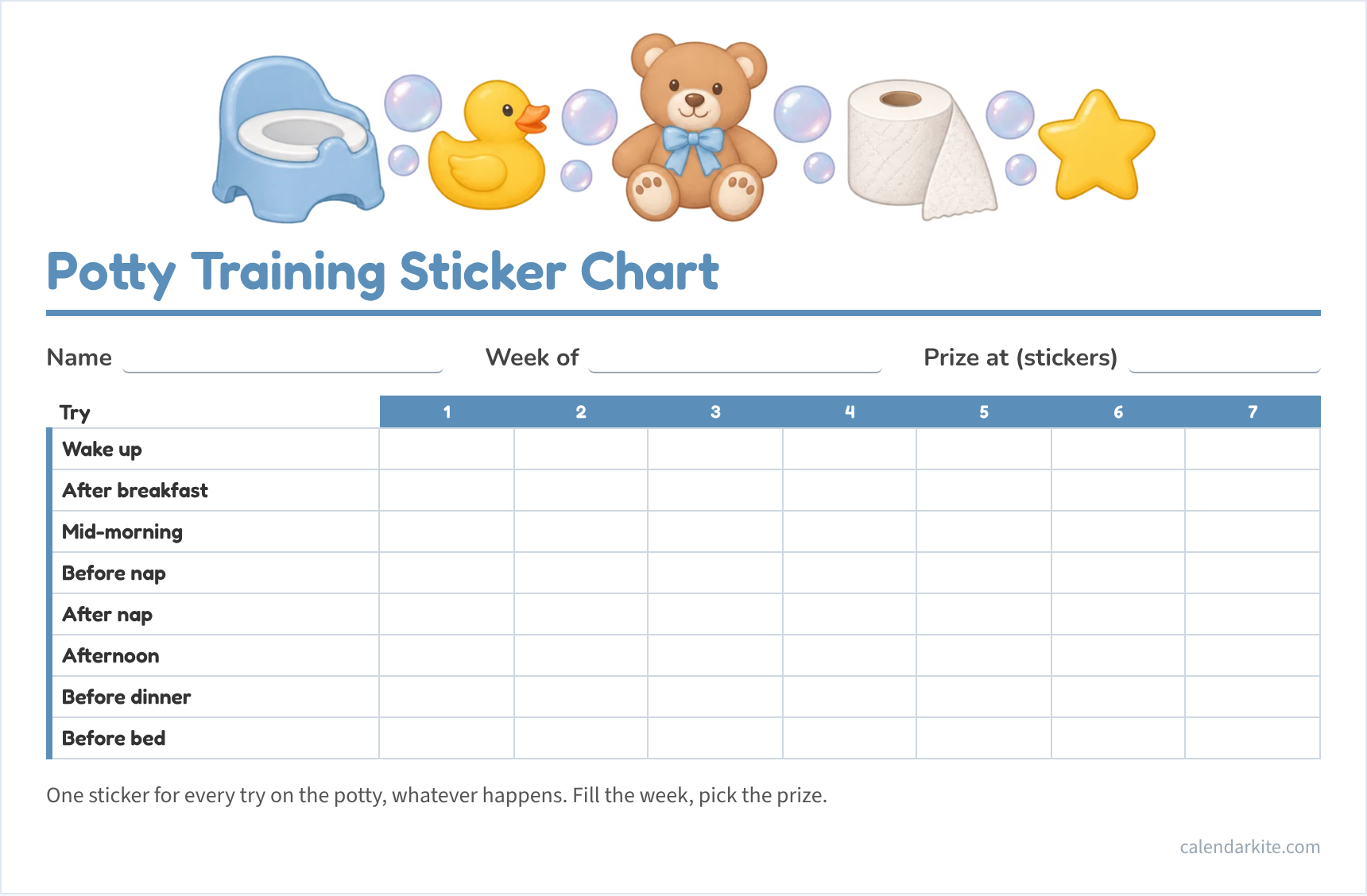
The pastel blue chart with little hand-drawn illustrations suits toddlers who need a bit of fun to stay interested. I put the artwork in a strip at the top so the sticker squares stay large and easy for small fingers.
Floral Potty Training Sticker Chart
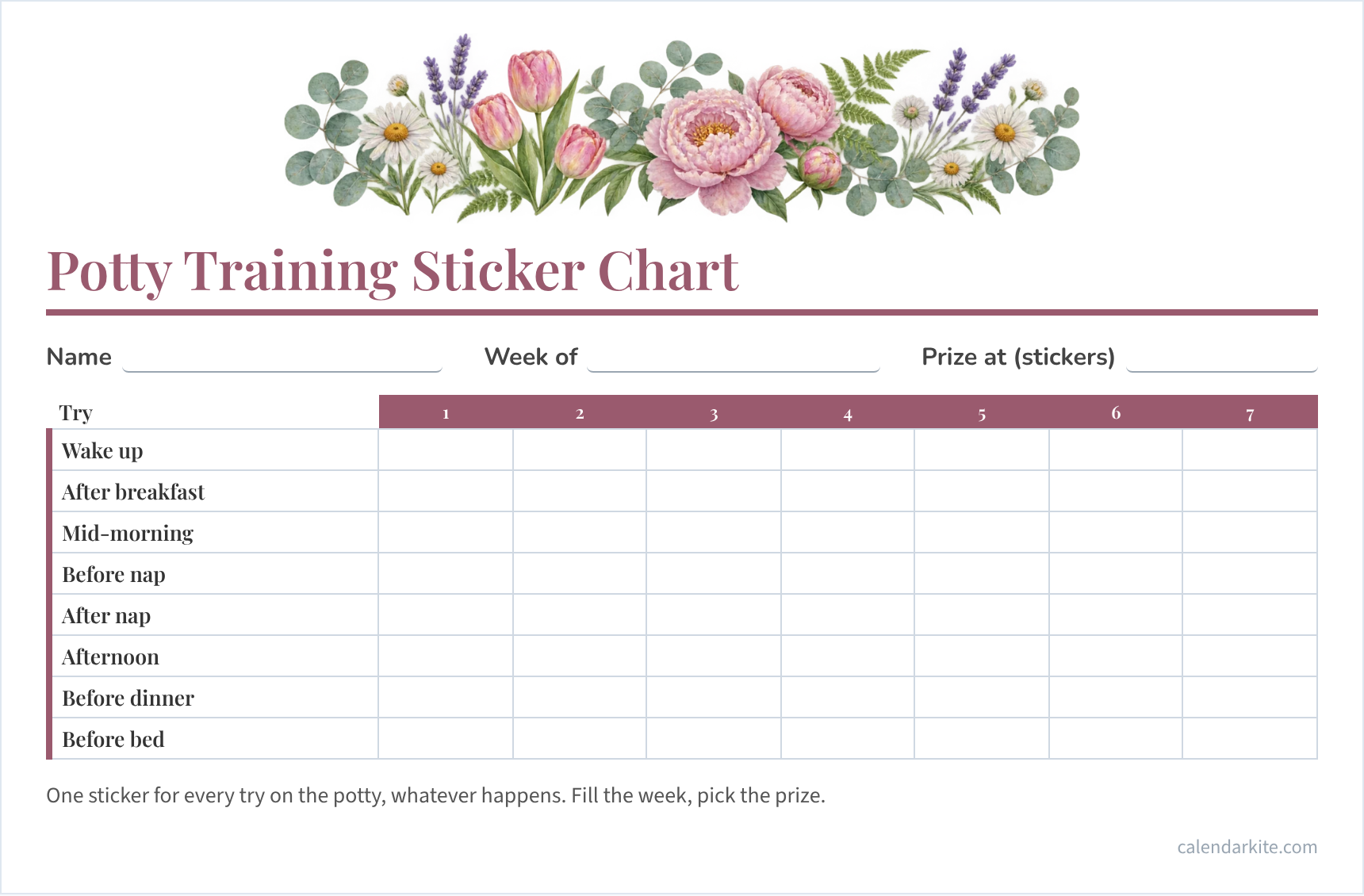
Watercolor flowers and elegant mauve headings make this a lovely choice for a parent who wants the chart to match the rest of the home. It looks tidy taped inside a bathroom cabinet door, within easy reach but out of sight from guests.
Colorful Potty Training Sticker Chart
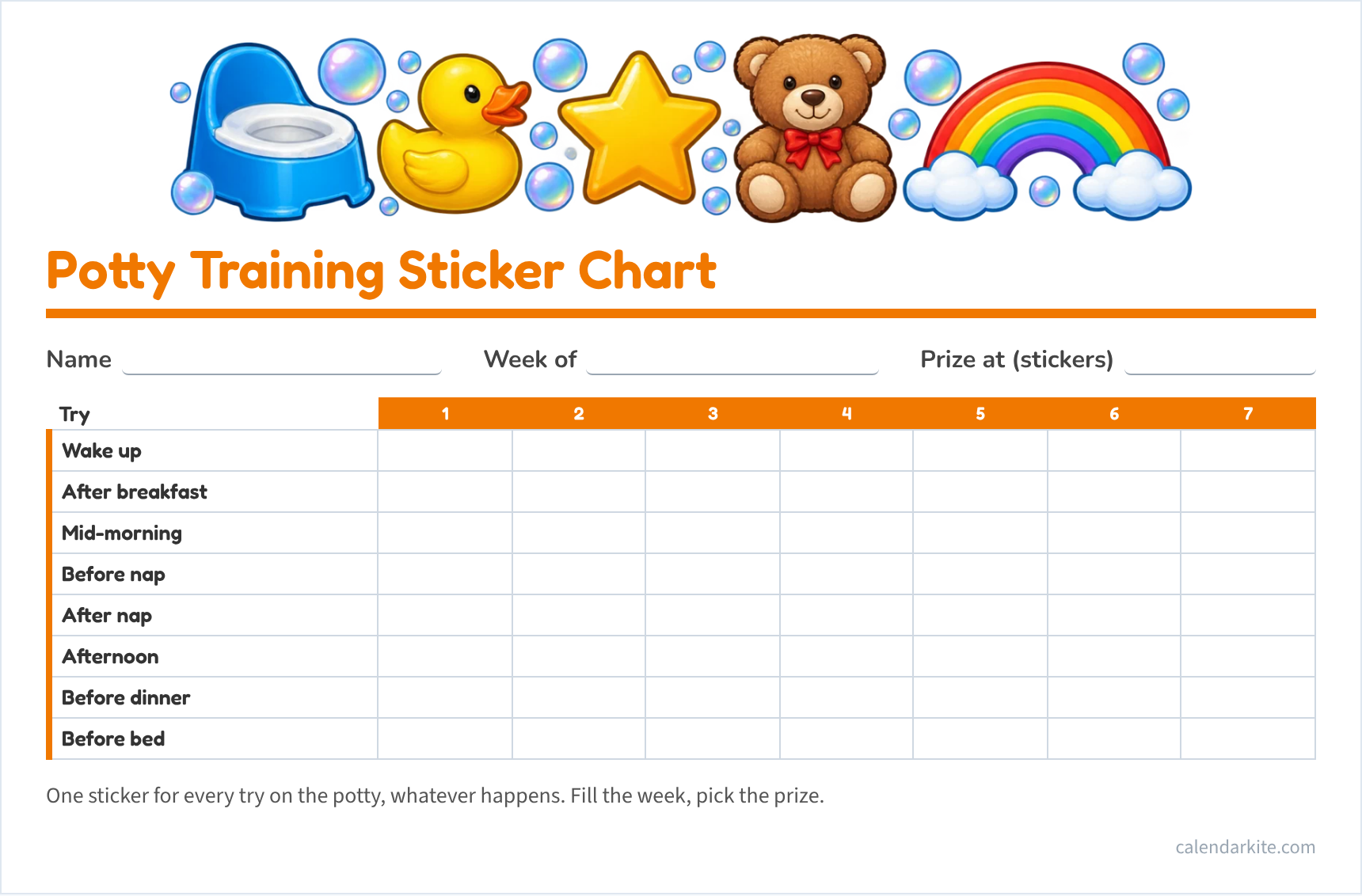
Bold orange and yellow with cartoon illustrations make this the most exciting chart for a toddler who needs extra motivation. Let your child pick the stickers and place them, because a bit of ownership keeps the routine fun.
Simple Potty Training Sticker Chart
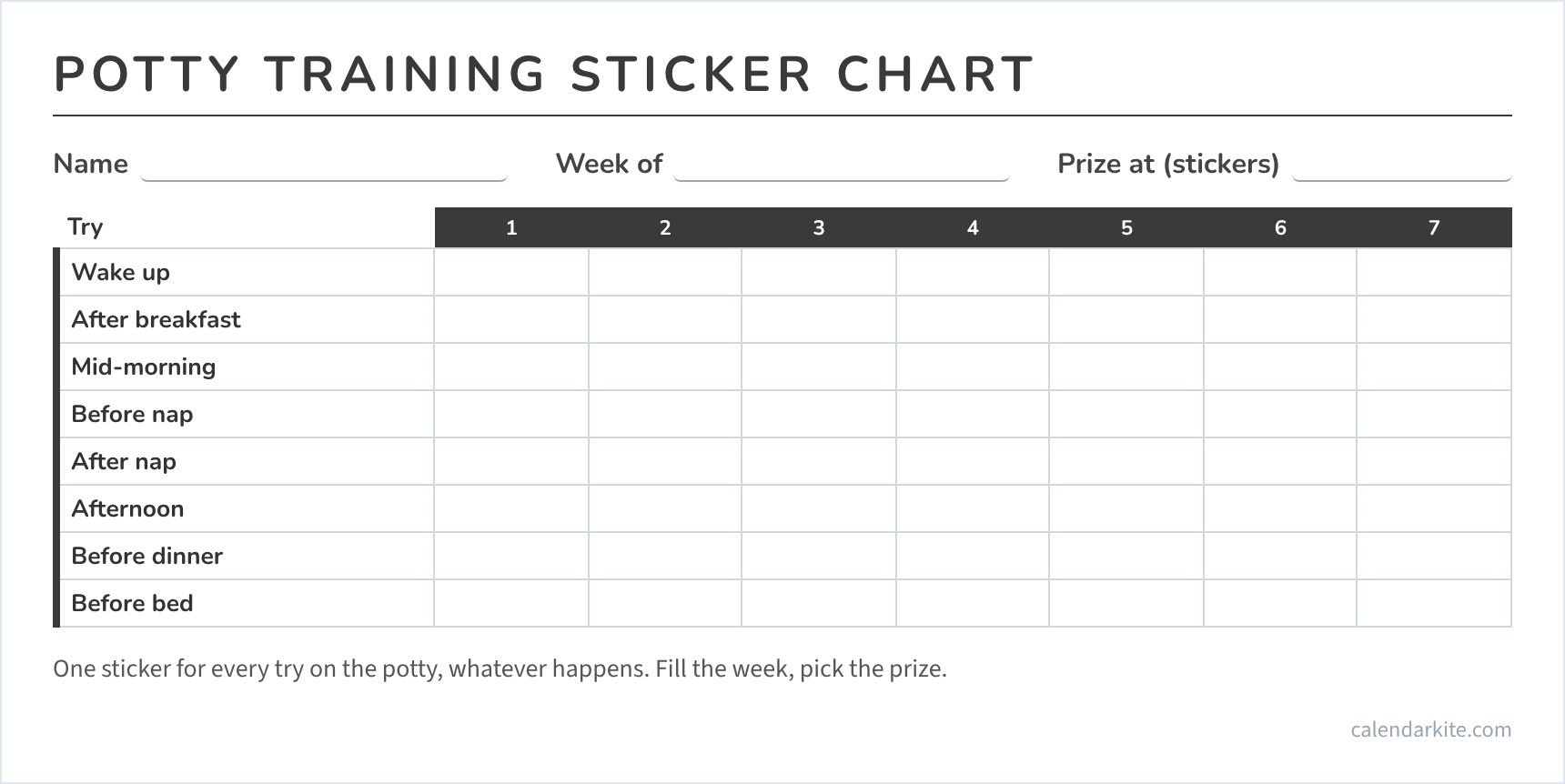
Thin gray lines and a light uppercase heading suit a parent who likes a clean, quiet look and wants to save color ink. From my office years, I learned a simple grid is easiest to read, so I kept the boxes evenly spaced.
Aesthetic Potty Training Sticker Chart
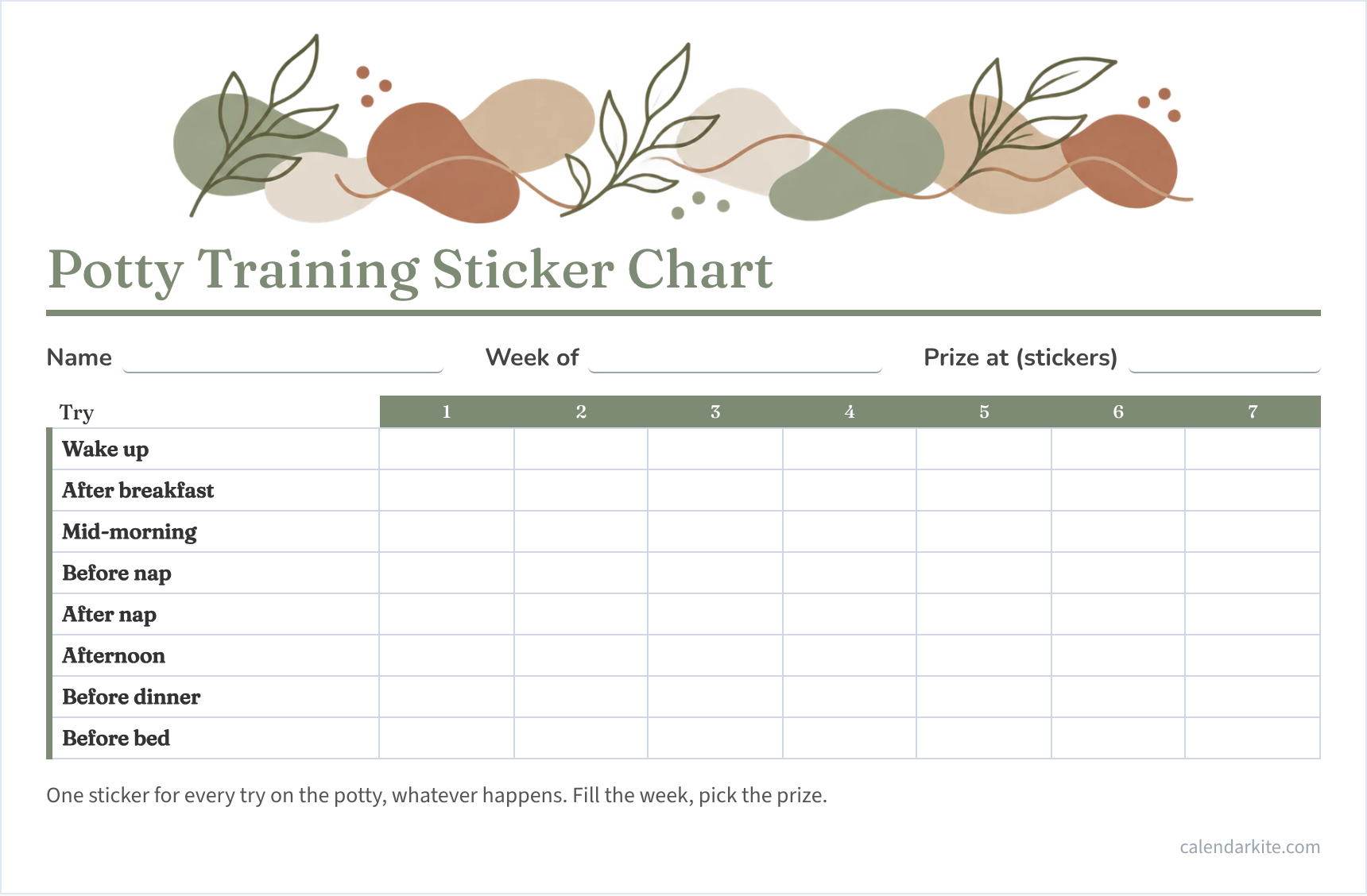
Muted sage, sand and terracotta with soft line-art leaves fit a modern home where the chart will be on show. Hang it on the fridge next to your calendar so every adult in the house remembers to add a sticker.
Modern Potty Training Sticker Chart
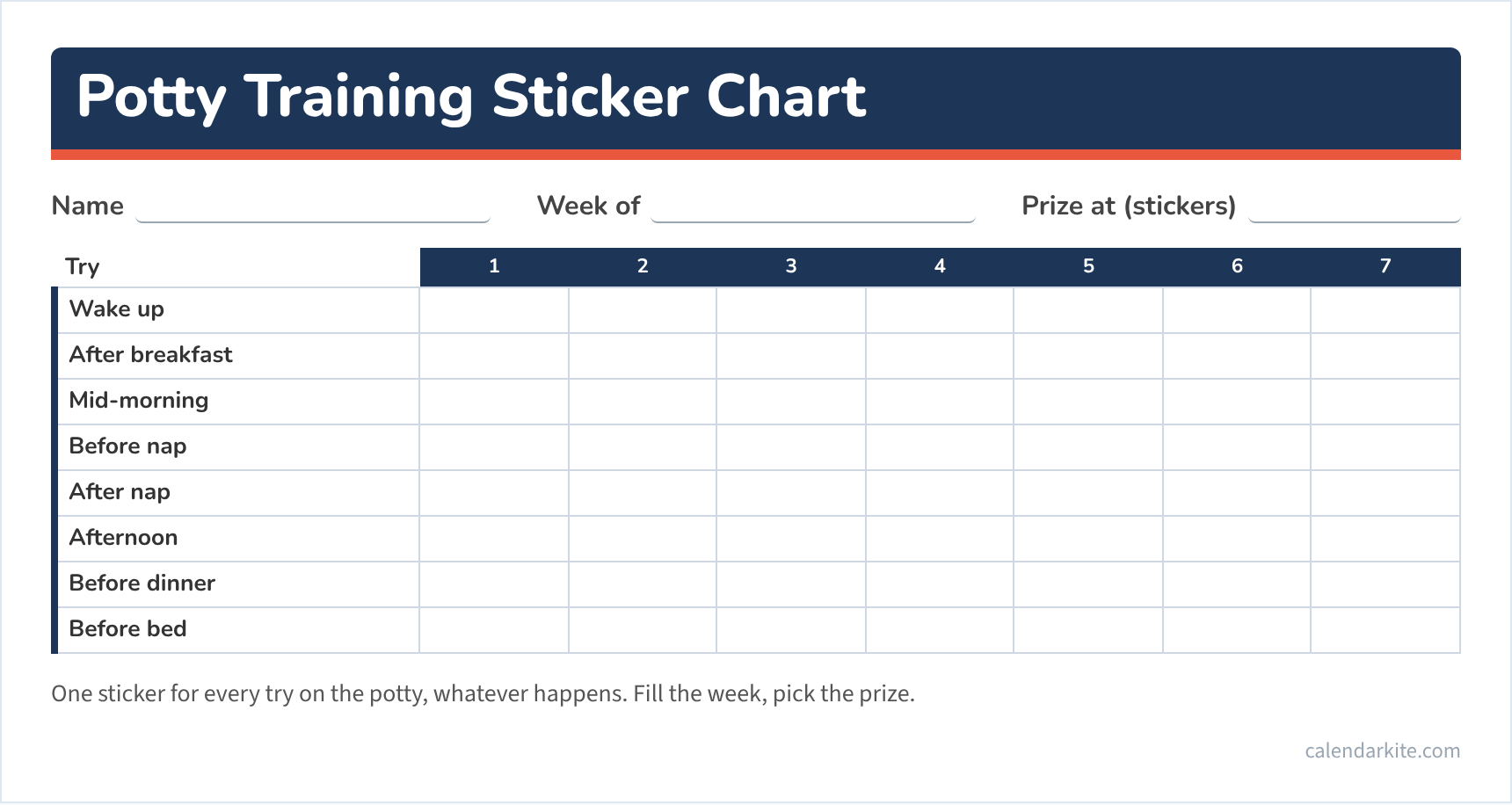
A navy header band with a coral accent gives a clear, modern look that grabs attention across the room. I like it for shared routines, such as a daycare or grandparent's house, where everyone needs to see the same chart.
I built the layout around the way real days go. The rows are tied to moments that already happen (waking up, after breakfast, before nap, before bed), because a try that is attached to a routine is far easier to remember than “every hour or so.” Below you will find how to fill it in, what should earn a sticker, how to handle accidents and nights, and how to stop using it when it has done its job.
What a potty training sticker chart actually does
A sticker chart does three small jobs. It gives your child something concrete to look forward to, it makes the plan visible (“we sit on the potty after breakfast, then we get a sticker”), and it gives you a quick record of how the week is going. That record is surprisingly handy. After a few days you can see that mornings go well and late afternoons are the trouble spot, and you can adjust the schedule instead of guessing.
It is a motivation tool, not a teaching method on its own. Your child still needs a potty or seat they feel safe on, clothes they can pull down, and calm adults who do not make a big deal of mistakes. The chart sits on top of all that. When it works, it turns a slightly scary new skill into a small game with a clear finish line.
In my ten years in office administration, the schedules that got followed were the ones everyone could read at a glance. The same rule applies on a toddler’s chart: if your child cannot tell what to do from the page, it will not get used. That is why this one has big cells, short row labels and plenty of white space.
Signs your child is ready for a potty chart
Stickers cannot create readiness. If your child is not interested or physically ready, a chart usually just becomes one more thing to fight about. There is no exact age, and children vary a lot, so look at behavior rather than the birthday.
Signs that tend to show up before a chart is useful:
- They stay dry for a couple of hours at a time, or wake from a nap dry.
- They tell you (with words, a face or a pause in play) that they are wet, dirty or about to go.
- They can follow a simple two-step instruction, like “sit down, then wipe.”
- They show curiosity about the toilet or want to wear underwear.
- They can walk to the bathroom and help pull clothes up and down.
If you tick most of these, a chart is a good fit. If you tick only one or two, it is fine to wait a few weeks and try again. Starting later often means a shorter, calmer stretch of training than starting early and pushing through resistance. If you are unsure, your child’s pediatrician is a good person to ask.
What is on this printable potty chart
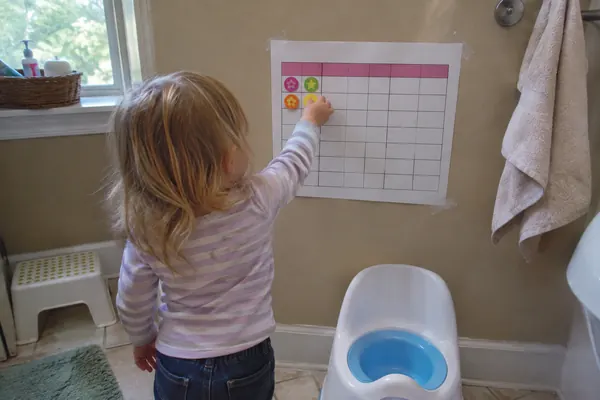
The chart has seven day columns and eight rows. Each row is a typical moment for a potty try: wake up, after breakfast, mid-morning, before nap, after nap, afternoon, before dinner and before bed. Each cell is a single spot for one small round sticker, a star, or a coloured-in dot. At the top there are three lines: your child’s name, the week you start, and the number of stickers needed for the prize.
I test-print every chart on my home inkjet on both US Letter and A4, and I changed this one after seeing how it looked on the page. My first version had twelve rows with no labels, and it looked like a spreadsheet. Eight labelled rows is enough to cover a full day without overwhelming a two-year-old, and you can rename any row to suit your own routine.
Because you can edit the sheet on screen before printing, you can swap “Afternoon” for “After daycare” or “Before outing,” type your child’s name in, and save it in your browser. Print a fresh copy each week so every Monday starts with an empty, hopeful page.
Try this: Before you print, rename two of the rows to match your own day. If you leave for school at 8:15, make one row “Before we leave.” A try that matches a real moment gets remembered.
How to fill in the chart, step by step
Set it up with your child, not for them. Ten minutes of preparation makes the first day go much better.
- Type or write your child’s name and the week’s start date at the top.
- Decide the prize goal together and write the number in the “Prize at” field. Start low, around five to ten stickers.
- Print the sheet and hang it at your child’s eye level, near the bathroom or on the fridge.
- Keep the stickers and a pencil nearby, ideally in a small container on a shelf you can reach.
- After each try, let your child choose a sticker and place it in the right cell. Say what they did: “You sat on the potty. Sticker time.”
- At the end of the day, count the row or column together, then look ahead to tomorrow.
The ceremony of placing the sticker matters as much as the sticker. Make it quick and cheerful. If you are filling in the on-screen version, you can tap the cells to mark each try, then print the page at the end of the week as a keepsake or a record to share with a caregiver.
What earns a sticker
This is the choice that shapes everything else, so decide it before day one. For the first week or two, I recommend one sticker for every try: sitting down, staying a moment, and getting up when you say. Nothing has to come out. You are rewarding the habit of going to the potty, and the results will follow as your child’s body catches on.
Once your child sits willingly, you can narrow the rule. Many parents move to one sticker for any pee or poop in the potty, with a special sticker for the first time a day goes accident-free. Keep the rule short enough for your child to say back to you. “Sticker when we try” or “sticker when pee goes in the potty” is easy to remember. A three-part rule is not.
One mistake I see often is putting too many behaviors on the same chart: handwashing, flushing, wiping, staying dry, telling a grown-up. It is a lot of effort for a small person. Pick one main goal per week and let the rest be routine.
Try this: Write your sticker rule on a sticky note in five words or fewer and say it aloud with your child once before bed. If you cannot say it in five words, simplify it.
Choosing the prize and the goal
The prize is the part that makes the stickers feel worth it, so keep it small, close and varied. A goal that is too far away (a toy after thirty stickers) is meaningless to a toddler who lives in the moment. Start with a goal of about five to ten stickers, and write that number on the chart so your child can see how close they are.
Prizes do not need to cost money. A trip to the park, an extra bedtime story, choosing the evening movie, a bubble bath with favorite toys, or a special snack all work well. A prize that gives your child time or attention with you often beats one that comes from a shop. If you do use small toys, buy a few in advance and keep them out of sight, so the prize is a surprise rather than something your child bargains for.
When your child hits the goal, hand over the prize that same day. Delays break the link between effort and reward. Then raise the goal slightly for the next round, or cut back on how often the prize appears as the habit builds.
Stickers and rewards that work
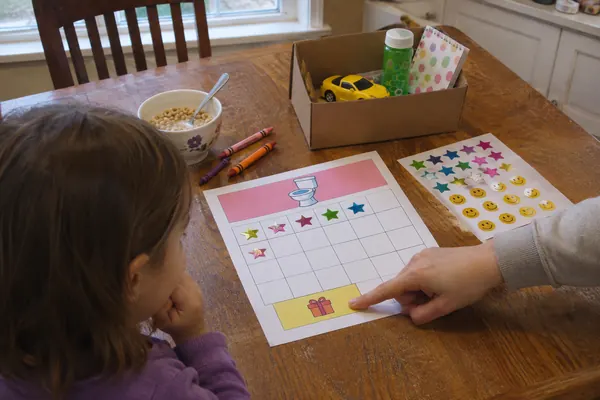
Your child’s favorite stickers are the right ones. Bright dots, stars, animals, trucks, and anything from a favorite show are all fine. What matters more is how you hand them out.
- Keep a limited, special stock that is used only for the potty chart, so the stickers stay exciting.
- Choose small round stickers that fit a single cell, so the chart does not turn into a collage.
- Offer a choice of two or three stickers each time, which gives your child a small feeling of control.
- Keep a bonus sticker, such as a gold star, for bigger wins like a dry afternoon or a first poop in the potty.
- Add praise to the sticker, but keep it low-key and about the effort, not about being “good.”
If your child is not that into stickers, you can still use the chart. Let them colour in the cell with a crayon, stamp it, or draw a smiley face. The grid is about marking progress, and the sticker is just one way of doing that.
What to do about accidents
Accidents are part of the process, and how you react to them matters more than the accident itself. Stay calm, help your child change, and move on. A quick “Oops, pee goes in the potty. Let’s get dry clothes” is plenty. Skip the lecture and the sighs, because children pick up on disappointment very quickly.
Do not remove stickers or cross out cells after an accident. The chart should only ever show good things. If a day went badly, leave the cells empty and let the next one start fresh. A chart full of blanks is not a failure, it is information about which times of day need extra help, such as a reminder just before a favorite show or before leaving the house.
If accidents become frequent or your child starts to resist the potty entirely, take a break for a week or two. Going back to diapers or pull-ups for a short while does not undo progress. When you start again, you can reprint a clean chart and begin at “one sticker for every try.”
Poop, pee and the harder tries
Many children master peeing in the potty long before they are comfortable pooping there. Some hold it, hide to do it, or ask for a diaper at the same time every day. This is common, and it usually passes with patience. A sticker chart can help, but only if the goal is realistic.
If poop is the sticking point, use your chart for tries at the usual time, often after a meal, and give a bonus sticker or a small extra prize for a poop in the potty. Keep a footstool under their feet so their knees sit above their hips, and offer a book or a quiet song to help them relax. Never insist that your child sit for long. A few minutes is plenty.
Boys and girls can use the same chart. If you have a boy, some families have him sit for both at first and move to standing later. The chart does not need to change, only the technique. If constipation is a pattern or poops seem painful, check in with your pediatrician before pushing further.
Sharing the chart with daycare and other caregivers
Children learn best when every adult follows the same approach. If your child spends part of the week with a grandparent, a nanny or at daycare, print an extra copy and explain the rule in a sentence or two. Tell them what earns a sticker, which stickers to use, and that stickers are never taken away.
Where it is hard to use the sticker sheet at daycare, ask caregivers to send home a short note about how many tries happened and mark the stickers together when you pick up. Or keep it simple and let the child place the stickers on the chart when they get home. A small notebook or a communication log tucked in a bag can help you pass these details back and forth without long conversations at drop-off.
I learned in the office that handoffs fail when information is vague. “How did the day go?” gets a shrug, while “two tries after nap, one pee” gives you something to work with. The same is true here. A line or two on the day and a filled cell or two on the chart tell the story.
Naps, nights and dry pants
Daytime and nighttime dryness are different skills. Daytime training depends on awareness and habit, while staying dry overnight depends on a child’s body producing less urine at night and waking when the bladder is full. That part is not something a sticker chart can speed up, and many children stay in night-time protection for months or years after they are dry during the day.
So keep nights off this chart. If you want to track them, use a separate small sheet for dry mornings, or just keep a simple note. Make sure your child never feels that a wet bed is a failure. A sleep log can be helpful if you want to notice patterns in wake-ups and bedtimes without turning it into a rewards system.
Naps sit somewhere in the middle. The “before nap” and “after nap” rows on this chart cover the tries around sleep, and I would start by rewarding those tries, not whether the nap itself was dry. Once naps are reliably dry, you can move to underwear for naps as well.
When to stop using the chart
A chart is a temporary scaffold, so plan to take it down. When your child is using the potty regularly, rarely has accidents and has stopped asking for stickers, you can start fading. Do it in stages rather than all at once, which can feel like the rules changed overnight.
A simple fading plan looks like this: first, keep the stickers but drop the prize. Next, use the chart for only two or three rows a day, such as the first try in the morning and the one before bed. Then move to a sticker only for something special, like a trip out without any accidents. After a week or two, ask your child if they want to retire the chart and have a “graduation” celebration, maybe a family dinner or a visit to the playground.
If your child slips back after a change, such as a new sibling, a move or illness, you can bring the chart out again for a week. That is not a step backwards. It is a reminder that routines take support when life gets disrupted.
Try this: When your child has a full week of stickers, put the chart in a folder with the date and a few words about how it went. It is a sweet keepsake, and it helps if you ever need to start again with a younger sibling.
Printing tips
The chart is designed to fit on one US Letter page and prints cleanly on A4 using the “fit to page” option. Use standard printer paper for a trial week, then try a heavier paper or card stock if stickers tend to peel the page. A matte paper takes stickers better than glossy, and ordinary printer ink is fine because the page is light and mostly white.
Print one copy at a time unless you have a few kids or caregivers who need their own. For the fridge, a magnet works well, but at low heights a clear plastic sleeve or a piece of low-tack tape keeps it from sliding off. If your child likes to pull it down, laminate it or slip it into a sleeve and use dry-erase markers or removable stickers on top.
Check the first print to make sure the cells are big enough for your child’s stickers. Smaller round dots work best. If you want a larger sticker, print the page at full size and leave out a row or two by deleting the labels before you print.
Variations to try
The same grid can be adjusted to fit different children and stages. Here are a few ways I would change it:
- Fewer rows: Delete a few row labels for a child who only needs a couple of reminder times a day.
- Mornings only: Use the first three rows as a morning routine, and leave the rest blank until the child is ready.
- Two children: Print two copies with different names and goals so each child gets their own chart and progress.
- Reward coupons: Write the prizes on small slips, such as “extra story” or “choose a snack,” and let your child pick one after each full week.
- Visual steps: Add a small set of pictures next to the chart showing the potty steps: pants down, sit, wipe, flush, wash hands.
Other printables on the site can help with the rest of your child’s routines. The charts section has more simple grids for kids, and you can take a look at the habit tracker if you want a similar layout for other daily habits.
Pairing the chart with your other routines
Potty training works best when it fits into a predictable day. A picture-based morning routine chart can include a “potty” step, so the first try of the day happens along with getting dressed and eating breakfast. Once toilet habits are settled, a chore chart for preschoolers is a gentle next step, giving your child another small job to take pride in.
On my own fridge there is a paper calendar for the family, and a chart like this would hang right beside it, low enough for small hands. It helps to look at the week as a whole. If you know that Tuesday has an appointment and Thursday is a long errand day, you can plan extra tries around those and not be caught off guard. A weekly calendar lets you see where those busier times fall.
Above all, keep the chart light. Your child will learn at their own pace, and the sticker sheet is there to make the process feel like a win. Print a clean page, pick a prize, and celebrate every small success along the way.
Common questions
How many stickers should a child earn before getting a prize?
Start small. Five to ten stickers is a good first goal for a toddler, and some children do better with a small prize after every three or four. Once the habit settles, stretch the goal a little each week.
Should I take stickers away after an accident?
No. Taking stickers back turns the chart into a punishment and can make a child nervous about the potty. Keep the stickers they earned, stay calm, and put a fresh sticker on the next try.
What age is best for a potty training sticker chart?
There is no single right age. Many children show readiness somewhere between about 18 months and 3 years, and the chart works best once your child understands what the potty is for and can follow a simple 'sticker for a try' rule.
Do I give a sticker for trying or only for success?
At the start, give one for every try, even if nothing comes out. Sitting down and cooperating is the habit you are building. Later you can shift to stickers for pee or poop in the potty.
How long should I keep using the chart?
Most families use it for a few weeks, until potty trips are routine and your child stops asking for stickers. Fade it out slowly by skipping the prize first, then using the chart for only one or two tries a day.
Can I use the same chart for nighttime dryness?
It is better to keep nights separate. Night dryness depends on body maturity more than effort, so a daytime sticker chart should not be tied to dry mornings.
More free charts
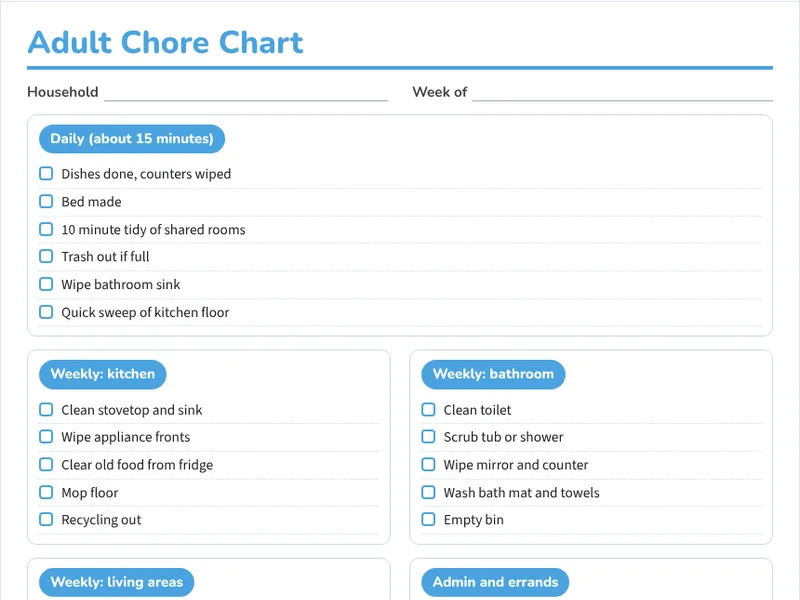 Chore Chart for Adults: Free Printable Weekly Chart
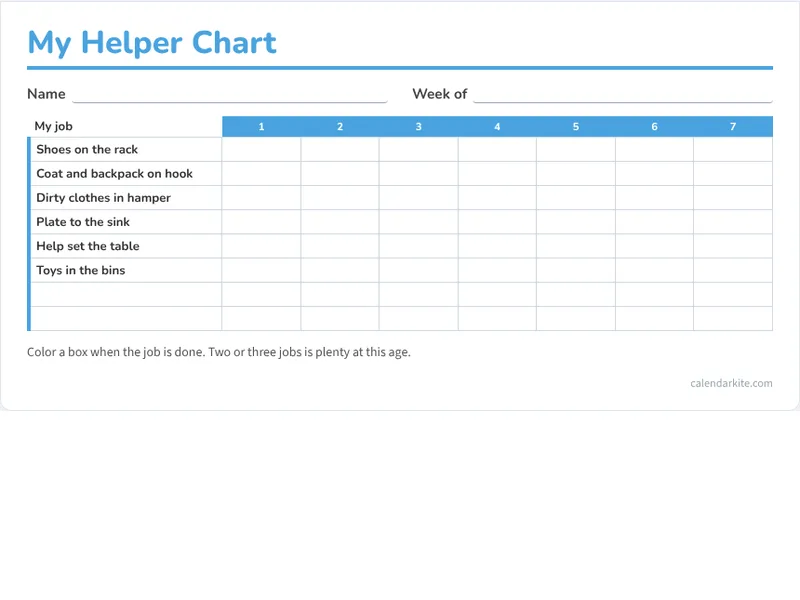 Chore Chart for Kindergarteners: Free Printable Weekly Sheet
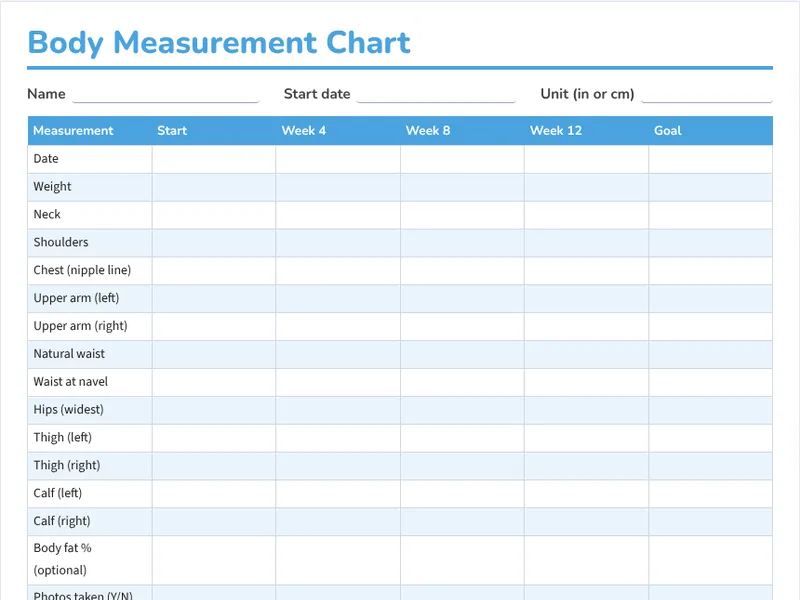 Body Measurement Chart: Free Printable 12 Week Tracker
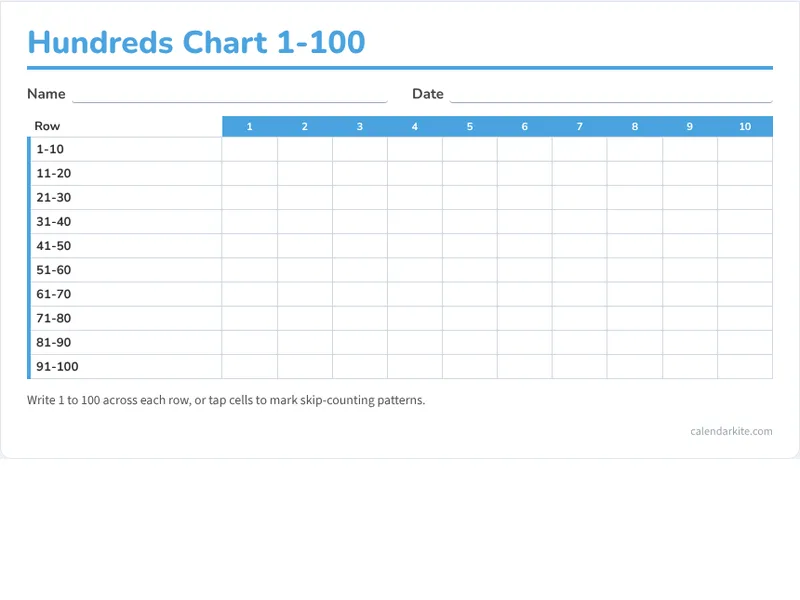 Hundreds Chart Printable: Free 1-100 Chart to Fill In and Print
 T Chart Example (Free Printable T Chart With Scoring)
 Weekly Chore Chart (Free Printable, Fill In Online)