
Attendance Chart: Free Printable for Class, Club or Team

An attendance chart is a grid that lists names down the side and dates across the top, so you can mark who was there on each day and see the whole month at a glance. The free printable on this page is a one-page monthly version with room for 15 names and 23 date columns, which covers the school days in any month. You can type into it on screen, tap the cells to mark them, and print it, or download a blank PDF and use a pen.
| Name | 1 | 2 | 3 | 4 | 5 | 6 | 7 | 8 | 9 | 10 | 11 | 12 | 13 | 14 | 15 | 16 | 17 | 18 | 19 | 20 | 21 | 22 | 23 |
|---|---|---|---|---|---|---|---|---|---|---|---|---|---|---|---|---|---|---|---|---|---|---|---|
Write the date above each column. Key: P present, A absent, T tardy, E excused.
Free for personal, classroom and office use. Your entries are included in the print, PDF and PNG. Prints on US Letter and fits A4.
Black and White Attendance Chart Printable
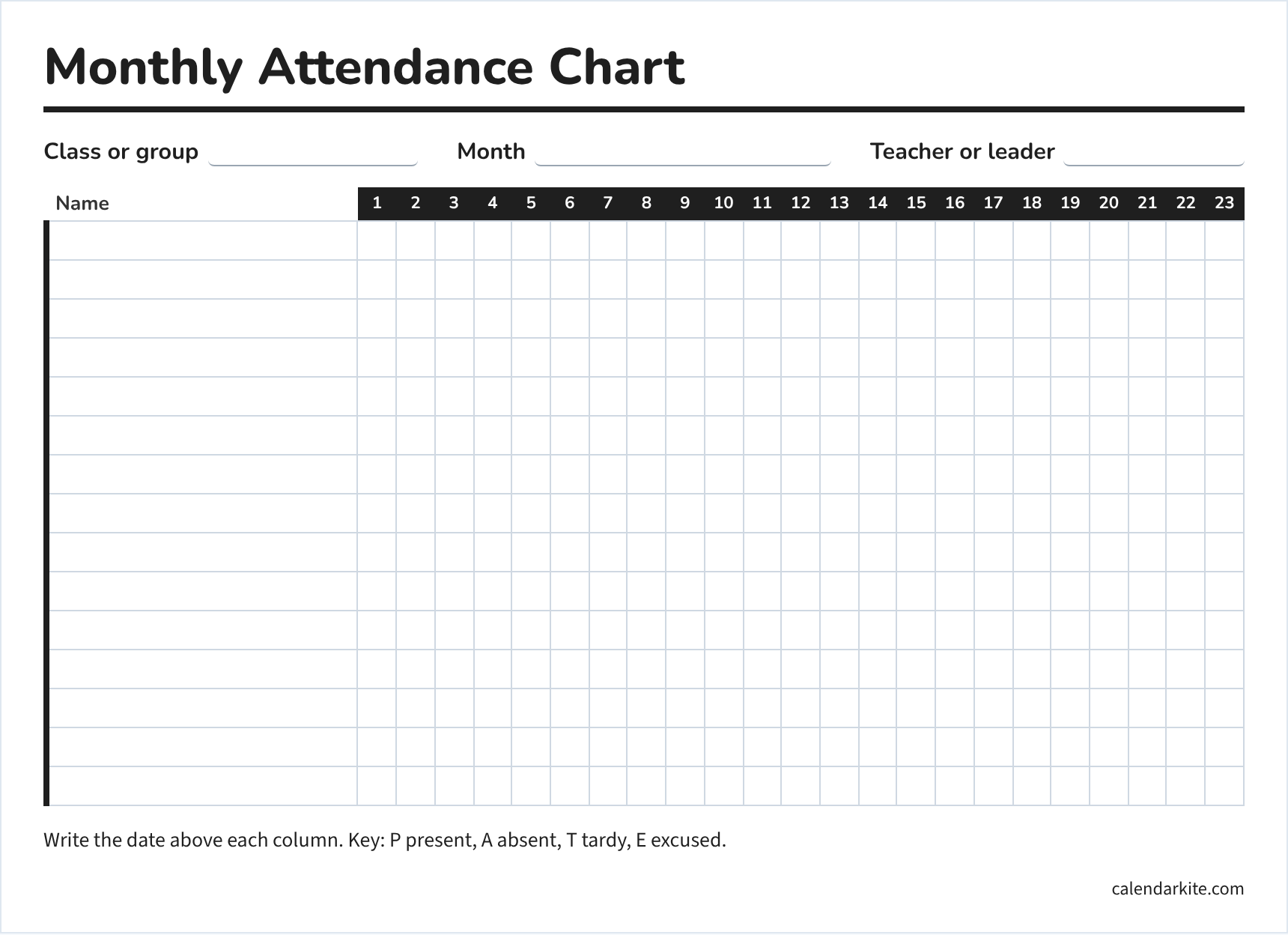
This is my go-to when I need a lot of copies, since plain black lines save ink and photocopy cleanly. In my office years I printed rotas like this by the stack, and it still works well for staff meetings or classes.
Pink Attendance Chart
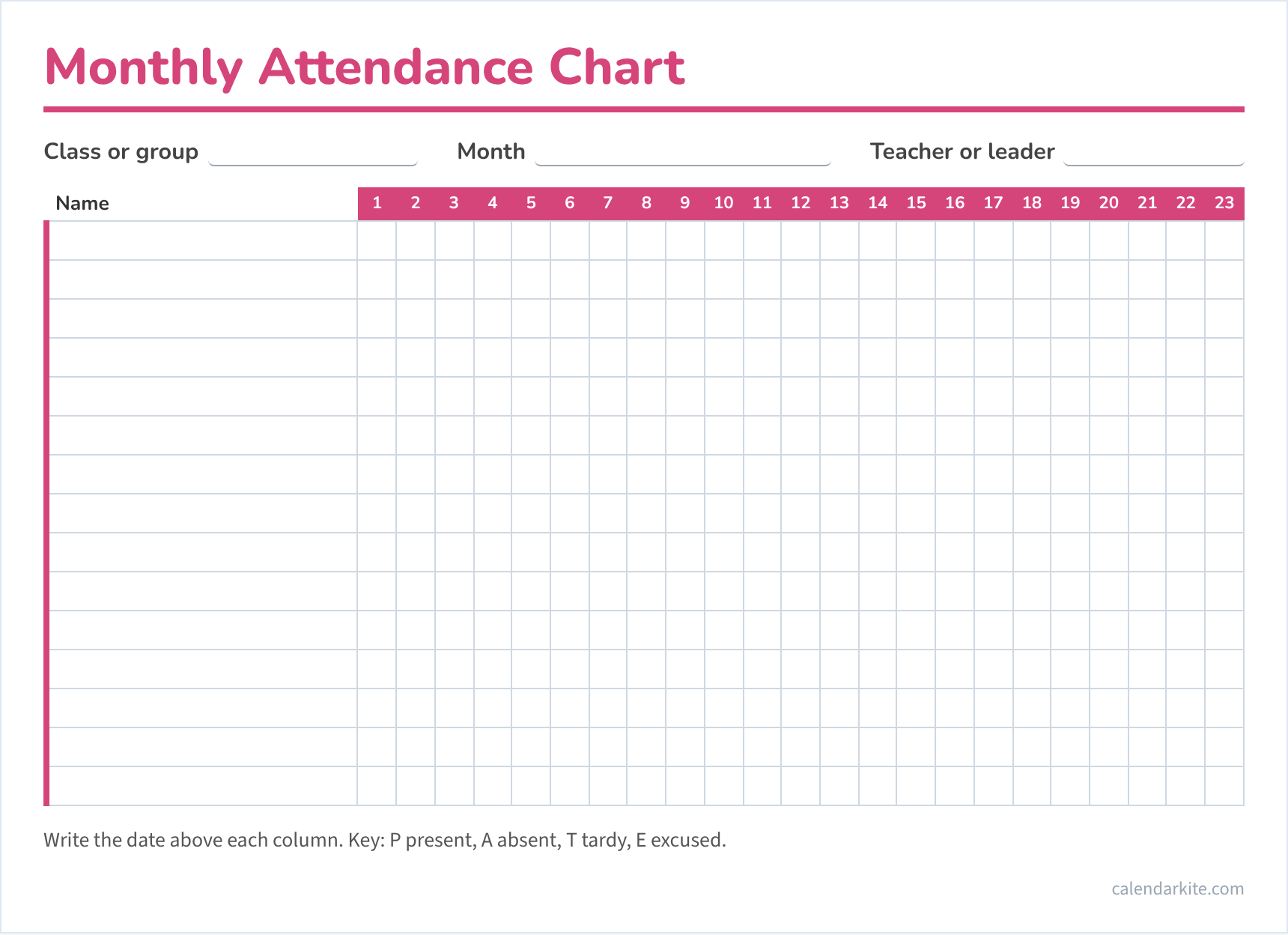
I'd pick this soft pink version for a dance class, a tutoring group or a clubhouse sign-in where you want something friendly on the wall. I test-printed it on my home inkjet, and the pale tint stays readable without eating much ink.
Sage Green Attendance Chart
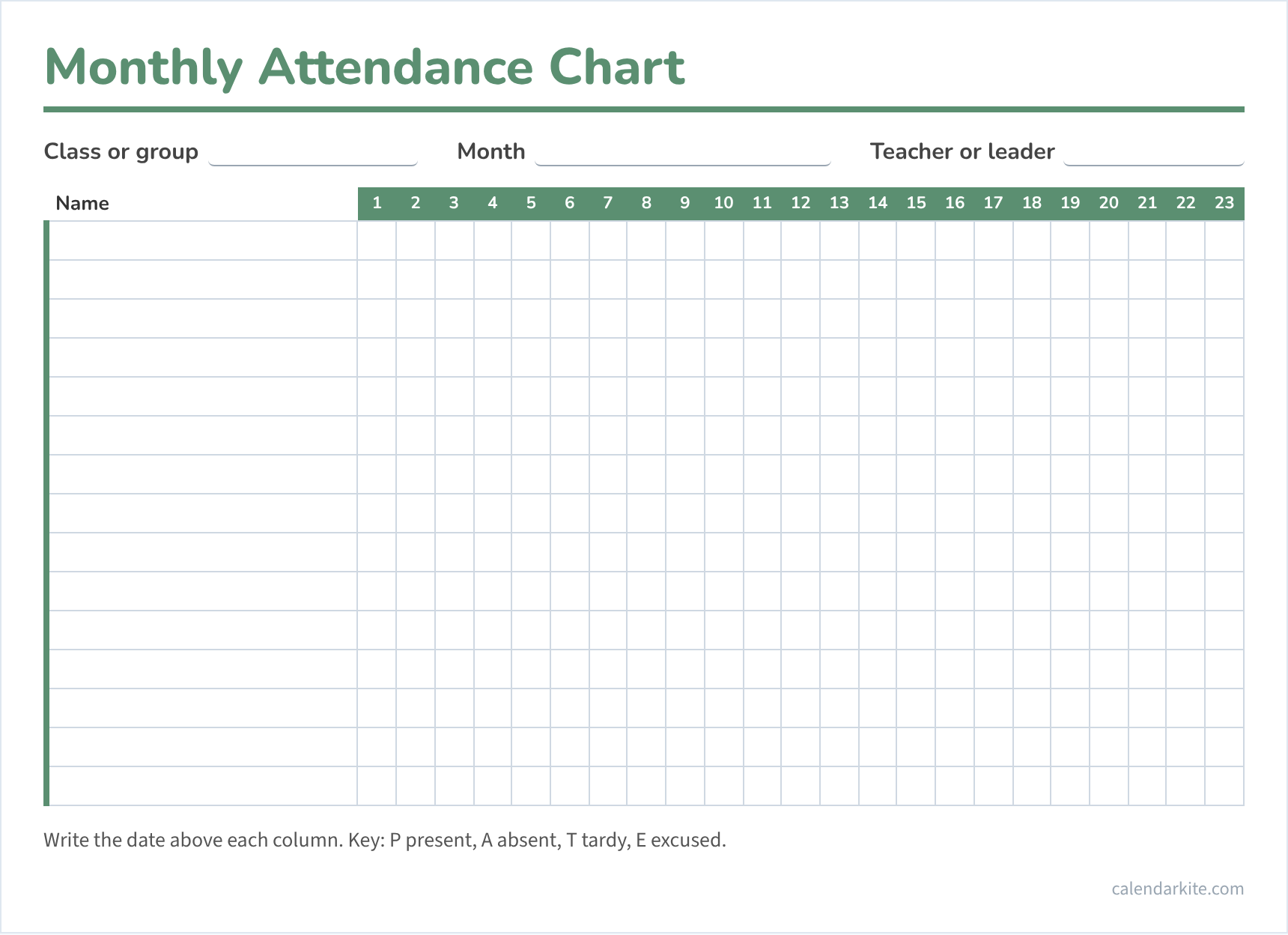
Sage green is calm and works nicely for a yoga studio, book club or small church group tracking who showed up each week. I keep the check boxes roomy because I learned in the office that cramped squares get messy fast.
Lavender Attendance Chart
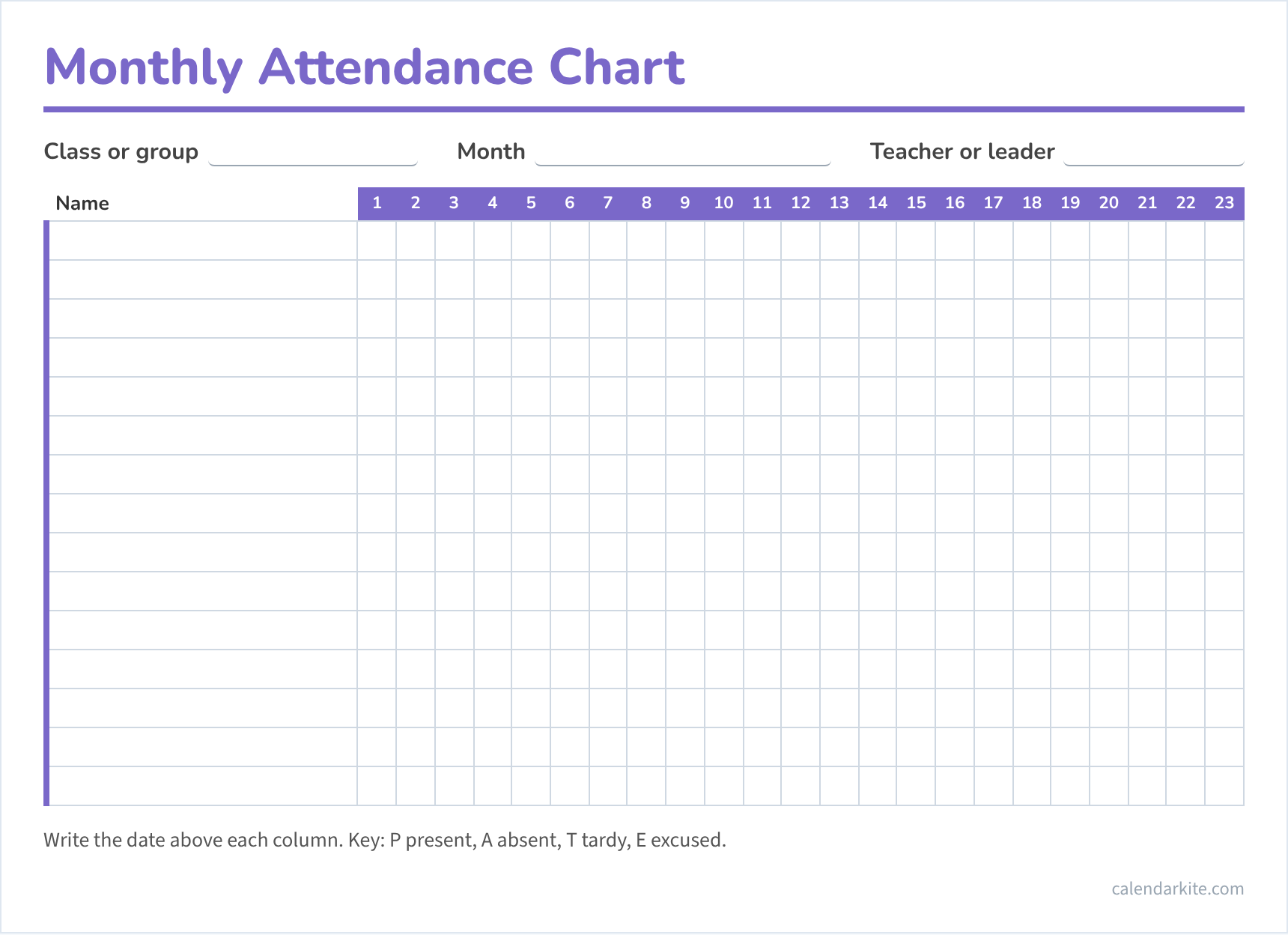
I like this lavender design for a homeschool co-op or a weekly workshop where you want a little color without it feeling childish. Pin it by the door and tick names off as people arrive, then total each column on Friday.
Cute Attendance Chart
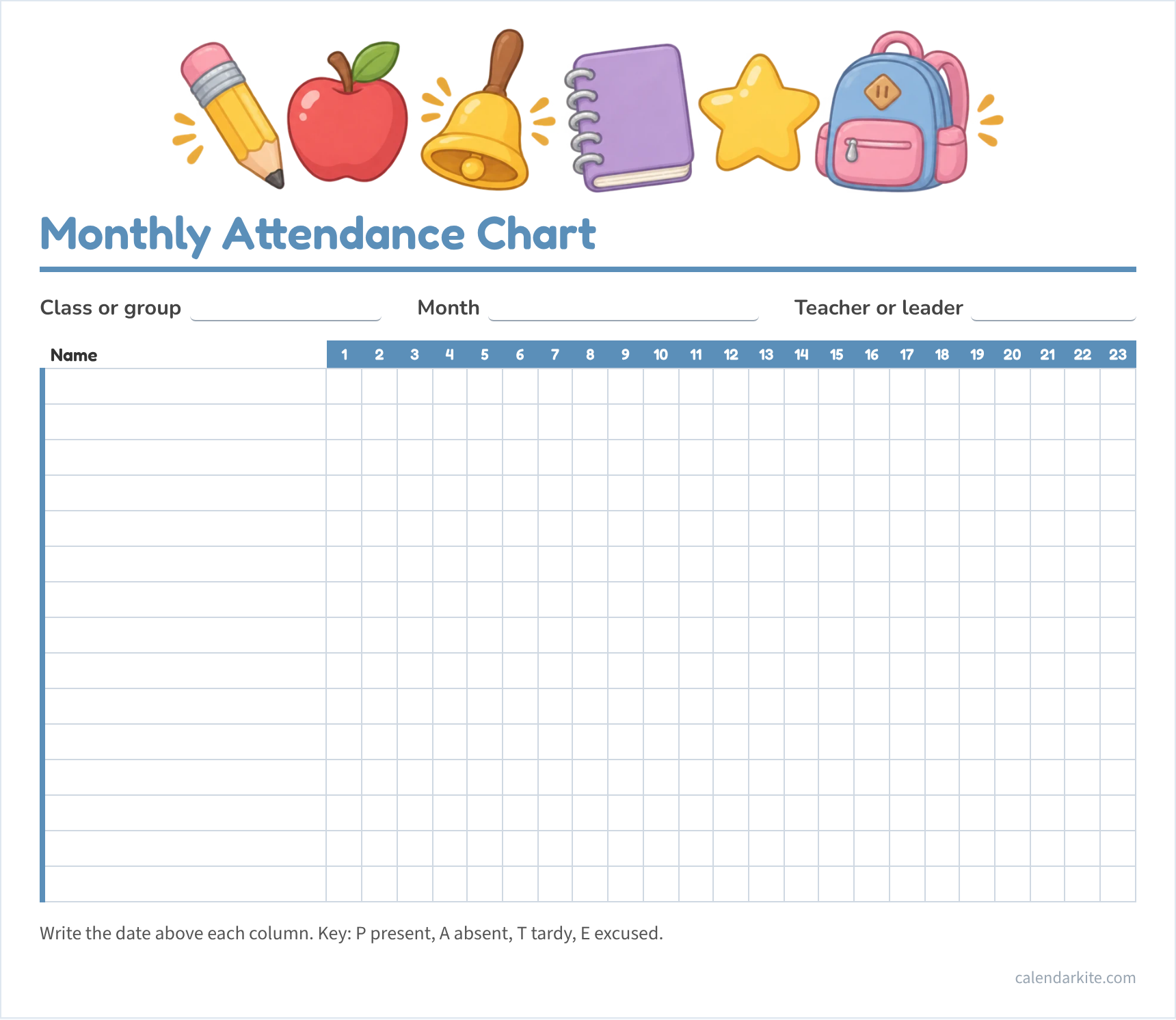
This pastel blue version with hand-drawn style illustrations at the top suits a classroom, preschool or playgroup wall. I'd print it on US Letter or A4 and let children add their own sticker each day they attend.
Floral Attendance Chart Printable
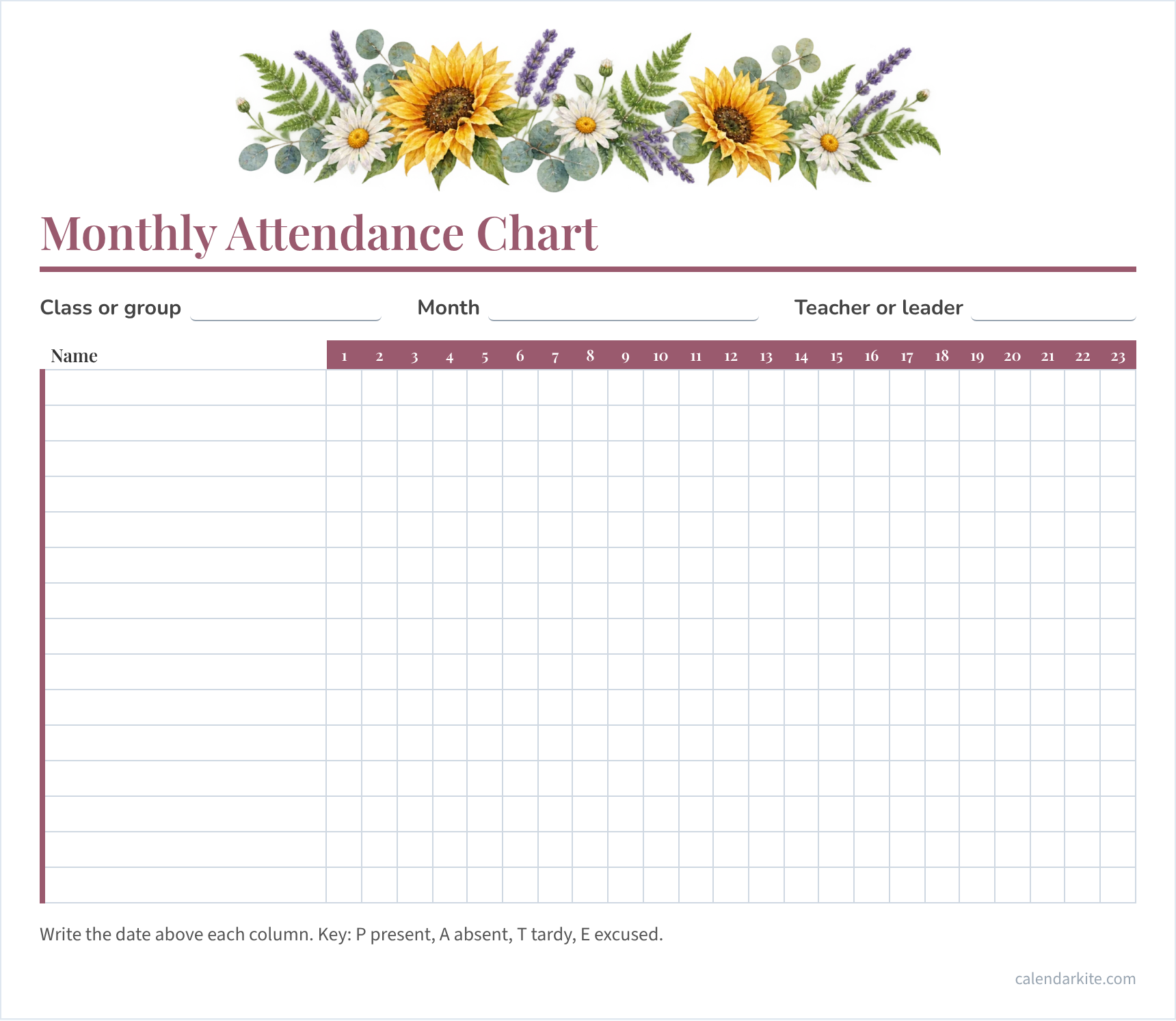
The watercolor flowers and mauve serif headings make this a lovely choice for a women's group, garden club or ladies' bible study sign-in. I'd print it on slightly heavier paper, since sheets that get handled every week wear out quickly.
Colorful Attendance Chart
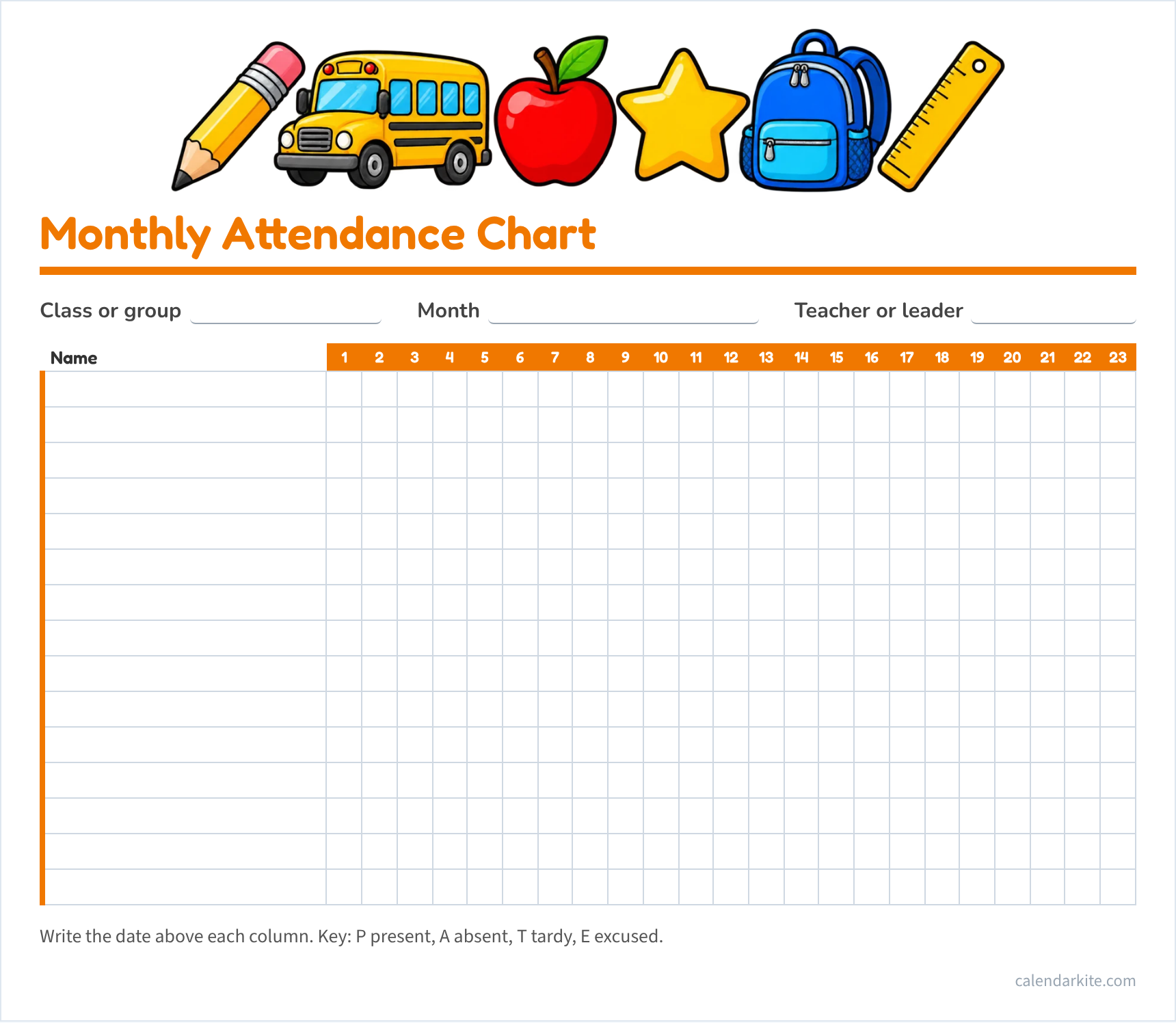
Bright orange and yellow with bold cartoon pictures make this a good fit for a Sunday school, after-school club or youth sports team. At home I'd stick it on the fridge next to my paper calendar so everyone sees the streak.
Simple Minimalist Attendance Chart
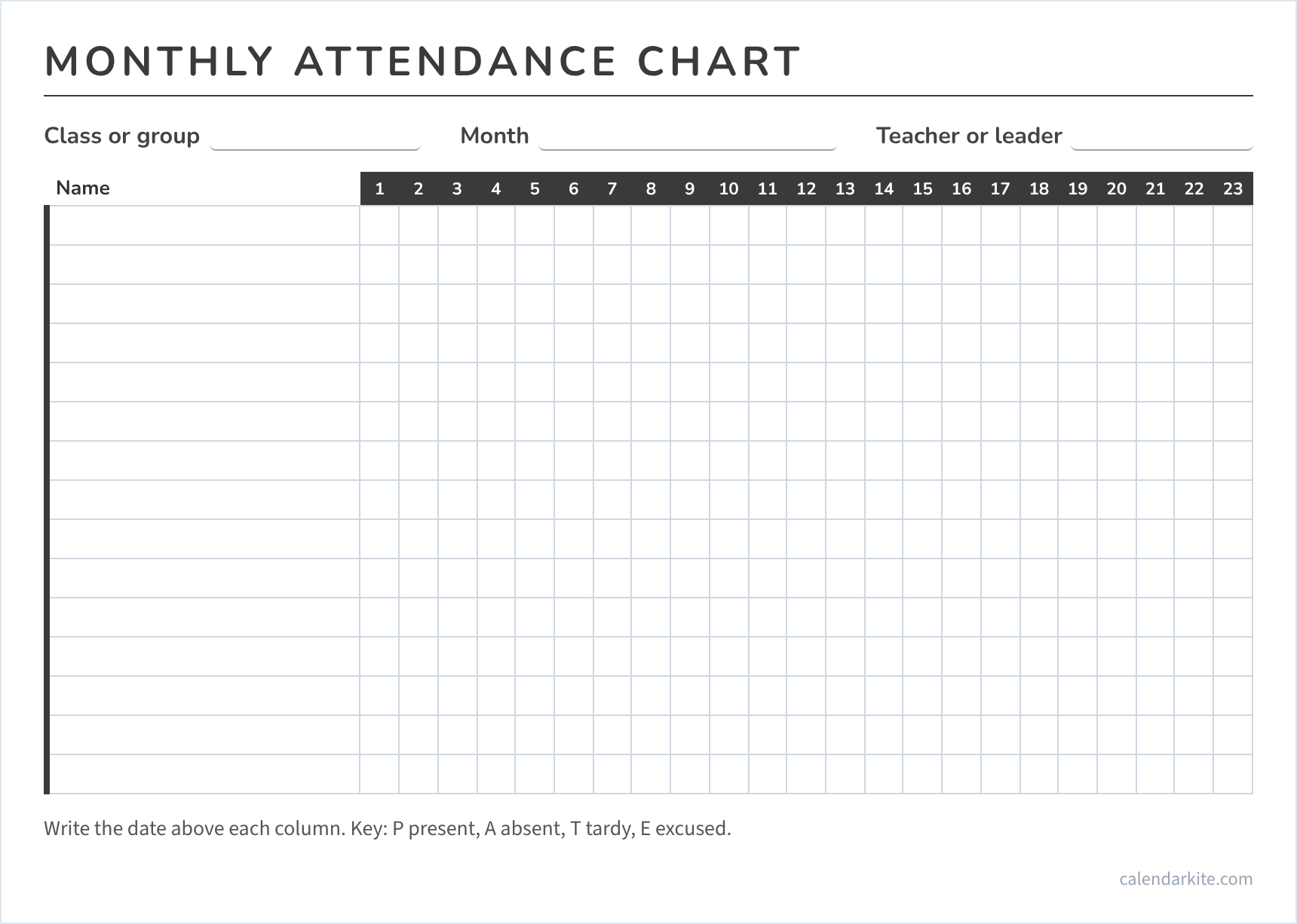
Thin gray lines and a light uppercase heading keep this one quiet, which suits offices, workshops and anyone who wants a clean record. I cut the extra decoration so names and dates stay the focus, the way I'd want a rota to look.
Aesthetic Attendance Chart
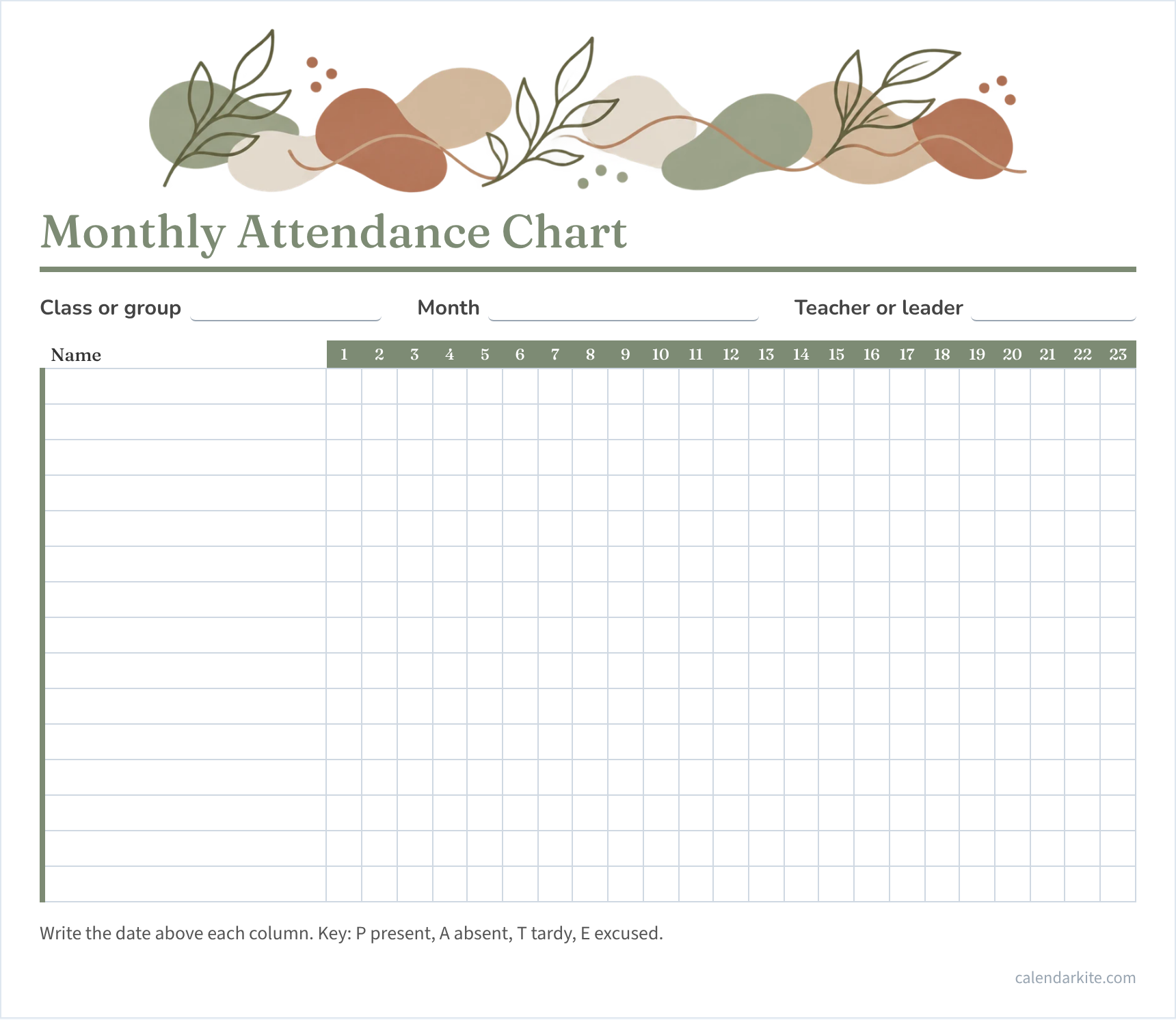
Muted sage, sand and terracotta with soft line-art leaves suit a studio, boutique team or homeschool corner that you want to look styled. It slips easily into a binder or onto a clipboard, and the soft colors keep names easy to read.
Modern Attendance Chart Printable
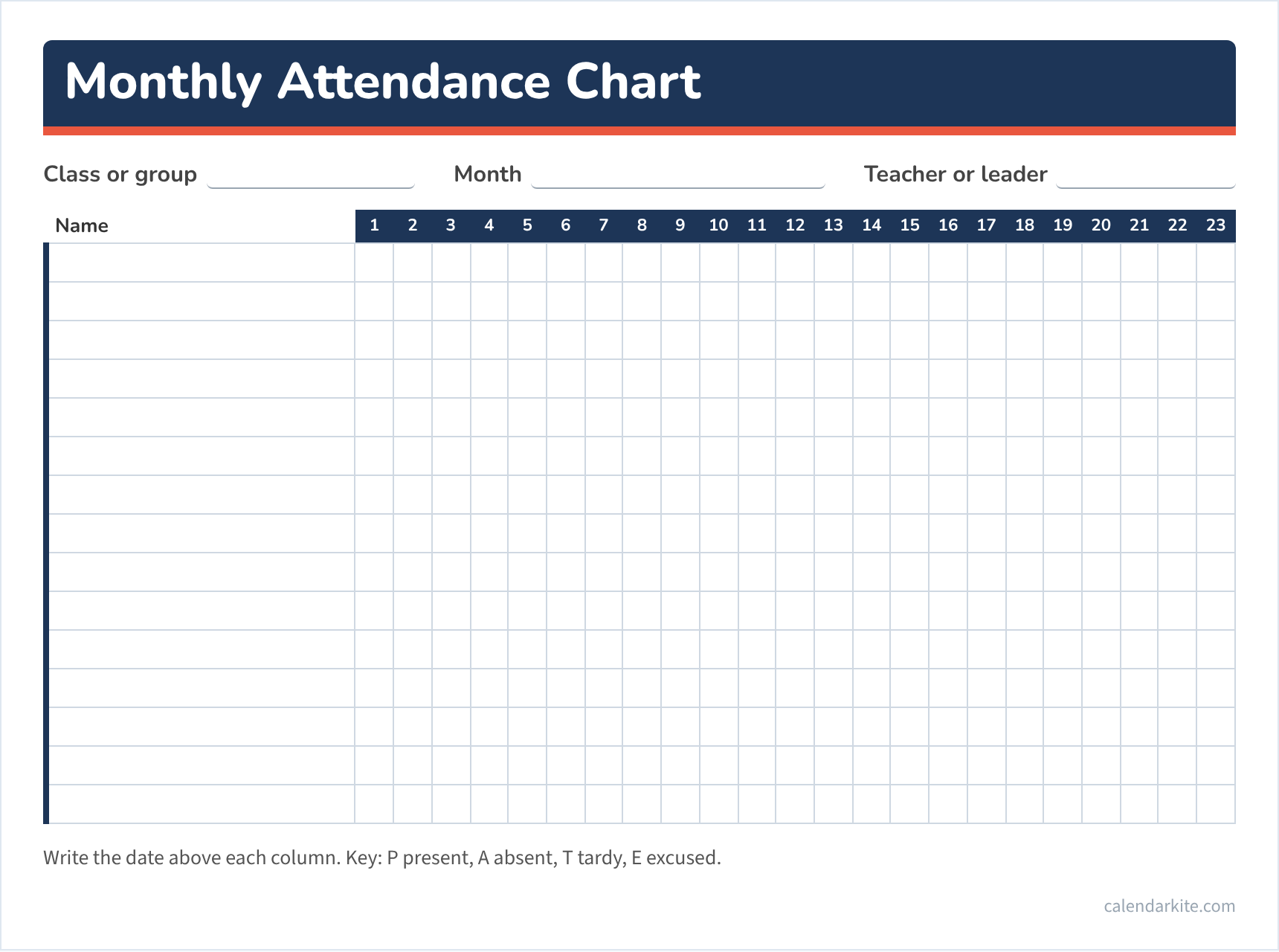
The navy header band and coral accent give this a modern, businesslike look for team meetings, training days or volunteer shifts. A mistake I saw often in offices was an unlabeled sign-in sheet, so I'd write the date and session in the header first.
I spent about ten years in office administration, and a lot of that time was spent keeping rotas and sign-in records readable. The attendance sheets that worked were never the fanciest ones. They were the ones where the rows were tall enough to write in, the key was printed on the page, and anyone could pick up the sheet and understand it in five seconds. That is what I built this one to do.
What an attendance chart records
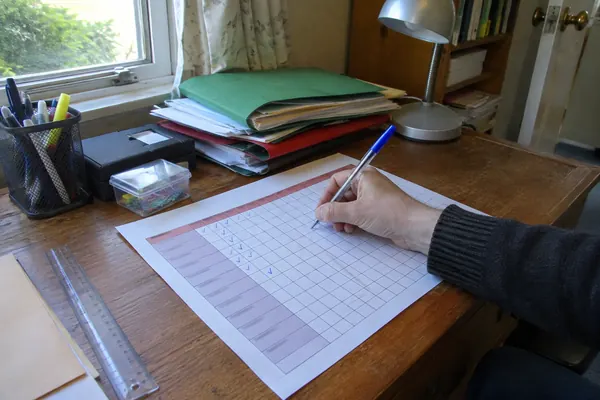
At its simplest, an attendance chart answers one question: who was here, and on which day? Each row belongs to one person and each column belongs to one date, so every cell is a single fact. Over a month the cells add up to a pattern, and that pattern is what makes the chart more useful than a simple roll call on a scrap of paper.
Most charts record more than present or absent. You may want to know who arrived late, who left early, and who had an excused absence such as a medical appointment. Keeping those separate matters, because an excused absence and an unexplained one are treated very differently by schools, employers and funders.
The chart is also a record you can hand to someone else. A teacher can give it to a substitute, a club leader can pass it to a treasurer, and a parent running a homeschool co-op can use it to show who attended which sessions. Because it sits on one page, nothing gets lost between folders.
How this attendance chart is laid out
The sheet has a header with three fill-in fields: class or group, month, and teacher or leader. Below that is a wide name column, then 23 narrow date columns, then 15 rows. The name column is wider than you might expect on purpose. In my test prints, a narrow name column forced people to squeeze in surnames and initials, and the sheet got messy by the second week.
I chose 23 columns because a month has at most 23 weekdays. That means you can write one school day per column and skip weekends entirely, instead of leaving a column of blank cells every seventh day. If your group meets only once a week, you will use four or five columns and can leave the rest as spare for make-up sessions.
The cells are sized so a pen mark or a single letter fits easily without touching the lines. I print each one on my home inkjet on US Letter and A4 before it goes live, to check that the grid lines stay crisp and that nothing runs off the edge of the page.
How to fill it in
Start with the header. Type or write the class or group name, the month, and the name of the person responsible for the record. Then enter the names in the left column. If you are filling it in on screen, you can type directly into each name line and the sheet saves in your browser, so you do not have to start again each time you open the page.
Next, write the date above each column. I put the weekday and the date number together, for example “Mon 4”, so a glance at the top tells me which column I am in. Skipped days such as holidays are easy to spot if you write “No school” down the empty column in light pencil.
Each day, tap the cell to mark it on screen, or make a mark with your pen once you have printed the sheet. Do it at the same moment each day, ideally right after the register is taken. Filling the chart in at the end of the week from memory is the most common reason records go wrong.
Try this: Before you print, fill in the first five names and the dates for the first week. Look at the sheet from arm’s length. If you cannot read a date or a name quickly, change how you write it now, not after a month of entries.
Choose your marks before day one
The key you use matters more than the layout. Pick your marks once, write them at the bottom of the page, and never change them partway through the month. A key that shifts is how a clear record turns into a guessing game.
A simple set that works for most groups:
- P or a tick for present
- A for absent
- T for tardy (arrived late)
- E for excused absence
- L for left early
If you want fewer marks, a plain tick for present and a circle around the empty cell for absent is enough. I keep to letters for anything that will be shared with other people, because a tick on a printed page can look like a smudge, and a letter reads clearly even in a photocopy.
Decide, too, what counts as tardy. In an office, I always wrote the cut-off time at the top of the sheet, such as “late after 8:30”. It prevents arguments and it means two different people record the same arrival the same way.
Who an attendance chart suits
The most obvious users are teachers, but a monthly attendance chart works anywhere a group meets regularly and somebody needs a record. The layout does not change; only the names and the key do.
It suits:
- classroom teachers and tutors
- homeschool parents and co-op leaders
- daycare and after-school program staff
- Sunday school, scouts, choir and club leaders
- sports coaches and dance instructors
- small business owners tracking staff days
- volunteer coordinators
If your group is bigger than 15, print a second sheet and continue the list, rather than trying to shrink the rows. If your group is smaller, leave the extra rows blank. They come in handy when a new student or member joins mid-month.
Setting up a class or group list
Spend five minutes on the list before you start marking. Enter names in the same order every time, either alphabetical by surname or in the order they appear on your official roll. A consistent order means you can run your finger down the column during roll call and never skip someone.
I like to leave one blank row at the very bottom for the person who turns up unannounced on day three. Adding a name to a full chart in the margin looks untidy, and untidy records get misread. Another useful habit is to write nicknames or preferred names in brackets next to formal ones, so a substitute does not call out the wrong name.
If you take attendance for several groups, give each month its own sheet and file them in order. A single folder per group, with the sheets stacked by month, makes it very easy to total up the term.
Working out attendance percentages
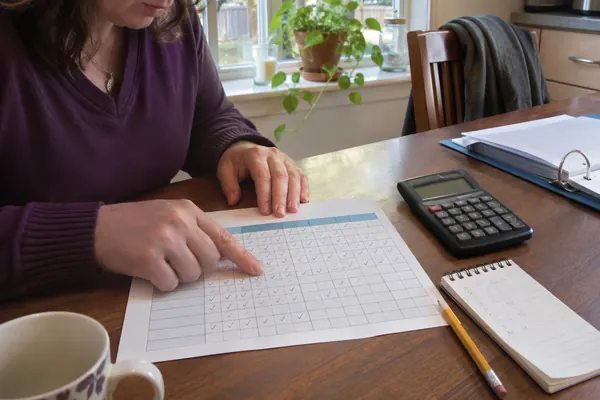
Once the month is done, count each person’s present days and compare them with the days available. The formula is days attended divided by days possible, multiplied by 100. If a student was present on 18 of 20 school days, the rate is 90 percent.
Decide beforehand how you count tardy and early-leave days. Most teachers count a tardy day as present, since the person did attend, and log the lateness separately. Others count three tardies as one absence. There is no single right answer, but there must be one rule, and it should be written somewhere you can find it.
I keep the totals in the right-hand margin of the printed sheet, in pencil, with three small numbers per person: days present, days absent, days late. It takes about two minutes per sheet, and it saves me from recounting when someone asks for a summary later.
Try this: At the end of the month, add a “Present / Absent / Late” total beside each name in the right margin. Then circle any name with three or more absences so you can follow up that week.
Spotting patterns
An attendance chart is more than a record. Read down a column and you can see which days are weak, such as the Monday after a long weekend or the afternoon before a holiday. Read across a row and you can see whether one person has been missing every Friday.
In an office, spotting these patterns early was usually the difference between a quick, kind conversation and an awkward one three months later. A single absence tells you very little. Three absences on the same weekday tells you something worth asking about, and you can ask about it with real dates in front of you.
For children and teens, the chart can help you notice when someone is starting to disengage, falls ill repeatedly, or has a transport problem. The point is to be curious, not to build a case. If you spot a pattern, a short note beside the sheet or an entry in a communication log helps you remember what you said and when.
Weekly, monthly and yearly versions
The sheet on this page is monthly, which is the version I find most practical. It fits on one page, it is small enough to keep in a clipboard, and it gives you a natural point each month to total and file the results.
A weekly chart suits groups with only a handful of sessions or programs where details change every day, such as daycare, where you may want arrival and pick-up times as well. A yearly chart suits homeschoolers who need to show a total number of instructional days, because it lets you shade each day on a single sheet. If you prefer to see attendance against dates on a real calendar, a printable monthly calendar works well beside the chart, with absences circled.
You can also turn the chart sideways. Put dates down the left and names across the top when you have only a handful of people but a long run of sessions. The data is the same; the layout simply fits your group better.
Attendance chart or sign-in sheet?
These two are often mixed up. A sign-in sheet is filled in by the people attending, each person writing their own name and arrival time on arrival. An attendance chart is filled in by the person in charge, who marks each name on a pre-written list.
Use a sign-in sheet when you do not know in advance who will come: drop-in events, open houses, one-off workshops or visitors. Use a chart when you have a fixed list and want to see patterns across weeks. If you need a sheet where people add their own names, such as for a volunteer shift or a class event, a sign-up sheet template is a better fit.
Some groups use both. A sign-in sheet at the door captures who came and when, and the leader copies the results onto the monthly chart afterwards. It is a little extra work, but it gives you both a signed record and a tidy summary.
Homeschool, daycare and club notes
Homeschool families often need to show a number of instructional days or hours, and the rules vary from state to state, so check what yours requires before deciding what to record. With one chart per child, or one chart for siblings with a column for each day, you have a clear record at a glance. If you are building a whole year around a calendar, my homeschool calendar pairs well with these monthly sheets.
Daycare and after-school programs usually need more detail than a tick. Consider adding arrival and pick-up times in the margin of the printed sheet, or writing them beside the mark. Always check with your licensing body, since some programs have specific forms they must use.
For clubs, choirs and sports teams, the chart can be much simpler. Write the practice dates across the top, mark who came, and use the totals to see who is committed and who needs a nudge. Coaches in particular find it helpful to have a printed copy in the kit bag, rather than relying on a phone that may be at 4 percent battery.
Employee and meeting attendance
For small businesses, an attendance chart can record who worked on which day, including sick days, annual leave and public holidays. Add letters to your key such as S for sick and V for vacation. If your records feed into payroll, check what your employer or local rules require, because a simple chart is a convenient summary but may not replace an official timekeeping system.
For meetings and training sessions, a chart helps show who attended a series of sessions rather than a single event. That is useful for compliance training, committees and any group where regular attendance is expected. If you are also planning who works when, a free work schedule template pairs neatly with the attendance chart: one shows the plan, the other shows what happened.
Printing tips
Print at 100 percent scale on US Letter or A4, not “fit to page”, so the cells keep their proper size. If your printer clips the edges, check that margins are set to default rather than “none”. Black and white is fine, and cheaper, since the grid is designed to read clearly without color.
Plain 20 pound copy paper is fine for a month of use. If you plan to carry the sheet on a clipboard through a busy week, a slightly heavier 24 pound paper resists creases. I print a spare copy of each month at the same time and keep it in a folder, because the first sheet is the one that ends up with coffee on it.
If you fill the sheet in on screen first, the entries save in your browser on that device, so use the same device and browser when you come back. Print when you need a paper copy, and download the blank PDF if you would rather write names in by hand or hand copies to colleagues.
Try this: Print three copies at once: one to use, one blank spare, and one to keep as your master. Next month, you will already have the habit and the paper ready.
Keeping records and privacy
An attendance chart is a list of real names with details of where people were, so treat it with care. Keep the sheet on a clipboard facing inward rather than on a visible wall or desk, and put finished sheets in a folder instead of loose in a bag.
Retention rules differ between schools, employers and programs, so ask your administrator how long records must be kept. If you are running a private club or homeschool, a sensible default is to keep sheets until the end of the school or program year, then store the summaries and securely dispose of the detailed pages when you no longer need them.
On screen, remember the sheet saves in the browser of the device you are using. On a shared or school computer, clear the entries once you have printed, so another person cannot open a page of someone else’s names.
Common mistakes
The biggest one I see is catching up at the end of the week. Memory fills gaps with guesses, and a guess in a record is worse than a blank. Take attendance at a fixed moment each day, even if that moment is thirty seconds at the door.
The second is changing the key halfway through the month. If you start with a tick for present and an X for absent, then swap to letters on the 12th, the chart becomes hard to read. The third is cramming too many people onto one page. Fifteen names fit comfortably; thirty names squeezed into the same grid do not.
Finally, many people forget to write the date at the top before printing a stack. Do it at the start of the month, in pencil, so you can erase and adjust for snow days and unexpected closures. That small habit keeps your chart honest and your totals simple. On my own fridge calendar, I circle the same closures, so the paper calendar and the attendance sheet always agree.
Common questions
What is an attendance chart?
An attendance chart is a grid with names down one side and dates across the top. You mark each cell to show whether someone was present, absent, late or excused, which gives you a running record you can total at the end of the month.
How do I mark attendance on a chart?
Pick one set of marks and use it every day. A tick or P for present, A for absent, T for tardy and E for excused covers nearly every situation. Write the key at the bottom of the sheet so a substitute or colleague can read it.
How do I calculate attendance percentage?
Divide the number of days someone attended by the number of days they could have attended, then multiply by 100. For example, 18 days present out of 20 school days is 90 percent. Decide in advance whether tardy days count as present.
How long should I keep attendance records?
It depends on the school, employer or program. Schools and employers usually have a retention policy, and homeschoolers should check their state or local rules. If you have no guidance, keep the sheets at least through the end of the school or program year.
Can I use this chart for a homeschool, a club or a team?
Yes. The name column and date columns work for any group. Change the heading fields to the club or team name, write the meeting dates across the top, and use the same marks you would use in a classroom.
Can I fill in the attendance chart on screen?
Yes. You can type into the fields, tap the grid cells to mark them, and the sheet saves in your browser so it is there when you come back. When you are ready, print it, or download the blank PDF to fill in by hand.
More free charts
 Potty Training Sticker Chart (Free Printable)
 Chore Chart for Adults: Free Printable Weekly Chart
 Chore Chart for Kindergarteners: Free Printable Weekly Sheet
 Body Measurement Chart: Free Printable 12 Week Tracker
 Hundreds Chart Printable: Free 1-100 Chart to Fill In and Print
 T Chart Example (Free Printable T Chart With Scoring)