
Baby Shower Planning Checklist (Free Printable)

A baby shower planning checklist works best when it is sorted by time, starting about 10 to 12 weeks before the party and ending with thank-you notes after it. The sheet on this page does exactly that: date, budget and guest list first, then invitations, food and decor, then a final-week and day-of list. You can fill it in on screen, tick items off, edit the wording, and print it.
10 to 12 weeks before
- Agree on the host and co-hosts, and who pays for what
- Ask the parents-to-be about style, guest limit and any no-go ideas
- Choose the date (often 28 to 32 weeks) and a backup date
- Set a total budget and keep a 10% buffer
- Draft the guest list and set a headcount cap
- Decide the format: in person, virtual, sprinkle, co-ed or surprise
- Book the venue or confirm the home, and ask about decor rules
6 to 8 weeks before
- Pick a theme or colour palette
- Confirm the registry is live, with a range of prices
- Collect mailing addresses and emails for every guest
- Send save-the-dates to out-of-town guests
- Choose the menu or caterer and note any allergies
- Decide how long the shower runs and whether gifts are opened
4 to 6 weeks before
- Send invitations with an RSVP date and registry link
- Set up a tracker for replies, plus-ones and kids
- Order the cake, cupcakes or dessert
- Order decor, tableware and balloons
- Choose two or three games and buy prizes
- Ask friends to help (food, setup, photos, gift list)
- Reserve rentals: tables, chairs, drink dispensers
2 weeks before
- Chase missing RSVPs and close the list
- Give the caterer or bakery a final headcount
- Write the day-of timeline and share it with helpers
- Make a playlist or pick the music source
- Prepare favors, signs and printed games
- Buy thank-you cards and stamps
- Check the weather plan for any outdoor space
Final week
- Shop for food, drinks, ice and paper goods
- Bake or prep anything that can be made ahead
- Clear fridge and freezer space
- Pack a day-of kit: tape, scissors, bin bags, pens, wipes
- Confirm delivery or pick-up times
- Set out serving dishes with sticky-note labels
- Charge the camera or phone
Day of the shower
- Arrive early and set up food, drinks and gift table
- Put out a guest book or advice cards
- Assign someone to record who gave which gift
- Welcome guests and start the first activity
- Serve food, then cake, then open gifts
- Take group photos before people leave
- Pack gifts, cards and leftovers for the parents
After the shower
- Return borrowed items and rentals
- Settle costs with co-hosts
- Send the gift list to the parents
- Mail thank-you notes within two to three weeks
- Share photos with guests
Count back from the shower date and write real dates beside each group.
Free for personal, classroom and office use. Your entries are included in the print, PDF and PNG. Prints on US Letter and fits A4.
Black and White Baby Shower Planning Checklist
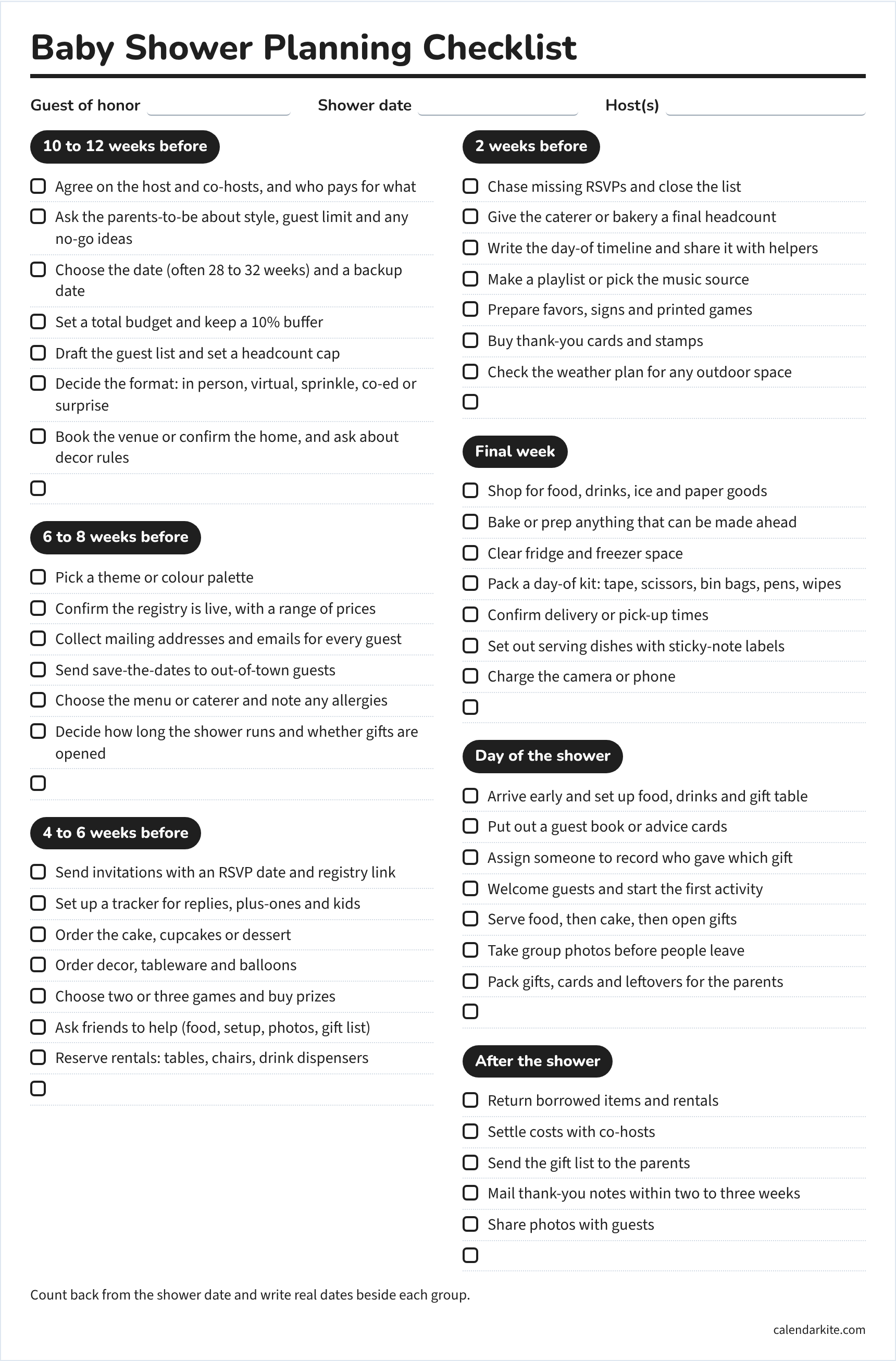
This ink-saving version suits hosts who print a copy for every helper, or who just want a clean sheet to tick through. I test-print on my home inkjet, and the plain black lines stay sharp even in draft mode.
Pink Baby Shower Planning Checklist
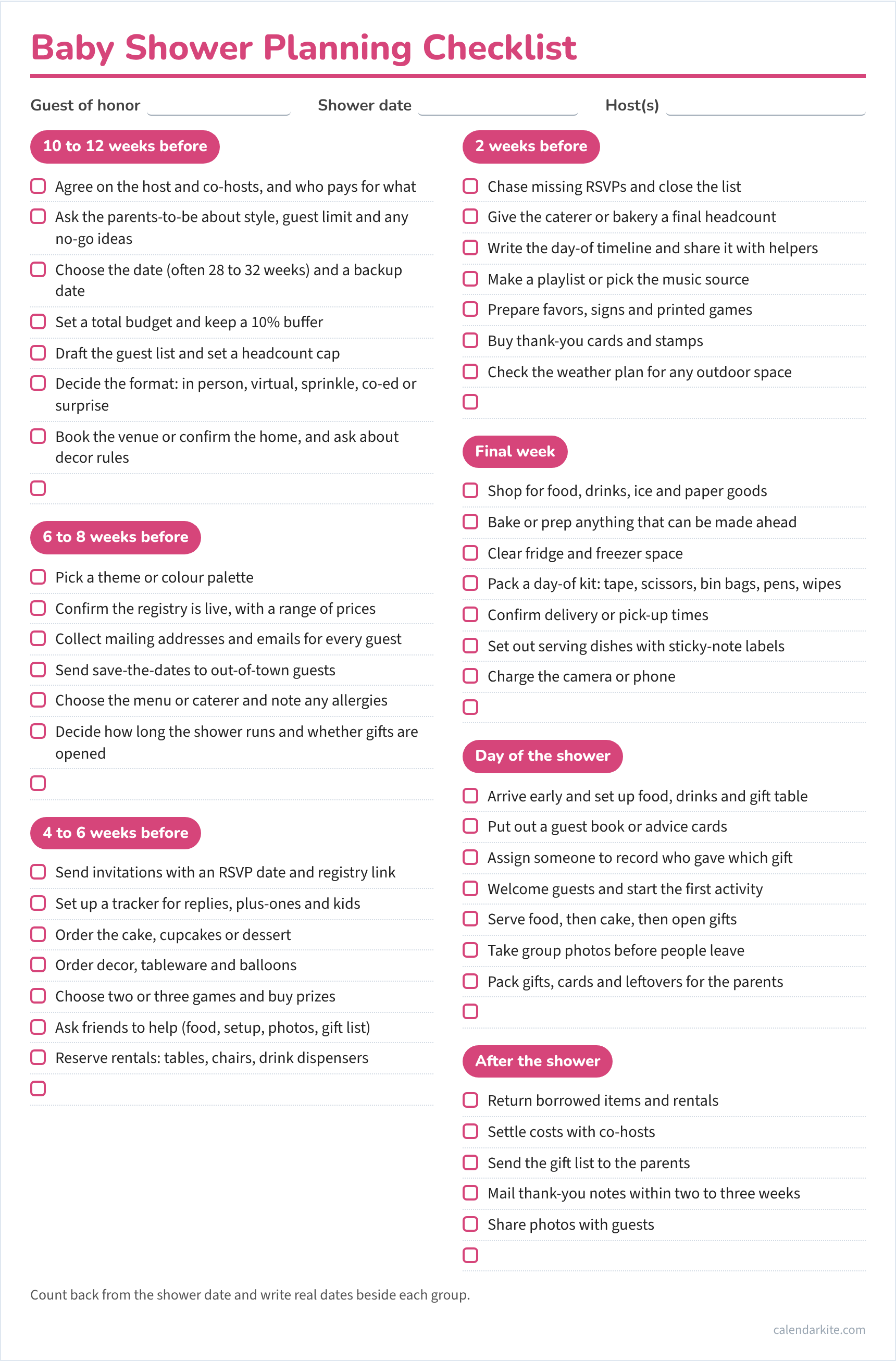
A soft pink checklist suits a girl's shower or any host who likes a gentle palette, and it tracks invitations and food orders well. In my office years I learned to put a deadline beside each task, so I kept that column clear.
Sage Green Baby Shower Planning Checklist
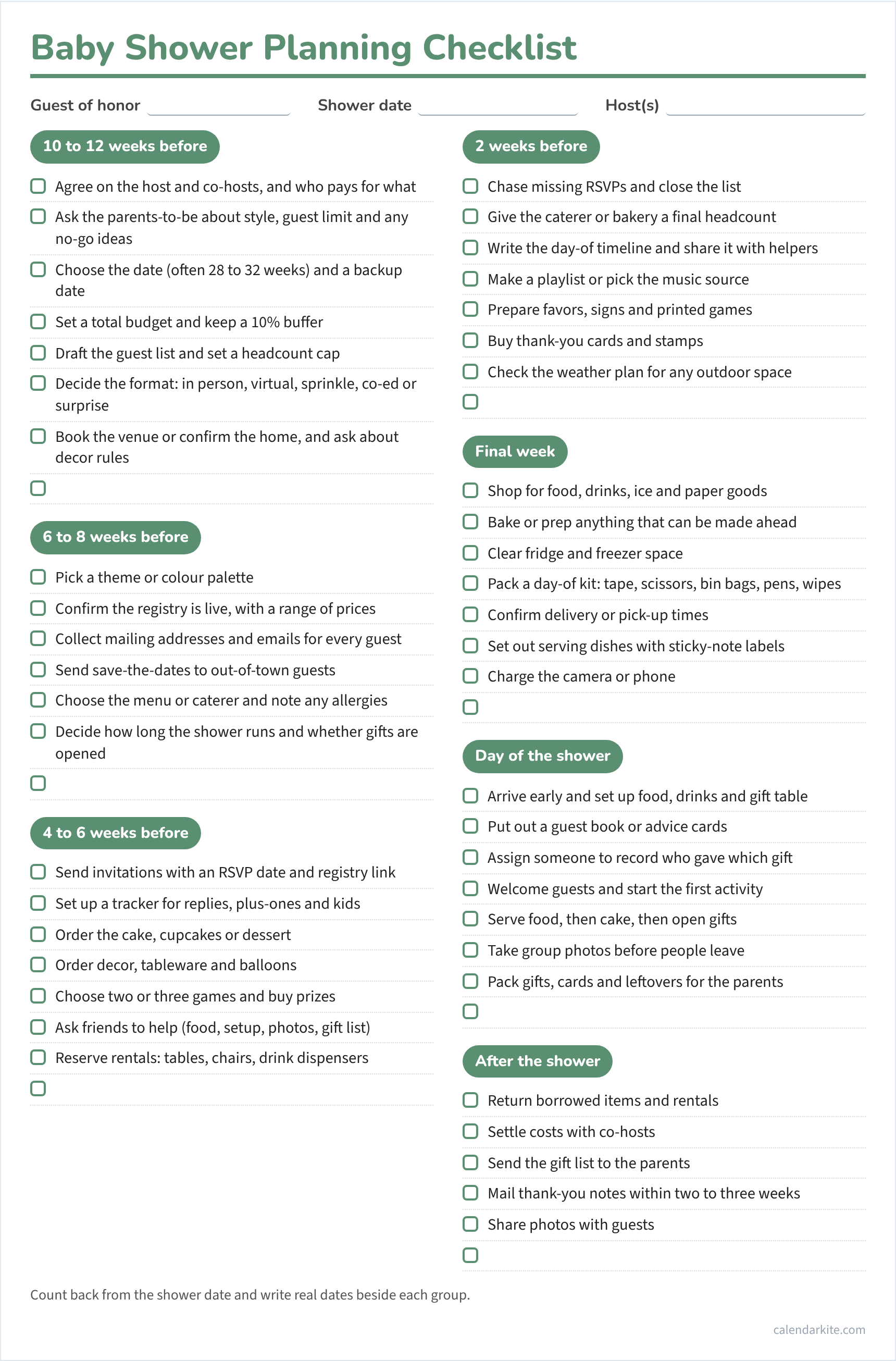
Sage green suits gender-neutral showers and hosts who want a calm, natural look, especially for a garden brunch. I keep a paper copy on the fridge so co-hosts can see what is still open.
Lavender Baby Shower Planning Checklist
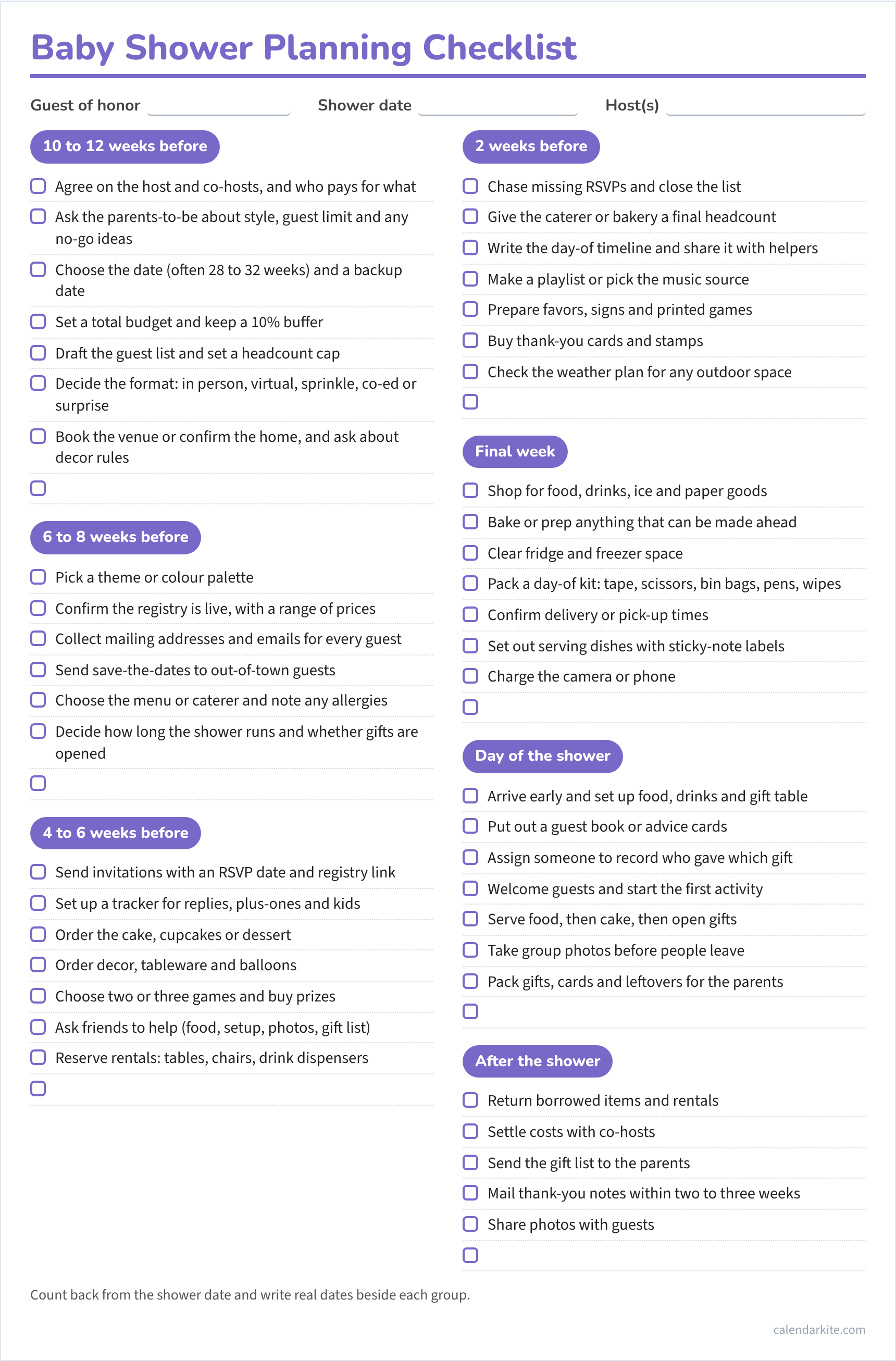
Lavender works for a neutral or surprise-theme shower and for anyone who wants a quiet purple tone while planning the guest list and games. I check that every sheet prints cleanly on both US Letter and A4, which helps if relatives are hosting from abroad.
Cute Baby Shower Planning Checklist
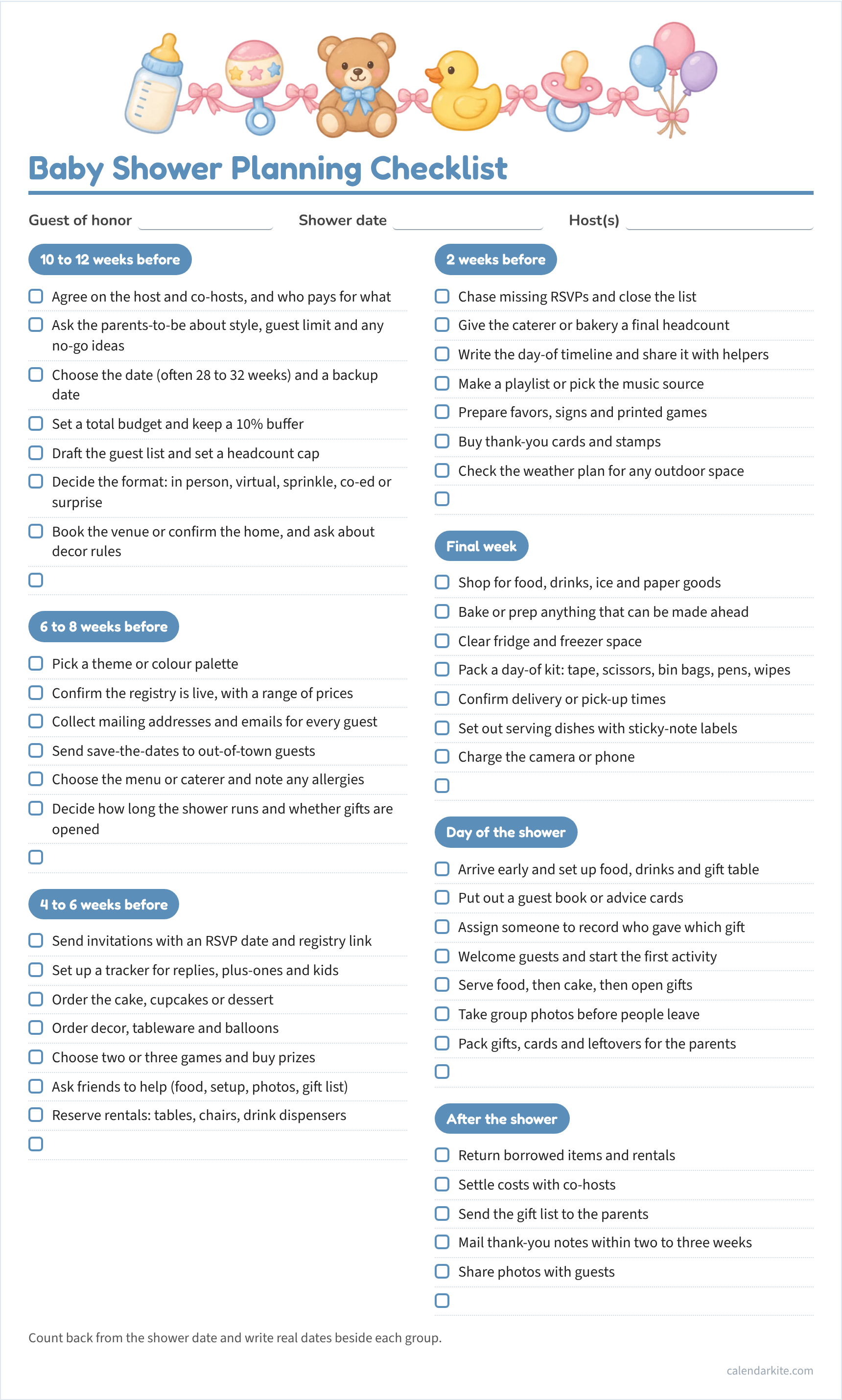
Pastel blue with cute illustrations suits a baby boy shower or a playful theme, and it is cheerful enough to pin up by your gift list. A mistake I often see is leaving thank-you notes until the very end, so keep that line visible.
Floral Baby Shower Planning Checklist
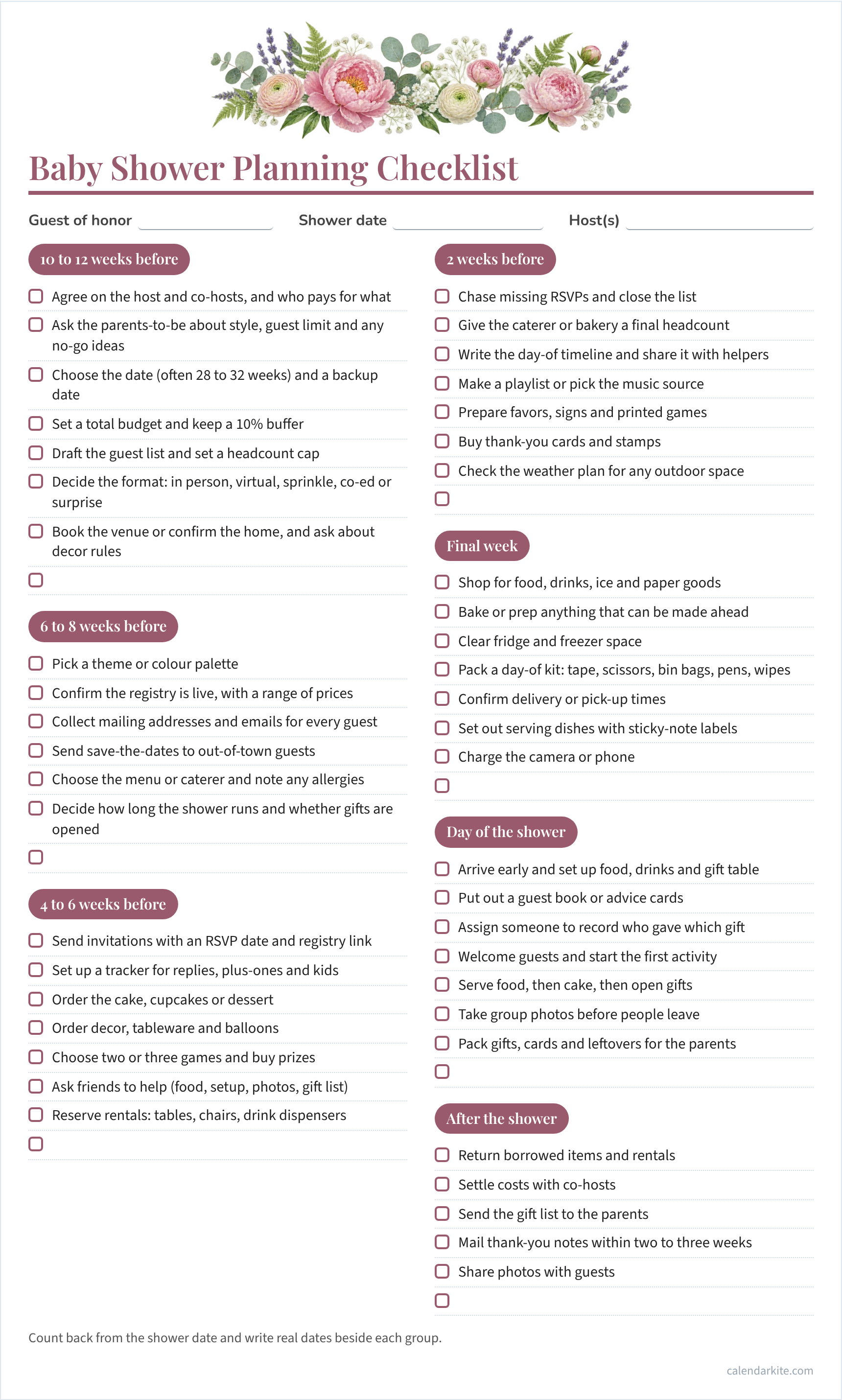
Watercolor flowers and elegant serif headings suit a spring tea-party shower with a mauve palette. It leaves generous space for menu, rental and décor notes, so it works well for a more formal afternoon event.
Fun and Colorful Baby Shower Planning Checklist
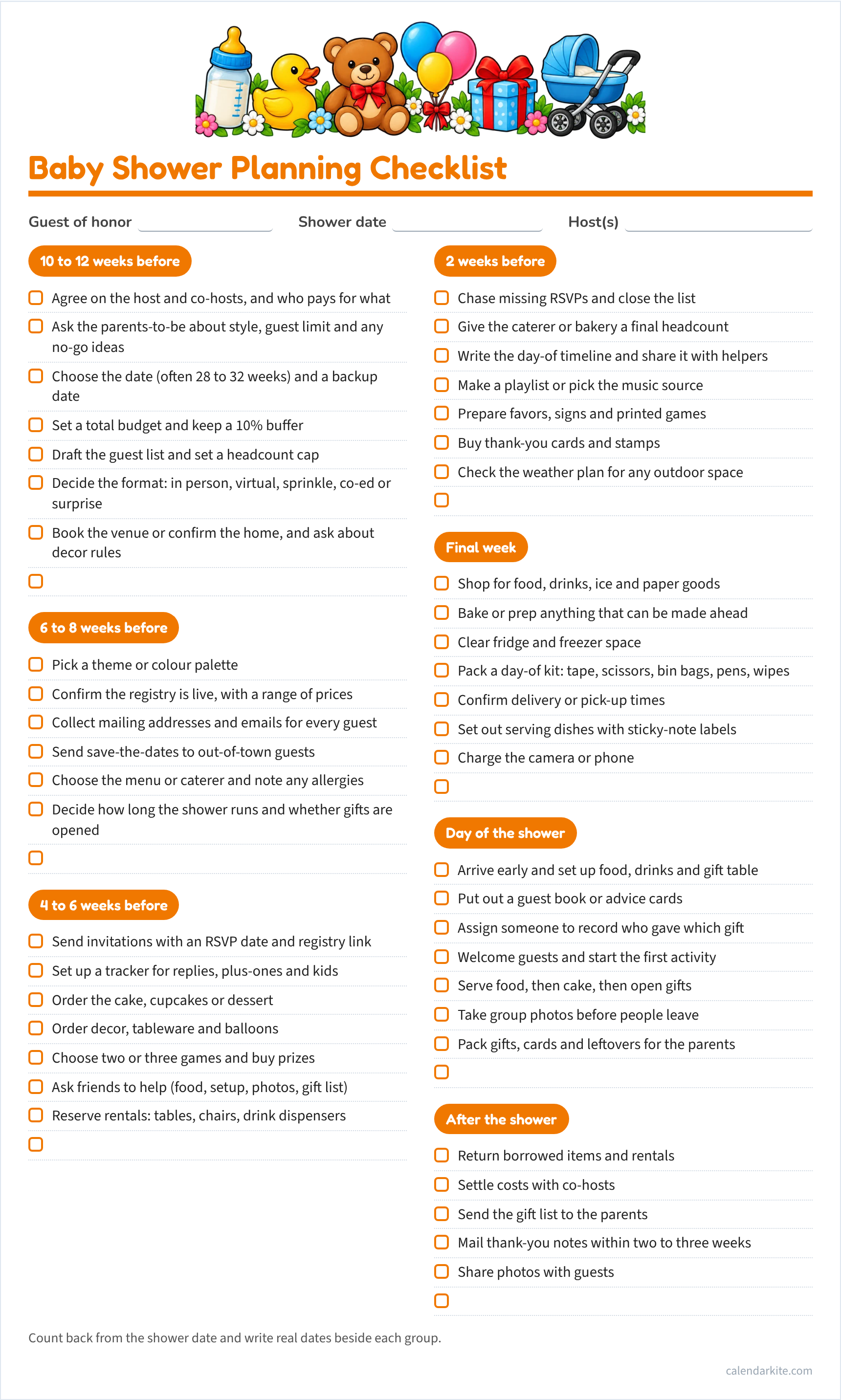
Bright orange and yellow with bold cartoon art suits a casual, playful shower, like a backyard party with games and a big crowd. It gives big, clear boxes for games, snacks and supplies, so helpers can find their tasks at a glance.
Simple Baby Shower Planning Checklist
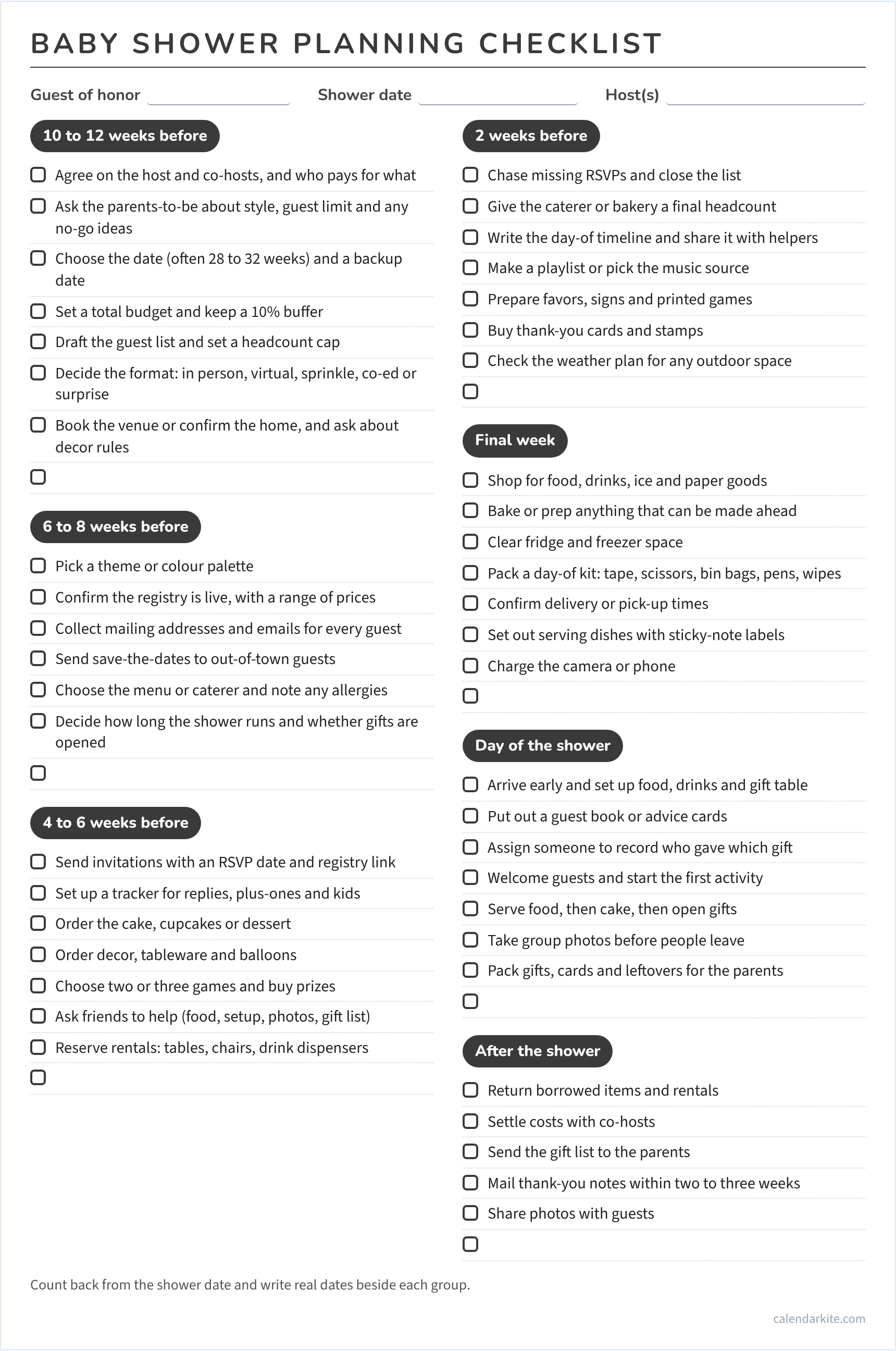
Thin gray lines and no color suit anyone who prefers a tidy, understated page for tracking budget, venue and RSVPs. It gives you plenty of white space to add your own figures and notes beside each task.
Aesthetic Baby Shower Planning Checklist
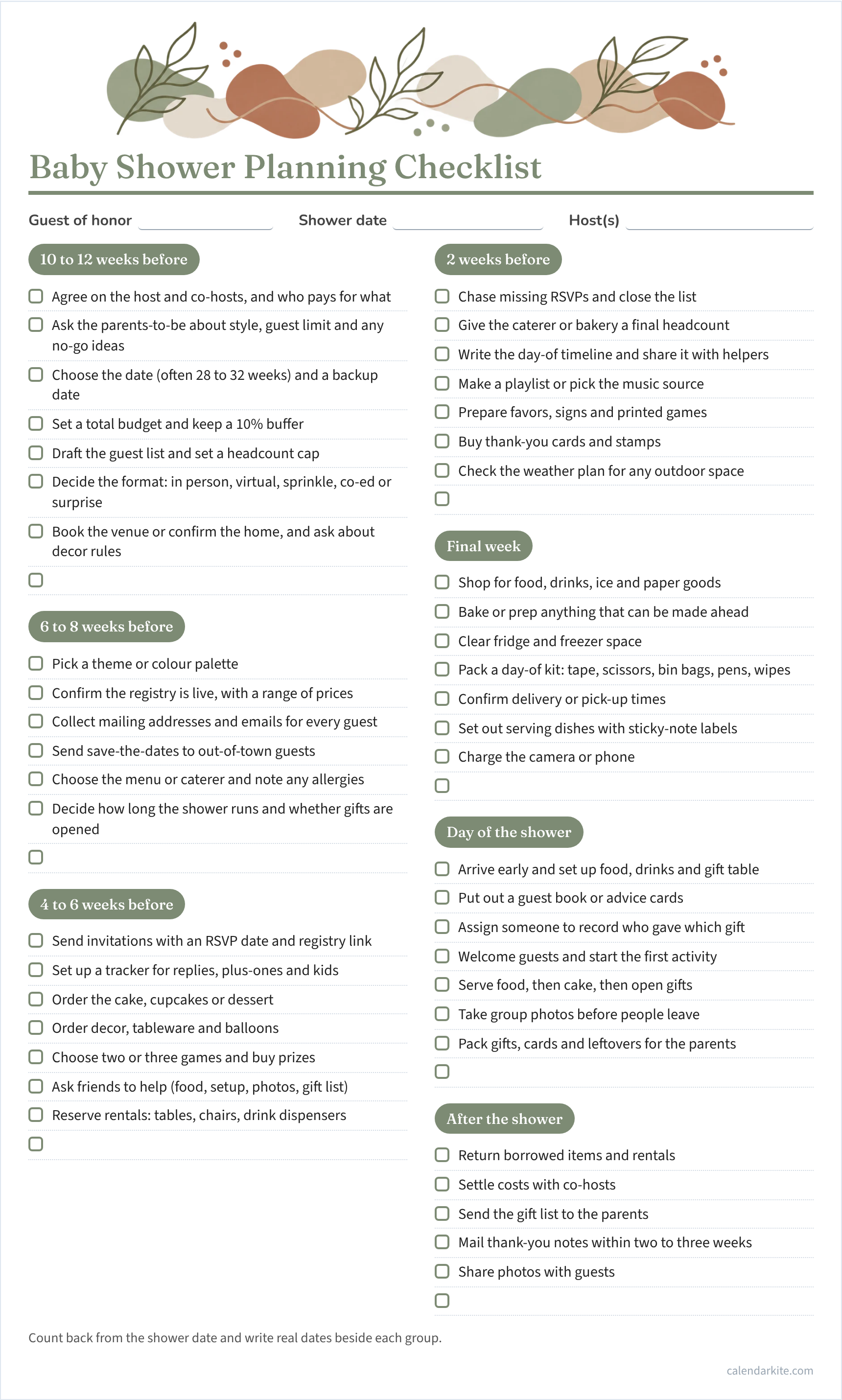
Muted sage, sand and terracotta with soft leaf line-art suit a boho shower, or a modern host who wants the checklist to look good on the counter. I keep my planner on the kitchen counter, and this style blends in there.
Modern Baby Shower Planning Checklist
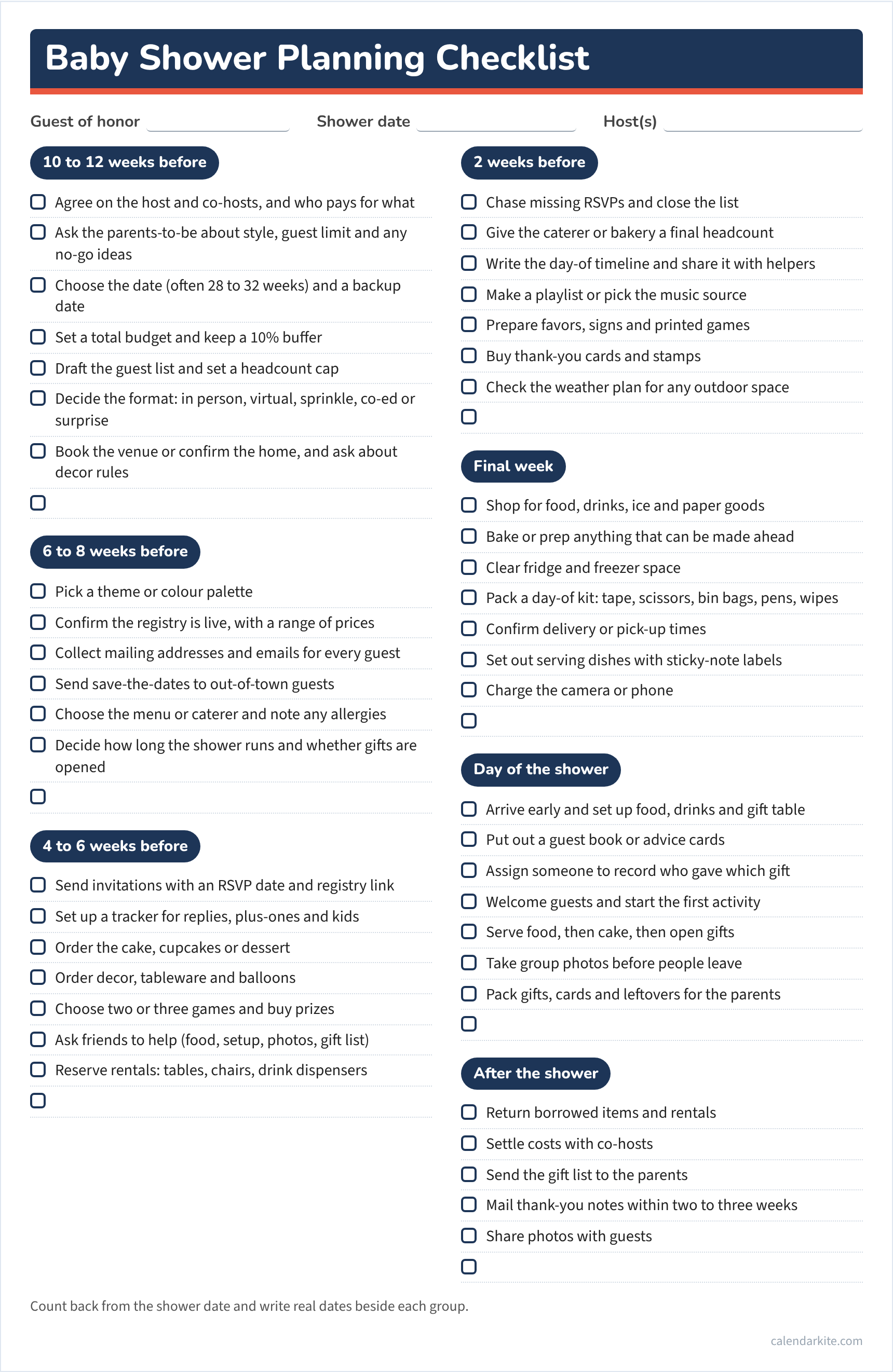
A navy header band with a coral accent suits a modern co-ed shower or any host who wants a polished plan to share with co-hosts. It prints clearly in color and sits nicely on a clipboard for the day of the party.
I keep a paper calendar on the fridge and a planner on the kitchen counter, and a shower is the kind of event that needs both. The calendar holds the fixed dates, and the checklist holds everything that has to happen before them. This page shows you how to use the sheet, how to adjust it for your kind of shower, and where the usual trouble spots are.
How to use this baby shower planning checklist
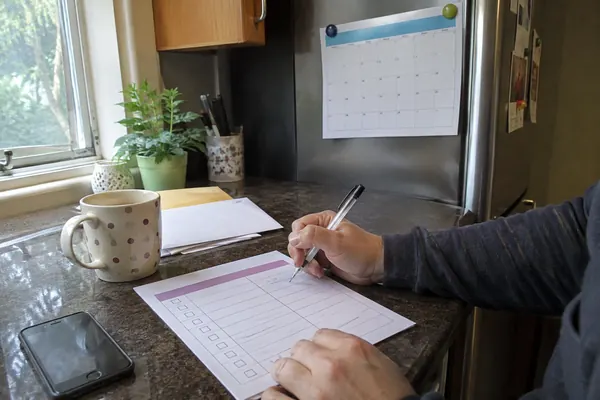
Start by filling in the three fields at the top: the guest of honor, the shower date and the host or hosts. If the date is not set yet, leave it blank and write it in as soon as you know. Then work through the sheet from the top, and do not worry about the later groups until the earlier ones are finished.
Here is the order I suggest:
- Fill in the top fields and write real calendar dates beside each time group (for example, “Sat 6 March” next to “4 to 6 weeks before”).
- Delete or rewrite anything that does not apply. A virtual shower has no venue to book, and a small one may skip favors.
- Use the blank row in each group for tasks that are specific to your shower, such as renting a tent or arranging a babysitter.
- Tick items as you finish them. Your changes save in your browser, so the sheet will be as you left it next time.
- Print it when you are ready and keep a paper copy where co-hosts can see it.
Try this: Before you do anything else, count back from your shower date and write a real date beside each time group on the sheet. Then put those dates on a monthly calendar so the deadlines are visible.
How the checklist is organized
Many checklists are sorted by topic: food, decor, games. That looks tidy, but it hides the one thing that matters most, which is when each job has to be done. I sorted this one by time, because a shower goes wrong when a deadline is missed, not when a category is neglected. Invitations that go out late, a cake that was not ordered, or a headcount that was never given to the bakery are all timing problems.
Within each time group, I put the decisions before the purchases. You cannot choose a menu until you know the guest count, and you cannot order decor until you know the theme and the venue. In my office years, the schedules that held up were the ones where the dependent tasks sat in the right order, and the same is true here.
The sheet runs to about fifty items, which sounds like a lot. Most are ten-minute jobs. A few, like the guest list and the menu, take longer, and those sit early so they do not crowd your final week.
Who this checklist suits
It suits the host, first and foremost: a friend, sister, mother, aunt or coworker who has been asked to organize a shower and wants a clear plan. It also suits parents-to-be who are hosting their own shower or sprinkle, and groups of co-hosts who need one shared list so that two people do not buy the same balloons.
It also works for people helping from a distance. If you are in Ohio and the shower is in another state, a printed sheet with names beside each task is a simple way to divide the work without twenty text messages. Write a helper’s name beside any item you hand off.
If you are planning other parties in the same season, the birthday party checklist uses a similar structure and is useful for comparing how much work a toddler party is next to a shower.
Choosing the date and when to start
Many showers are held around 28 to 32 weeks of pregnancy. By then the early appointments are behind the parents-to-be, they can usually spend an afternoon out, and there is still time to wash the baby clothes and build the crib. A few families would rather wait until after the birth and hold a sip and see, so ask the parents-to-be what they want before you pick a date.
Start planning 10 to 12 weeks before the shower if you can, and at least 6 weeks if the party is small. A longer runway means you can book a venue before the good weekends are gone, and it lets you send invitations without rushing. Choose a backup date at the same time, especially for outdoor showers.
Check the date against holidays, school breaks, big local events and other showers for the same person. Showers often land on weekend afternoons, so a Saturday or Sunday between late morning and mid-afternoon is the safest choice. A monthly calendar makes clashes easy to spot, and I write the invitation deadline and RSVP deadline on it as well as the shower itself.
Setting a budget and agreeing who pays
Money is the awkward topic that causes the most friction between co-hosts, so settle it in the first week. Decide the total, decide who covers what, and write it down. A host usually pays, but many showers are shared among two to four people, and some guests offer to bring a dish or the cake.
Build a 10% buffer into the total. There is always something: extra ice, a last-minute cake topper, a replacement for the cake plates that went missing. A buffer means you do not spend the final week feeling that you have broken the budget over a bag of ice.
Keep a simple record of spending as you go. A page from the budget planner printable works well for this, with a column for the estimate and a column for the actual cost. When the shower is over, you can settle up with co-hosts from the page instead of from memory.
Guest list, invitations and RSVPs
Ask the parents-to-be for the guest list early, along with any limits. Some people want a big gathering of family and coworkers, and others want ten close friends. Collect full names, plus a mailing address or email for every guest. Getting the address at the invitation stage makes thank-you notes much easier later, and it is the step most hosts skip.
Send invitations 4 to 6 weeks before the shower. If many guests will travel, add a save-the-date at 8 weeks or earlier. Every invitation should include:
- Who the shower is for and who is hosting
- The date, start time and approximate end time
- The address, with parking or access notes
- The registry link or gift guidance
- An RSVP date, and a way to reply (phone, text or email)
- Any theme, dress or food notes, including whether it is a surprise
Set the RSVP deadline about two weeks before the shower. That is when you give the caterer or bakery a final number, so it is a real deadline, not a polite suggestion. Track replies as they come in, including children and plus-ones. I use a plain table with columns for name, reply, number attending and dietary needs, and it takes five minutes to set up.
Try this: Write the RSVP deadline on the invitation as a date, and write it on your own calendar two days earlier. Use those two days to message anyone who has not replied.
Venue, food and drinks
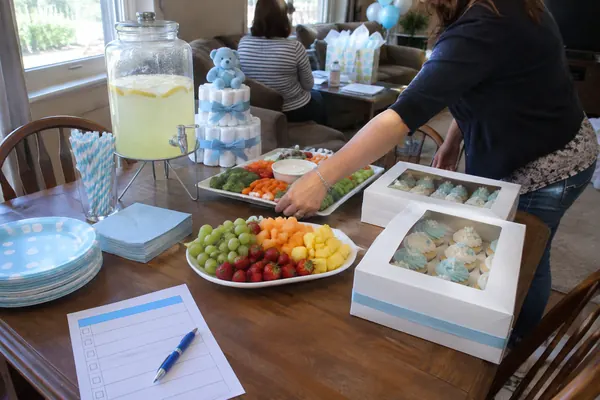
A home is the cheapest option and the most flexible, as long as everyone fits comfortably. A community room, restaurant back room or park shelter costs more, but they take the cleanup and the seating off your plate. Ask about capacity, setup time, decor rules (some places ban tape or confetti) and whether you can bring your own food.
Plan the menu around the time of day. A mid-morning shower suits brunch dishes, a one o’clock start suggests light lunch, and a 3 pm start can get away with snacks and dessert. Make a note of food allergies on the RSVP list and label dishes on the table. Always offer a non-alcoholic drink that feels special, since the guest of honor will be drinking it too.
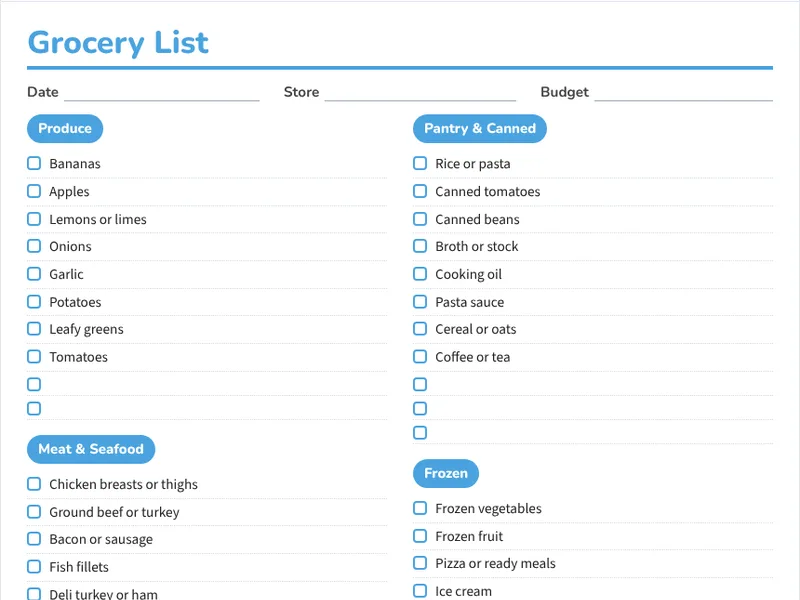
For quantities, order or cook for the confirmed headcount plus a few extra, and put the cake order in early, because bakeries book up on popular weekends. If friends are bringing dishes, a sign-up sheet stops you ending up with five bowls of pasta salad and no drinks. When you are ready to shop, a grocery list sorted by aisle keeps the week-of trip to one store visit.
Games, decor and favors
These are optional, and the sheet treats them that way. Two or three short games are plenty for most groups, and many guests are just as happy with food and conversation. Pick one that works for mixed ages, one quiet one that people can do while they eat, and skip anything that asks guests to do something embarrassing.
Decor should serve the room you actually have. A balloon arch, a dessert table and a welcome sign will carry most showers. Pick a colour palette instead of a full theme if you want something simpler, since it is easier to buy plates, napkins and flowers that match.
Favors are the first thing I would cut if the budget is tight. If you do them, something consumable (cookies, tea bags, seed packets) beats a keepsake that people will leave behind. I would rather spend that money on better food.
Registry and gifts
Confirm that the registry is live and has items at a range of prices before the invitations go out. If the parents-to-be are not using a registry, add a short list of ideas to the invitation. A gift guideline for the guests is polite and it reduces duplicate presents.
Decide whether gifts will be opened at the shower. Opening gifts adds around 30 to 45 minutes and some guests find it dull, but others love it. If you skip it, set up a gift table and have the parents open them at home. If you do open them, plan a seat for the parents and pass each gift around in an orderly way.
Whichever you choose, ask one person to record who gave what. This is the most useful job at the whole party. A sheet of paper with columns for the giver, the item and a note is enough, and it is the document that makes thank-you notes possible. Hand the list to the parents at the end.
The final week and the day itself
The final week should be about shopping, prepping and setting up, not deciding. If you are still choosing a theme at this stage, the earlier sections of the sheet need attention. Aim to finish all purchases three days before, prep food that can be made ahead, and pack a day-of kit with tape, scissors, bin bags, pens, wipes and a lighter for the candles.
Write a timeline for the day and share it with helpers. For a shower that runs about two and a half hours starting at 1 pm, mine would look like this:
- 11:30: hosts arrive and set up food, drinks and the gift table
- 1:00: guests arrive, drinks, guest book and a quiet first game
- 1:30: welcome, short toast and a main game
- 2:00: food
- 2:30: cake, then gifts if you are opening them
- 3:15: photos, favors and send-off
If the timeline needs to be more detailed, an hourly schedule lets you add setup tasks in the hours before guests arrive. At home, I give each helper one job, such as drinks or photos, so I am not the single point of failure. That one habit has saved more of my parties than any amount of decor.
Try this: The night before, set out every serving dish with a sticky note saying what goes in it. On the day, anyone can plate the food without asking you.
After the shower: thank-you notes and settling up
Send thank-you notes within two to three weeks. People understand if a newborn delays them, but the notes are far easier when you have the gift list and the addresses at hand. Write one specific line for each gift, such as how the parents plan to use it. It takes a few minutes per note and makes a real difference to the person who gave it.
Return borrowed or rented items, settle costs with co-hosts, and share photos with the guests. The last section of the sheet covers all of these so the shower ends cleanly instead of trailing off.
Variations for different kinds of showers
Every shower is a little different, so change the sheet to fit.
Virtual or hybrid showers
Cross out venue and food service items, and add a video platform, a start time that works across time zones and a plan for sending a small gift or recipe card to remote guests. Send the link with the invitation and again the day before.
Surprise showers
You need one extra person who is responsible for getting the guest of honor to the venue at the right time. Add that name to the sheet, along with a cover story. Surprise showers need tighter RSVP tracking, because you cannot ask the parent-to-be to check the guest list.
Co-ed showers and sprinkles
For a co-ed shower, plan food and activities that suit everyone and set a clear end time. A sprinkle (a smaller shower for a second or later baby) usually means fewer gifts, so consider diapers, wipes and books instead of a full registry.
Twins and multiples
Add time for extra gifts and a larger cake, and consider a venue with more space. Ask the parents which items they will need two of, then put that on the registry.
Mistakes I see most often
The most common problem is starting with decor. People will happily spend a weekend choosing balloons before they have a date, a budget or a guest list. The sheet puts those decisions first on purpose.
The second is skipping the addresses and gift list, which makes thank-you notes a scramble. The third is putting everything on one person. In my office days I learned that a task without a name beside it is a task that does not get done, so write a name next to every shared item.
Last, I see hosts plan a packed program of games and gifts and forget to leave time for people to talk. A shower is a social event first. Leave gaps, and let the room breathe.
Printing and keeping the sheet
The sheet is set up for one US Letter page, and I test-print it on my home inkjet on both US Letter and A4 to make sure the text stays readable. Choose “actual size” or 100% in your print dialog rather than “fit to page”, which can shrink the text and leave the margins uneven. If you use A4, the same setting works.
Fill the sheet in on screen first if you can, because it saves in your browser and you can keep editing as plans change. Then print a copy for the fridge and one for each co-host. If you prefer to write by hand, download the blank PDF instead.
Keep the printed sheet somewhere you pass every day. Mine would go on the fridge next to the calendar, and I tick items with a pen when I finish them. If you want more lists for the same kind of work, the checklists page has others you can print.
Common questions
How far in advance should you start planning a baby shower?
Start 10 to 12 weeks before the shower if you can. That gives you time to agree on a budget, book a space and send invitations 4 to 6 weeks out. A small at-home shower can be planned in 6 weeks.
What should be on a baby shower planning checklist?
The date, budget and guest list come first, then venue, invitations, registry, food, games, decor, favors and a day-of timeline. A good list also covers a gift recorder and thank-you notes, because those are the tasks people forget.
When should baby shower invitations be sent?
Send them 4 to 6 weeks before the shower, and add a save-the-date earlier if guests are travelling. Set the RSVP deadline about two weeks before the event so you have time to give final numbers to the caterer or bakery.
Who plans and pays for a baby shower?
A close friend or relative usually hosts, but anyone can, including the parents-to-be. The host normally covers the costs, and co-hosts often split them. Agree on this early and write it down.
When is the best time to have a baby shower?
Many showers happen around 28 to 32 weeks of pregnancy, when the parents-to-be are usually comfortable and there is still time to set up the nursery. Some families prefer a sip and see after the birth, so ask them first.
Can I edit this checklist before printing?
Yes. You can type into every line and field, tick boxes, and change or add items directly on the page. Your changes save in your browser, and there is also a blank PDF if you would rather write by hand.
 Camping Checklist Printable: Free One-Page Packing List
 Checklist: A Free Printable You Can Fill In, Edit and Print
 Grocery List Printable
 Moving Out of State Checklist
 Move Out Cleaning Checklist (Free Printable)
 Printable To Do List: Free Sheet You Can Fill In and Print