
Dorm Room Planner: A Free Printable for Move-In and Beyond

A dorm room planner is a single place to track everything that has to happen before and just after you move in: the housing rules, your measurements, what you pack, what your roommate brings, and where your important papers are. The free printable on this page puts all of that on one US Letter sheet, so you can fill it in on screen, print it, and carry it with you.
Check first
- Read the prohibited items list
- Measure room, window and door swing
- Confirm bed size (Twin XL?)
- Message your roommate
- Book your move-in time slot
- Note what the room already includes
Bed and bedding
- Twin XL sheets (2 sets)
- Mattress topper or pad
- Pillows (2)
- Comforter or duvet
- Extra blanket
- Mattress protector
Bathroom and laundry
- Shower caddy with handle
- Shower shoes
- Towels (3)
- Toiletries and medicine basics
- Laundry bag or hamper
- Detergent pods
- Stain remover pen
Desk, tech and study
- Laptop and charger
- Desk lamp
- UL-listed surge protector
- Extra-long charging cable
- Notebooks and pens
- Planner and wall calendar
- Headphones
- Backpack
Storage and clothes
- Hangers
- Under-bed bins
- Over-door hooks
- Hanging shoe organizer
- Drawer dividers
- Removable wall strips
- Mirror
Kitchen and snacks
- Water bottle and mug
- Bowl, plate and utensils
- Airtight food containers
- Dish soap and sponge
- Shelf-stable snacks
- Microwave-safe bowl
Documents and health
- Student ID
- Housing assignment and forms
- Insurance card
- Prescription list
- First-aid basics
- Flashlight
Roommate split
- Fridge: who brings it?
- Microwave: who brings it?
- Rug: who brings it?
- Cleaning supplies: who brings it?
Pack the bulk 3 to 5 days early. Buy decor and extra storage after your first week in the room.
Free for personal, classroom and office use. Your entries are included in the print, PDF and PNG. Prints on US Letter and fits A4.
Black and White Dorm Room Planner Printable
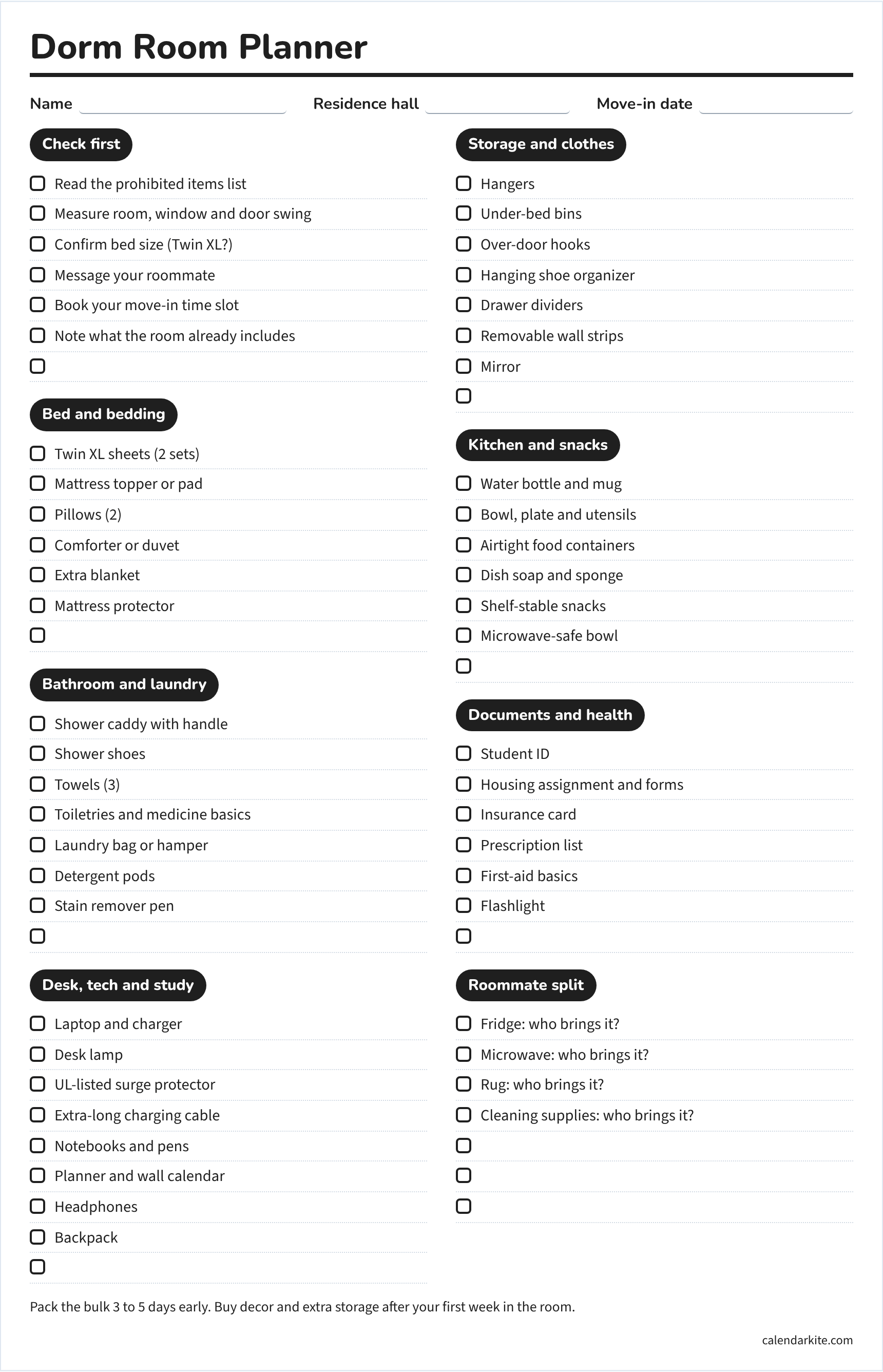
This ink-saving version suits students who want a clean packing and room-layout checklist without burning through color cartridges. I test-print every page on my home inkjet, and plain black lines keep a few extra copies cheap.
Pink Dorm Room Planner
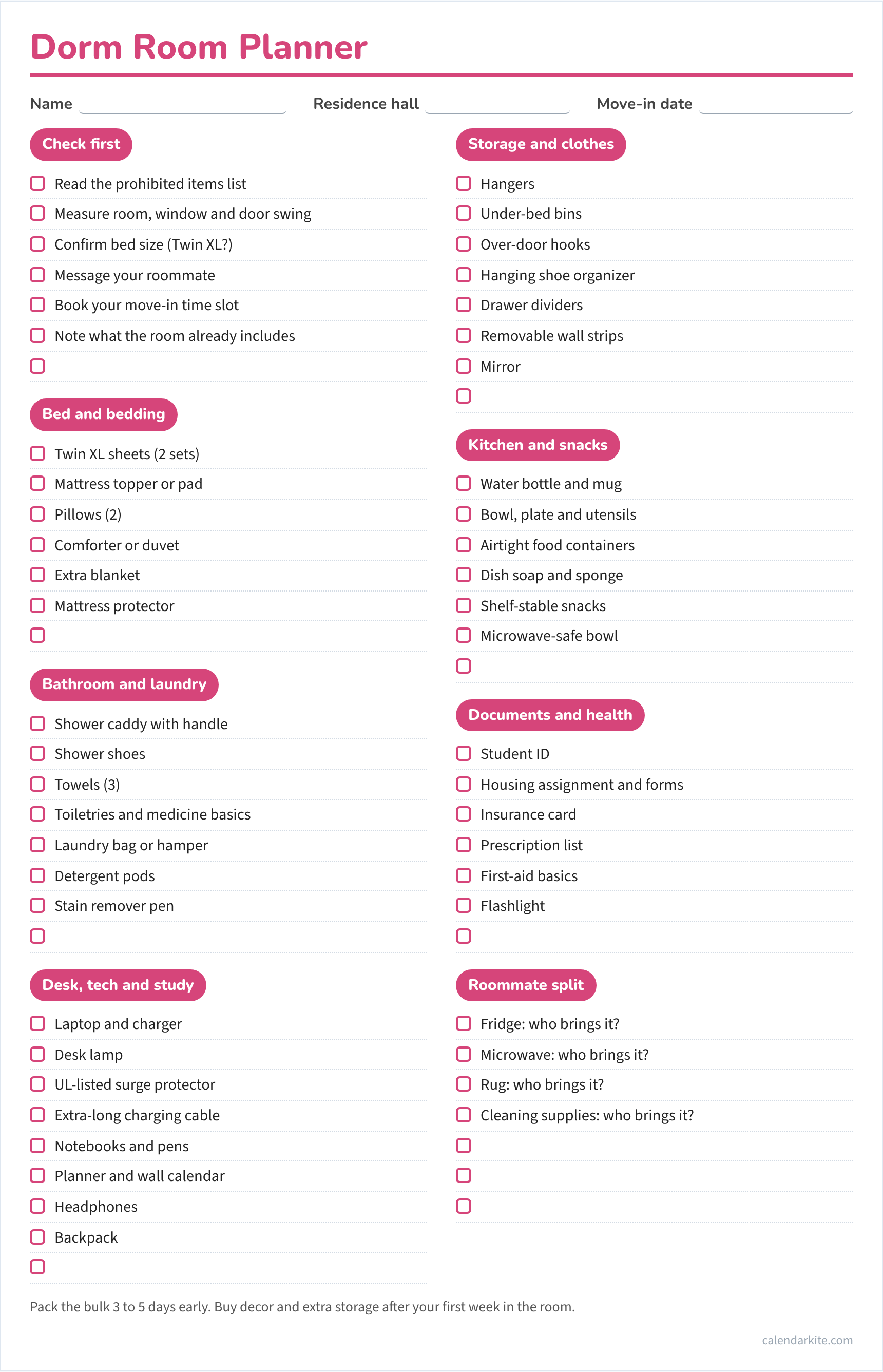
Pick this soft pink planner for a calm, cheerful setup sheet to sort bedding, storage and decor with a roommate. Use it to split who brings the mini fridge, the rug and the lamp before move-in day.
Sage Green Dorm Room Planner
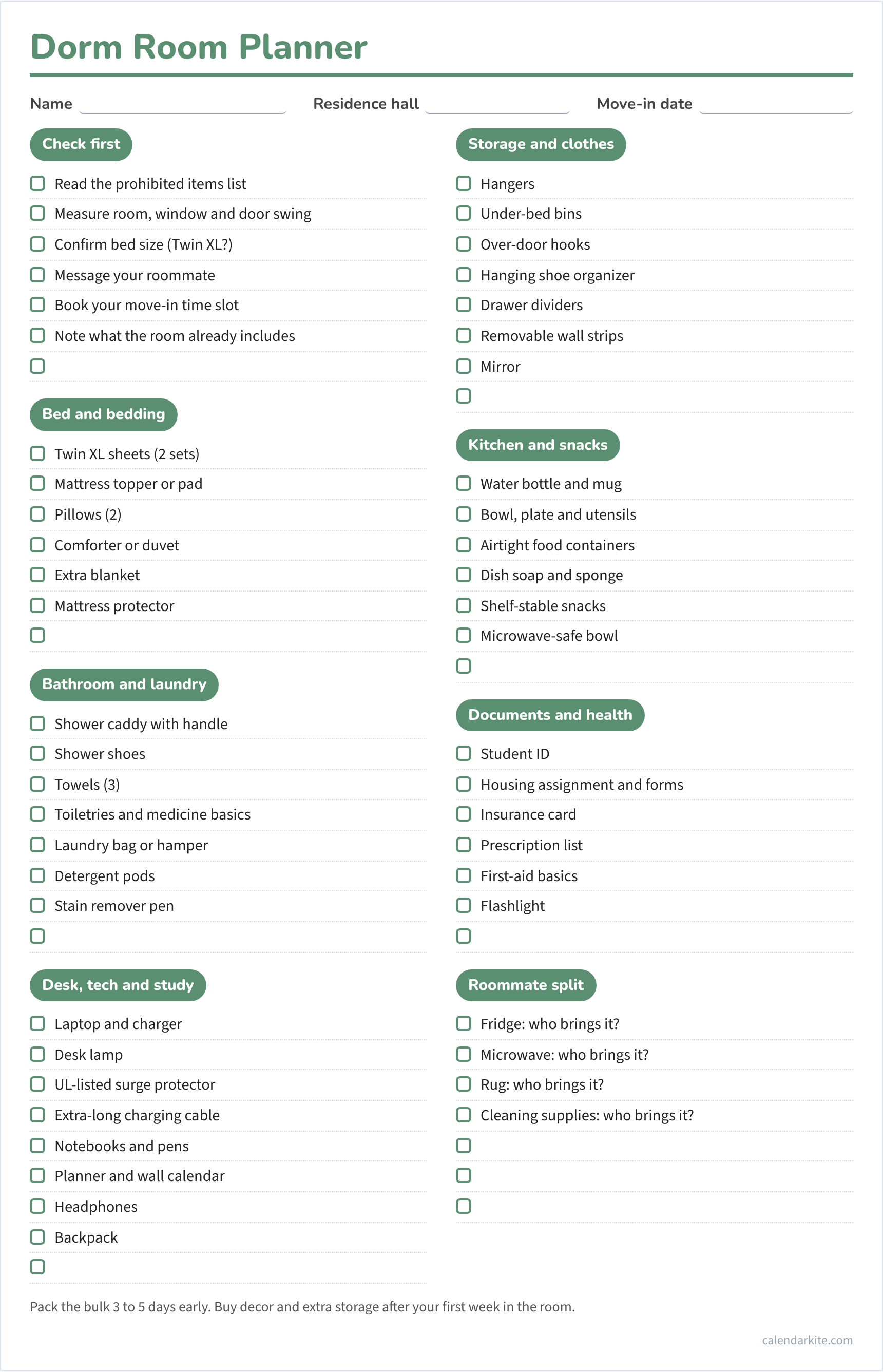
The sage green design suits a calm, muted room and works well as a move-in countdown list. In my office years I learned that a checklist with space to write beats a crowded one, so I left generous room beside each item.
Lavender Dorm Room Planner
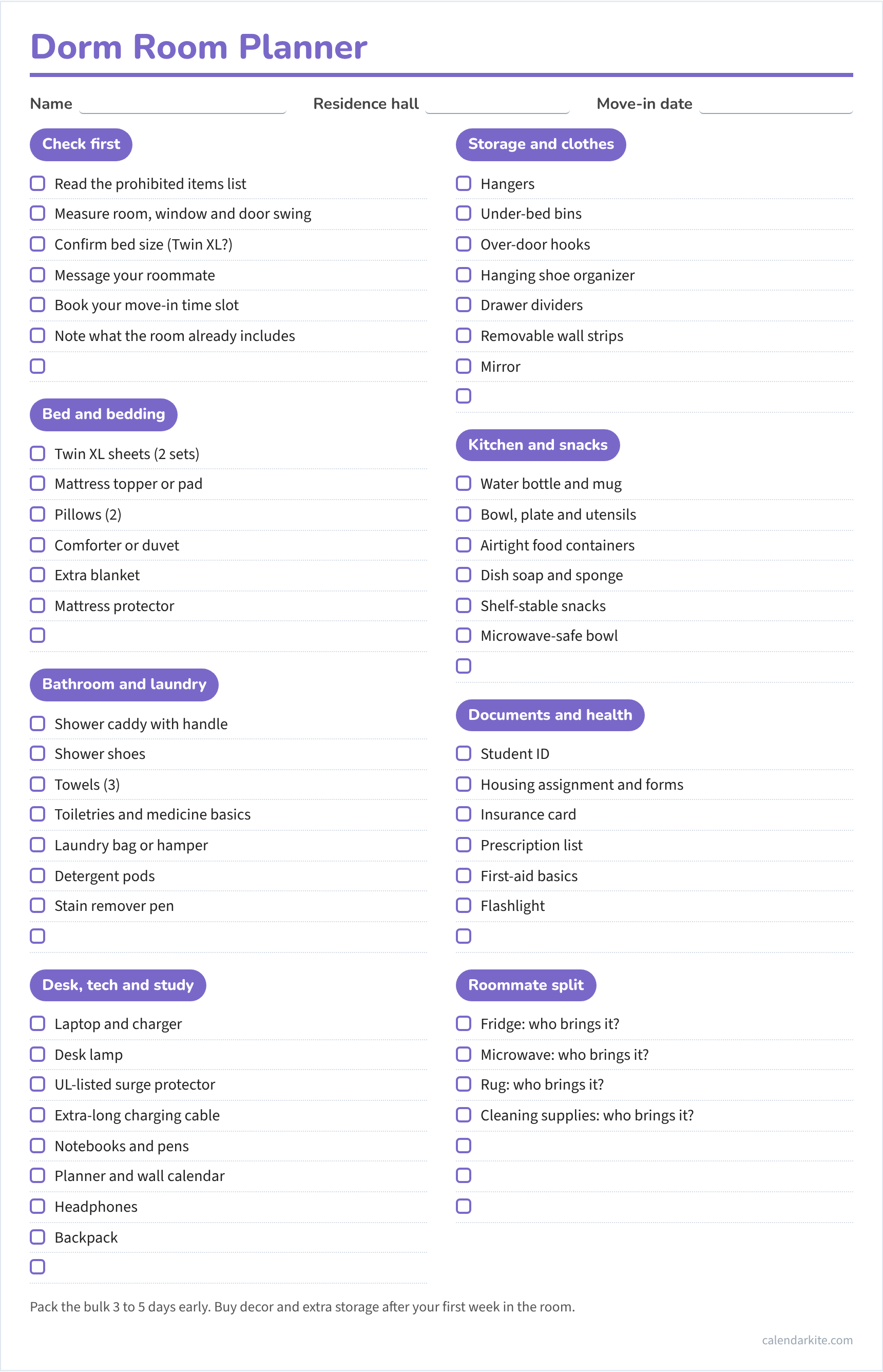
Lavender suits students who want a touch of color that doesn't feel loud on a desk or corkboard. Use it to plan your closet and shelf layout, then pin it where you'll see it each morning.
Cute Dorm Room Planner
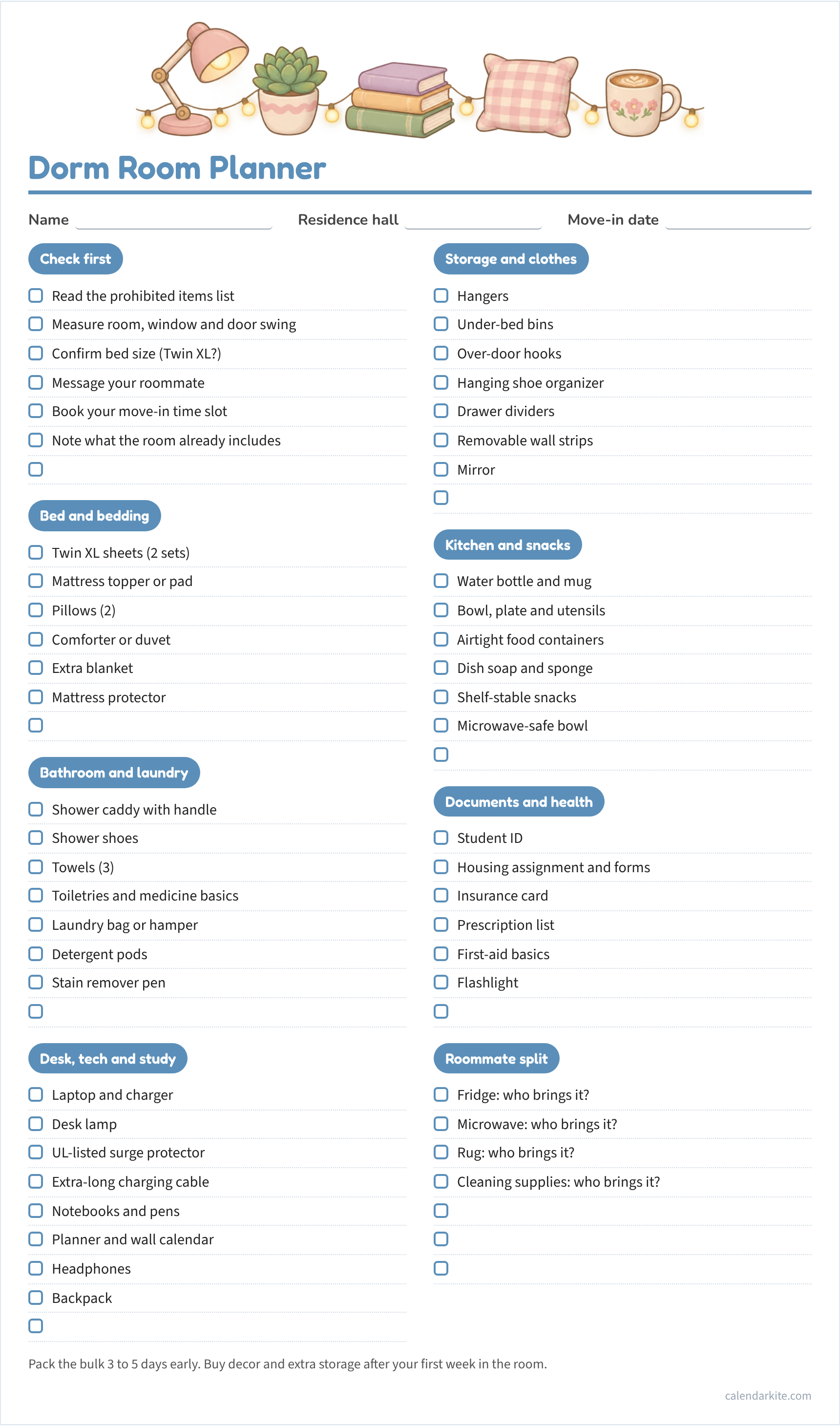
This pastel blue version with little illustrations suits first-year students who want planning to feel less stressful. Fill it in with your shopping list for bedding, a shower caddy and desk supplies before you head to campus.
Floral Dorm Room Planner
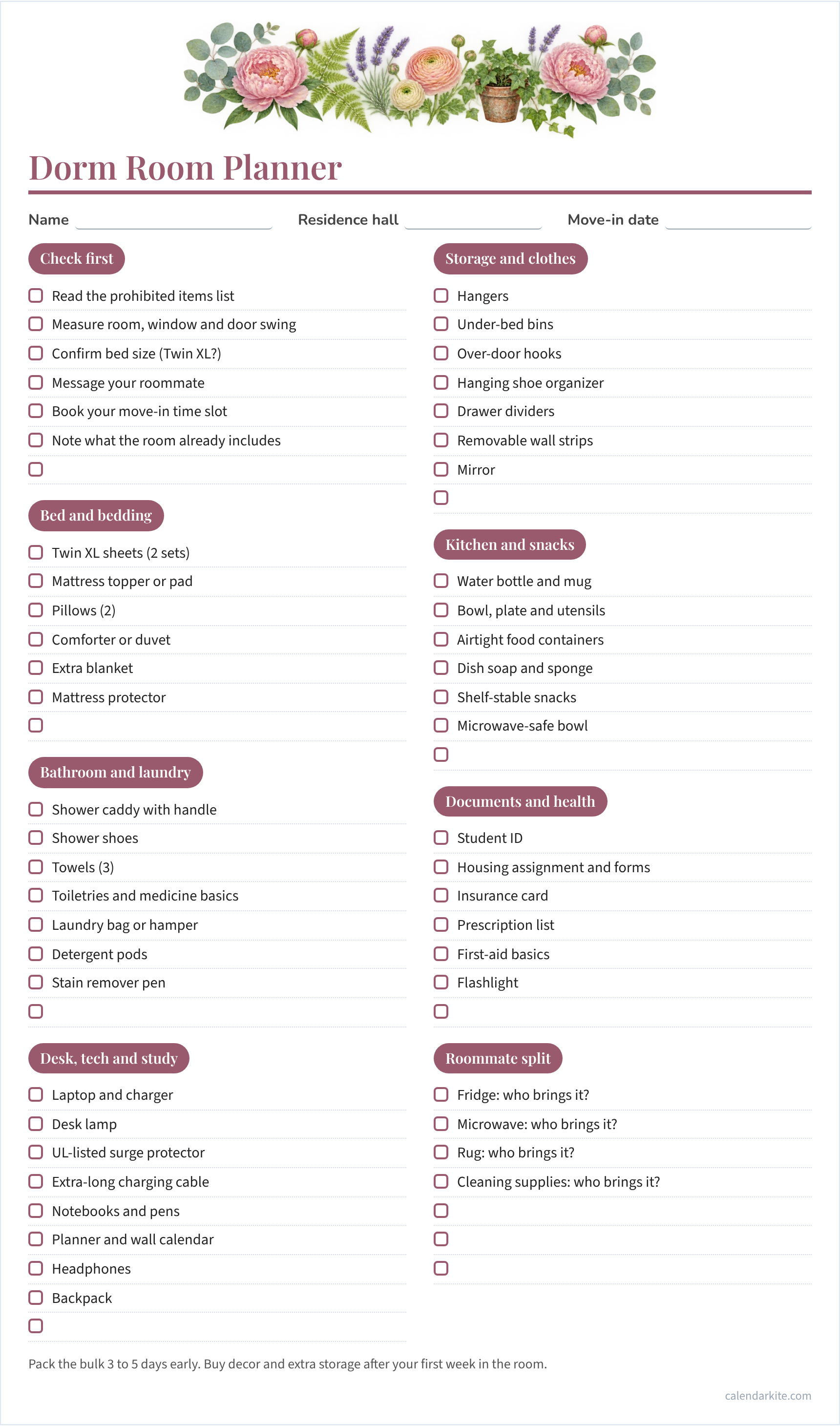
The watercolor floral design suits anyone who wants an elegant planner for a room that feels like home. I keep a planner on my kitchen counter, and a pretty page like this is one I actually leave out and use.
Fun Colorful Dorm Room Planner
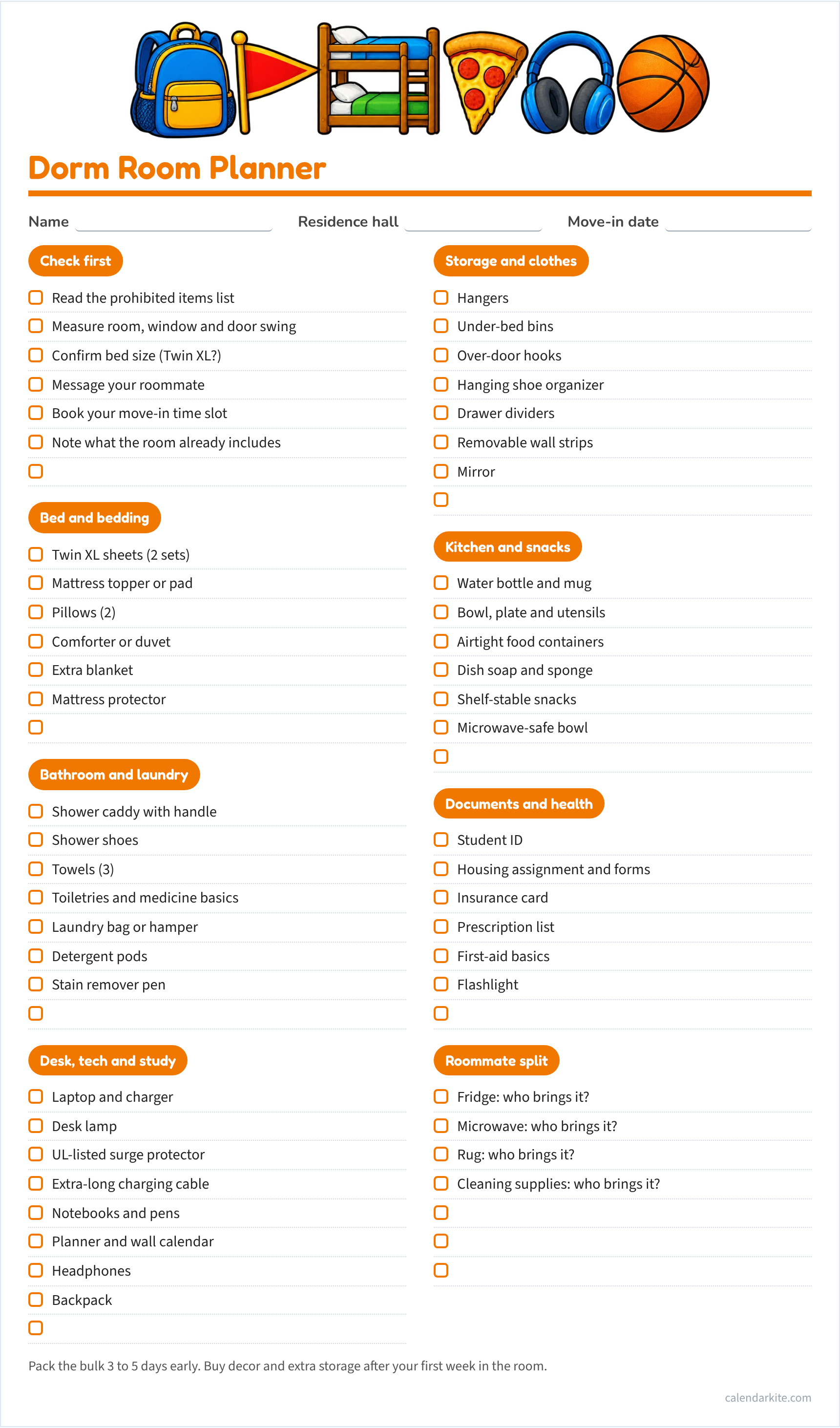
Bright and playful, this one suits students who love bold color or want a lively way to plan with friends or siblings. Use it to map out who brings what and tick items off as the car fills up.
Simple Minimalist Dorm Room Planner
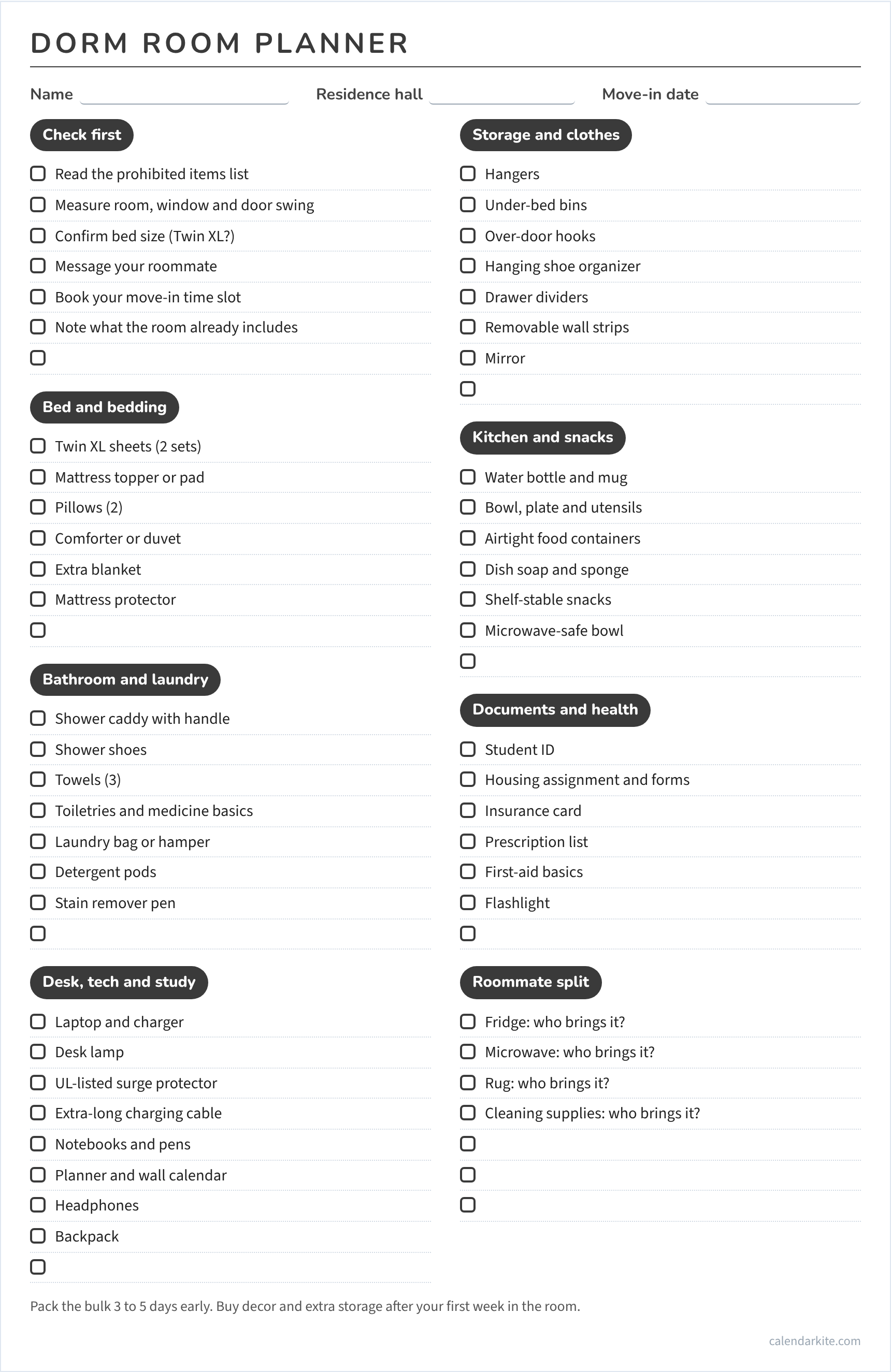
Thin gray lines and no color make this the best fit if you prefer a quiet, uncluttered page for your room list. I widened the rows after noticing cramped lists tend to get abandoned halfway through.
Aesthetic Dorm Room Planner
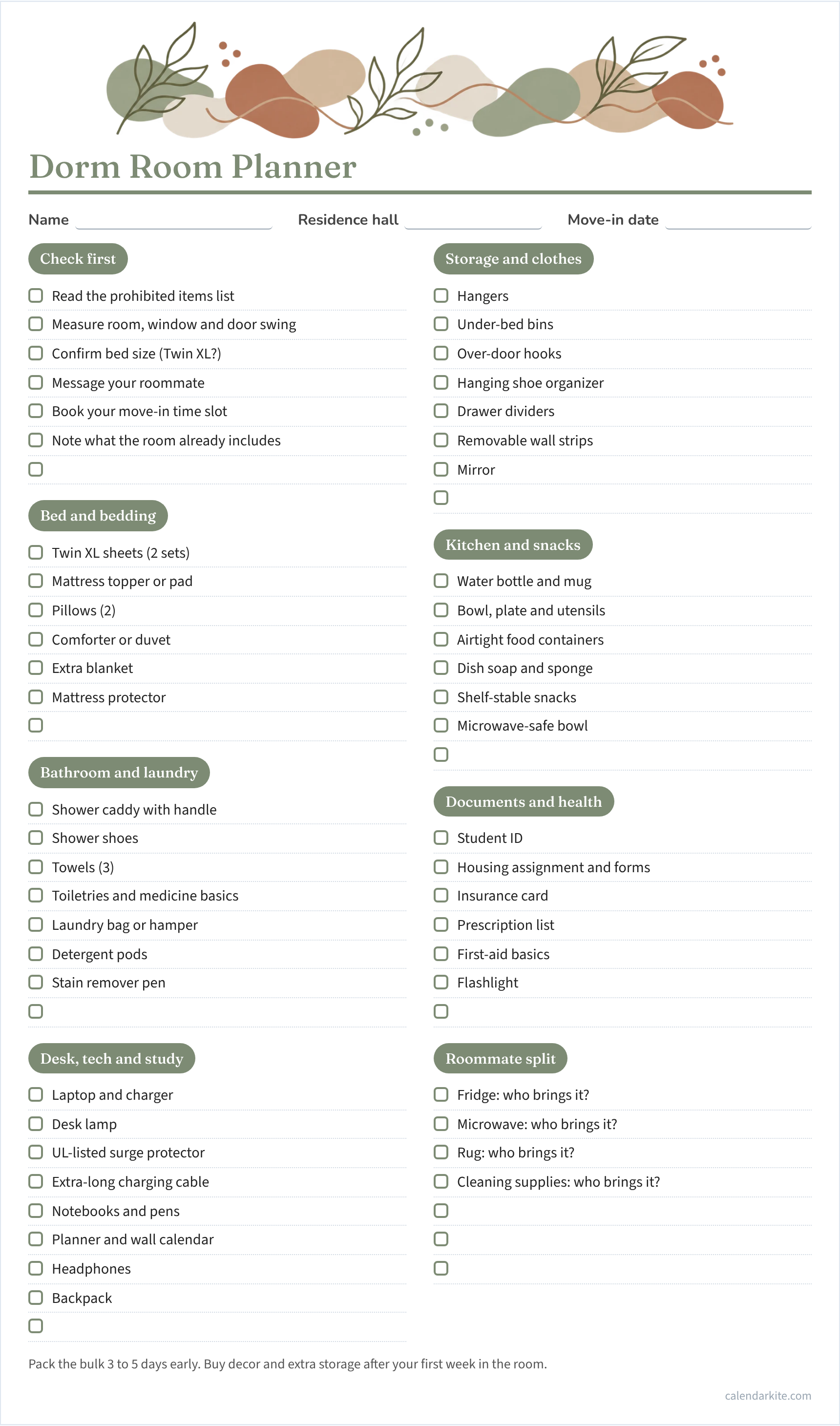
The muted sage, sand and terracotta palette suits students building a neutral, calm dorm look. Use it to settle your color scheme and decor purchases so the bedding, rug and wall art actually match before you buy.
Modern Bold Dorm Room Planner
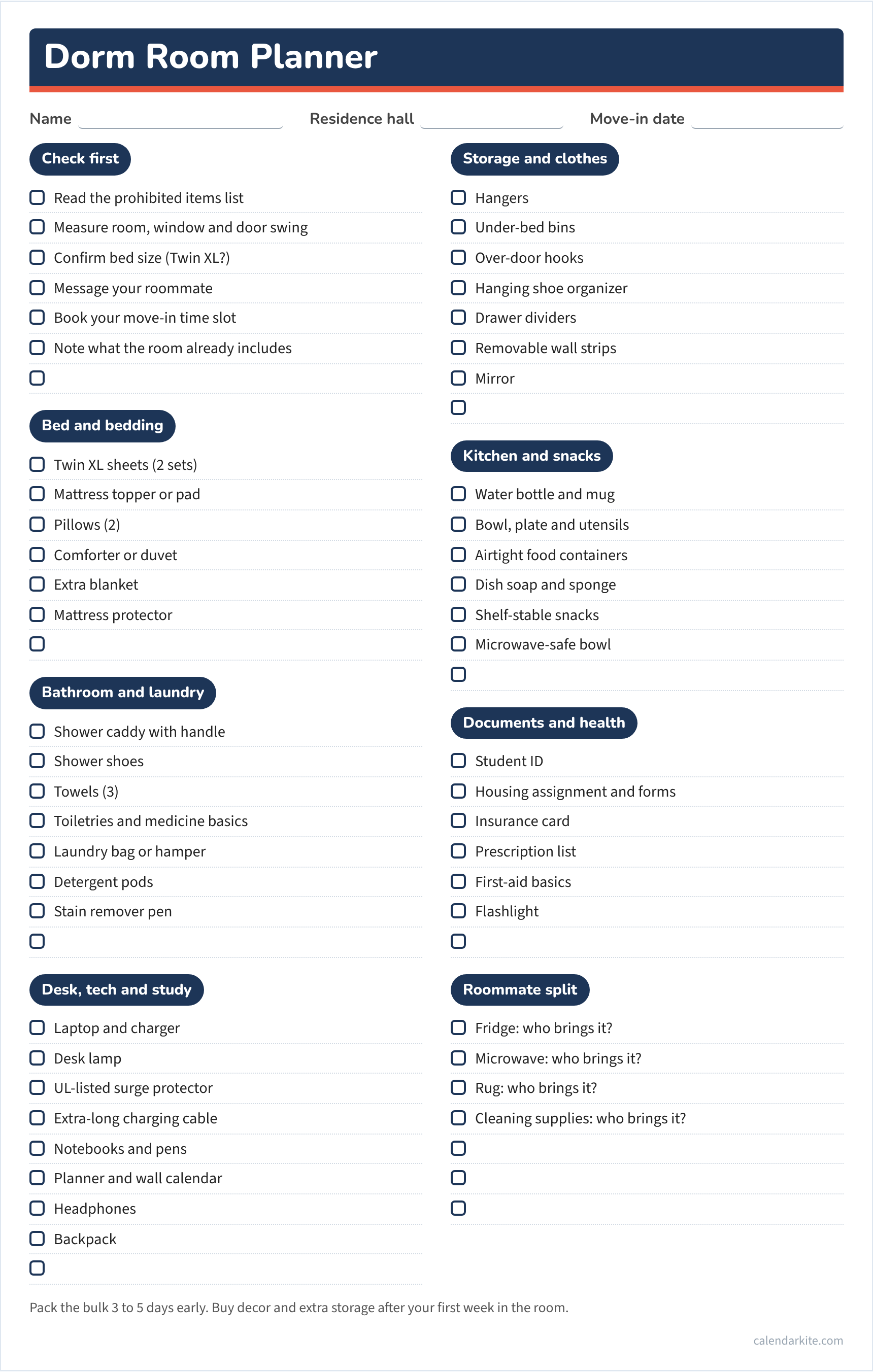
The navy header band and coral accent suit organized students who want a modern, businesslike planner. Use it as a move-in command sheet for housing forms, orientation dates and shipping deadlines, much like the staff schedules I kept in the office.
I spent about ten years in office administration, where my job was mostly keeping supply lists and schedules readable for other people. A move-in list is the same problem in a smaller room. If it is cluttered or split across five pages, nobody checks it. So I built this one to be short, grouped by where things go, and honest about the fact that a dorm room is small.
What the printable sheet covers
The sheet has eight boxes. Check first holds the things you should do before buying anything: reading the prohibited items list, measuring the room, confirming the bed size, contacting your roommate and booking a move-in slot. Then come bed and bedding, bathroom and laundry, desk and tech, storage and clothes, kitchen and snacks, documents and health, and a roommate split box at the bottom.
Every line is editable on the page. You can type into the header fields (your name, residence hall and move-in date), tick items as you go, rewrite any item to match your room, and use the blank rows in each box for things I could not guess. Your changes save in your browser, so you can come back to it over several weeks. When you are ready, print it, or download the blank PDF and write by hand.
I kept the item wording short on purpose. “Towels (3)” tells you what to do without a paragraph of reasons. The reasons live in this article, so the sheet stays quick to scan on a bed or in a car.
How to fill it in
Work from the top down, but do not try to complete the whole page in one sitting. The first box is for the first week, and the rest fill in over time as you hear from your school and your roommate.
- Fill in the header fields so the sheet is yours: name, hall and move-in date.
- Complete the Check first box before you buy a single thing.
- Edit the packing boxes to match your room. Delete what you already own by ticking it, and use the blank rows for extras.
- Agree the roommate split, then write names or initials next to the shared items.
- Tick items as they go into the bin or the car, not when you first buy them.
That last step matters. A bought item sitting in a shopping bag at home is still not packed. Ticking at the point of packing means the sheet matches what is actually in the car.
Try this: Read the Check first box out loud and answer each line in one word (yes, no, waiting). Anything that is “waiting” gets a date next to it, so nothing sits unanswered for weeks.
Start with the Check first box
Your school’s housing portal is the real source of truth for what you can bring. Look for the prohibited items list before you pack or buy anything, because rules about things like extension cords, candles, appliances and string lights vary from school to school and hall to hall. Log into your housing portal and find the prohibited items list, then adjust the sheet to match.
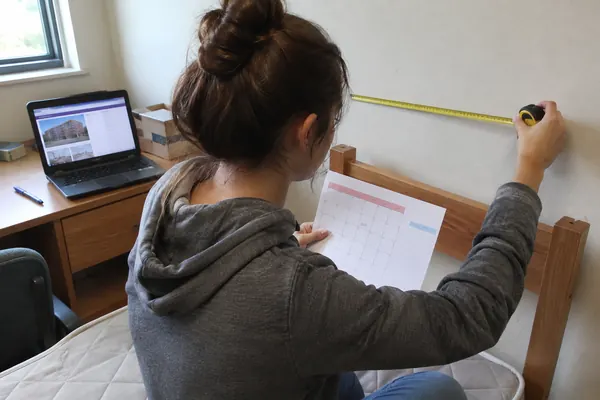
Measure next. You need the width and length of the room, the window, the closet and the swing of the door, because a dresser or bin that blocks a door swing is a common layout problem. Write the numbers into the blank row in the first box. You will use them again when you decide about rugs, under-bed storage and any furniture your hall allows.
Then confirm the bed. Many halls use Twin XL mattresses, and dorm beds are five inches longer, so regular Twin sheets will not stay on. I treat this as the single most common avoidable purchase mistake, so it has its own line on the sheet.
Bedding, bathroom and laundry
Bedding is where most of the comfort in a dorm comes from, since the mattress is usually thin and not yours. Two sets of Twin XL sheets let you wash one and sleep on the other, and a mattress topper is often the best money you will spend. Pillows and a blanket from home make the bed feel familiar, which matters more than a matching decor theme.
For shared bathrooms, a caddy with a handle, shower shoes and a quick-dry towel are the core. I put three towels on the sheet (one in use, one clean, one backup), which matches common advice and means laundry day is not an emergency. Toiletries can be bought in small amounts, and you can restock locally once you know what you actually use.
Laundry gear is easy to forget because at home it is just there. A bag or hamper you can carry, detergent pods (easier than a heavy jug) and a stain remover pen cover most weeks. If your hall’s machines take cards or an app, add that to the blank row under the box.
Desk, tech and storage
A desk lamp, a laptop charger and a long charging cable are the quiet heroes of a dorm setup. Outlets are rarely where you want them, so a surge protector is useful, but pick a UL-listed one rather than a bare extension cord, and check that your hall allows it. The sheet also has a line for a planner and wall calendar, because seeing the month on the wall and the week on the desk are two different jobs.
Storage is about using vertical space. Hangers, over-door hooks, a hanging shoe organizer (which also holds toiletries and cleaning supplies), drawer dividers and under-bed bins all earn their place. Removable wall strips are on the list too, though check what your hall allows on walls.
Buy storage after you have measured, not before. I mention this because it is easy to fall in love with a set of bins online that turns out to be an inch too tall for the bed frame.
Try this: Before you tick any storage item, write its dimensions next to it and compare with your room measurements. If it does not clearly fit, leave the line unticked until you are in the room.
Kitchen, snacks and documents
You do not need a kitchen, but you probably need a few kitchen things. A reusable bottle, a mug, a bowl, a plate and one set of utensils handle most dorm eating. Airtight containers are worth including, because open food in a small room attracts bugs. Dish soap, a sponge and a small drying rack complete the set, though counter space is tight, so measure before buying one.
The documents box is short but important. Your student ID, housing assignment and any move-in forms, an insurance card and a current prescription list should live in one folder that goes in your bag, not a box. Add first-aid basics and a flashlight, which sound small until the power goes out or you get a paper cut at 11 pm.
At home I keep a paper calendar on the fridge and a planner on the kitchen counter, and I learned from office life that important papers need one fixed home too. The folder idea comes from that. If everything you may be asked for lives in one place, you stop turning the room upside down on day one.
Splitting shared items with your roommate

The roommate split box sits at the bottom of the sheet, and I gave it three blank rows. When I tested the layout, shared items kept growing past the four I had printed (fridge, microwave, rug, cleaning supplies), so I added the spare lines. A TV, a fan, a coffee maker and a printer are the usual extras.
Agree on one person per item before buying anything. If one of you brings the fridge, the other can bring the microwave or the rug, so you end up with one of each instead of two. If you have not spoken yet, a short message with the four items from the sheet is a friendly way to start. You can also agree on the room’s colors or general feel at this point if that matters to either of you.
Once you are both moved in, the next shared question is cleaning. A written rota prevents most small arguments, and our roommate chore chart is made for exactly that. You can fill it in together on the first weekend while you are both still keen.
A simple timeline from first email to move-in day
Most of the stress around move-in comes from doing everything in the last week. A rough schedule helps, and it does not need to be strict. Here is the order I would follow, using the sheet as the working document.
- Four to six weeks out: read the housing rules, fill in the Check first box and contact your roommate.
- Two to three weeks out: finalize the roommate split and begin buying bedding, bathroom and desk items.
- One week out: print the sheet fresh, tick what you already own, and put the documents in the folder.
- Three to five days out: pack the bulk of the room and live out of a smaller bag until you leave.
- Move-in day: bring the sheet, your folder and a short list of first-night things such as bedding, a towel, a charger and toiletries.
This follows the advice that you should start your checklist four to six weeks before move-in and start shopping two to three weeks out. If your move-in date is in August, our August 2027 calendar is handy for marking each step in the weeks before.
What to leave at home or buy later
A dorm room fills up fast, and most people overpack. A good rule is to pack for the room you actually have, not the one in your head. Anything that is not needed in the first few days can wait until you have lived there a week.
- Decor, rugs and wall organizers: they are easiest to choose once you have seen the room in real light. Under-bed bins, wall organizers, rugs and decorative items are easiest to buy after a few days in the room.
- Course-specific supplies: wait for your syllabi before buying binders, calculators or special notebooks.
- Duplicates of shared items: if your roommate is bringing the microwave, you do not need one.
- Large kitchen gadgets: they rarely fit and are often not allowed.
- Seasonal clothes you will not wear before the first break.
I tell people to make a short “later” list on the back of the sheet, or in the blank rows. It stops you buying a thing just to feel prepared, and it gives you a ready list for the first weekend after classes begin.
Measuring the room and planning the layout
A floor plan does not need software. Draw a rough rectangle on the back of the printed sheet, mark the door, window, closet and any fixed furniture, and sketch the bed, desk and dresser in pencil. There are really only a few sensible arrangements in a shared room, such as beds on opposite walls, beds in an L shape, or one bed raised with a desk beneath if your hall allows lofting.
Check three things on your sketch. Can the door open fully? Can you reach the window and any heater or vent? Can both of you get to your closet without moving a bed? If the answer to any is no, move something on paper before you move it for real.
If you share the sketch with your roommate before move-in, you can agree who gets which side without a negotiation in the doorway. It is one of the quietest ways to avoid a bad first day.
Keeping the room running after move-in
A planner like this one is mostly about getting in the door, but the first few weeks decide how the year goes. Once you are settled, move to weekly tools. A college schedule planner helps you lay out classes, work and study blocks, and a college assignment tracker keeps deadlines from piling up.
Money and food are the other two places things slip. If you cook or snack in your room, a printable weekly meal planner keeps you from buying duplicates, and a weekly budget planner lets you see where small purchases add up. Neither needs to be complicated.
Try this: On your first Sunday in the room, spend ten minutes writing the week’s classes, one cleaning task and one meal plan on a single page. Keep it on the wall by your desk.
Who this planner suits
This planner is built for first-year students, but it works for anyone moving into a shared or small space. Transfer students and returning students will use fewer lines but still gain from the roommate split. Parents helping with a move often find it easier to share one printed sheet than a long text thread of items.
It also works for off-campus apartments. Cross out the dorm-specific lines, and use the blank rows for lease dates, utilities and deposits. If you are heading to a new city, our moving checklist template covers the bigger tasks of an apartment move, such as address changes and bills.
If you are a resident adviser or a parent organizing several students, print one copy per person and let each fill in their own. The grouped layout makes it easy to compare notes on a call.
Variations to try
The sheet is a base, and small changes can make it fit your situation better. Here are a few that work well.
- A budget version: write a price next to each item and total the boxes at the bottom of each section.
- A first-night bag: highlight bedding, towel, charger, toiletries and documents so you can find them straight away.
- A two-person version: print two copies, one each, and compare the roommate split boxes.
- A semester reset: after winter break, reprint and use it as a check for what to bring back.
- A summer move-out list: reverse the sheet and use it to track what goes home and what goes into storage.
I like to print an extra copy and keep it blank. That way if something changes (a new room, a new roommate, a change of hall), you can start again without scribbling over the old one.
Printing tips
The sheet is designed to fit one US Letter page, and it prints well on A4 if you choose fit to page. I test-print every printable on my home inkjet on both sizes, and I use plain black and white to keep ink use low. Boxes and checkboxes are large enough to tick with a pen, and I left a little room around the edges so a basic home printer does not cut off lines.
If you want to carry it, use a clipboard or a thin folder, or tuck it into the documents folder with your housing papers. For a sheet you will mark up for weeks, 24 lb paper is a bit sturdier than standard copy paper, but regular paper is fine.
Print once after you have filled it in on the page, and keep the blank PDF for a second pass. Having a clean copy ready is more useful than I expected.
Common mistakes to avoid
The first is buying before reading the rules. A box of items that your hall does not allow is wasted money and a return trip. The second is buying standard Twin sheets for a Twin XL bed. The third is leaving the roommate conversation until move-in day, which leads to two fridges or none.
Another is packing for an imaginary life. One source I came across described it as packing for a fantasy life instead of a small shared room, and I agree. Bring what you will use in the first week, then add comfort items once you can see the space.
Finally, do not let the list live only on a screen. A paper sheet taped by the door, or in the car on move-in day, gets used more than a note buried in an app. If you want a broader overview of other tools for this stage, our page on planners for college students is a good next stop.
Common questions
What should a dorm room planner include?
At minimum it needs a pre-move check (rules, measurements, bed size), a packing list by area, a place to split shared items with your roommate, and a spot for documents. A good one also helps you plan the first week, not just move-in day.
When should I start filling in a dorm room planner?
Start about four to six weeks before move-in, and begin buying two to three weeks out. That gives you time to read your housing rules, hear back from your roommate and avoid last-minute duplicates.
What size sheets do I need for a dorm bed?
Most dorm beds are Twin XL, which is about five inches longer than a standard Twin. Standard Twin sheets tend to slip off, so check your school's housing page and buy Twin XL if that is what the beds are.
Can I use this planner for an off-campus apartment?
Yes. Cross out the dorm-specific lines, such as the prohibited items list, and use the blank rows for things like lease dates and utilities. The roommate split box works the same way in any shared home.
How do I split items with a roommate fairly?
Write the big shared items (fridge, microwave, rug, TV) in the roommate box and agree on one person per item before you buy anything. Whoever brings the bulkier item can have first pick of the smaller ones.
Does the planner work on A4 paper?
Yes. The sheet is built for US Letter but prints cleanly on A4 if you choose fit to page in your print dialog. Margins stay safe either way.
More free planners
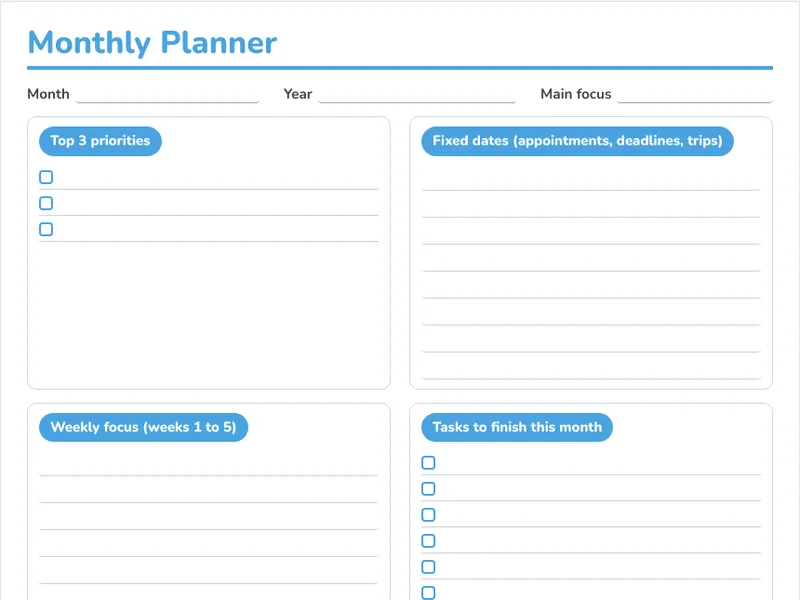 Monthly Planner: Free Printable One-Page Sheet
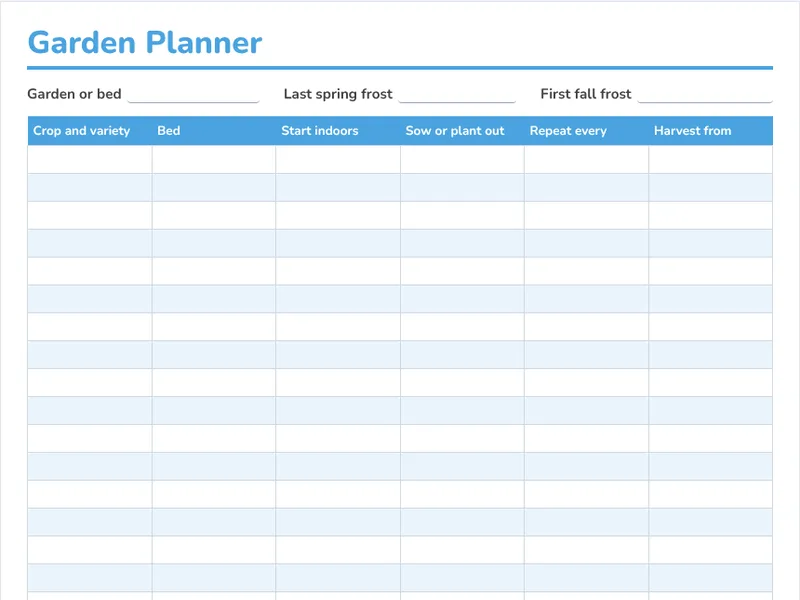 Garden Planner: Free Printable Planting Sheet
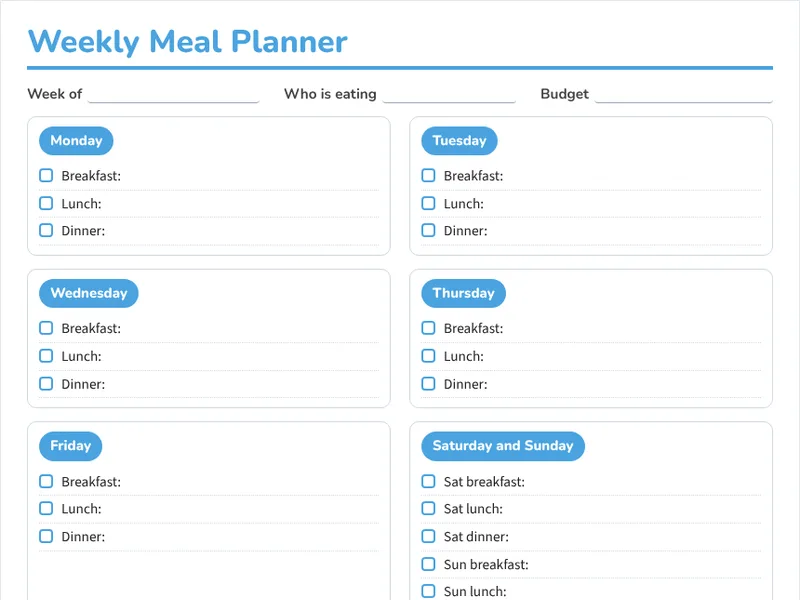 Printable Weekly Meal Planner
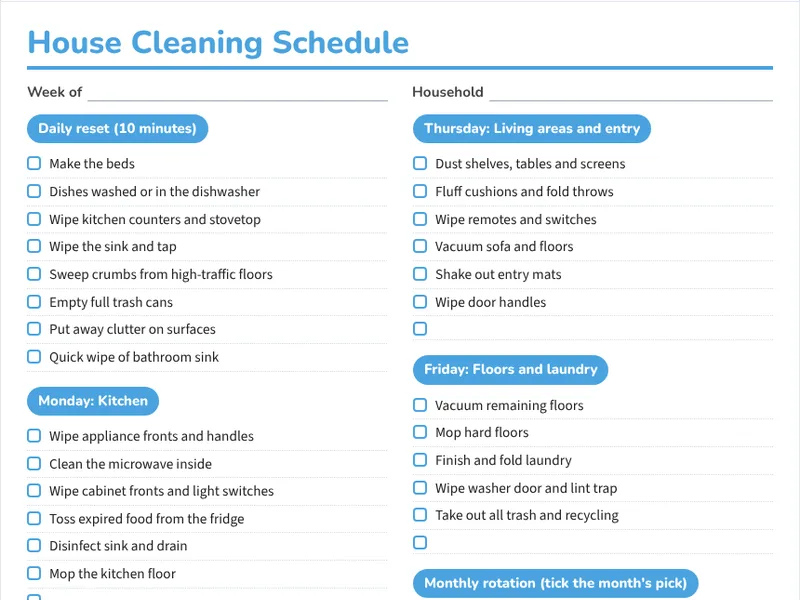 House Cleaning Schedule: Free Printable for Daily, Weekly and Monthly Jobs
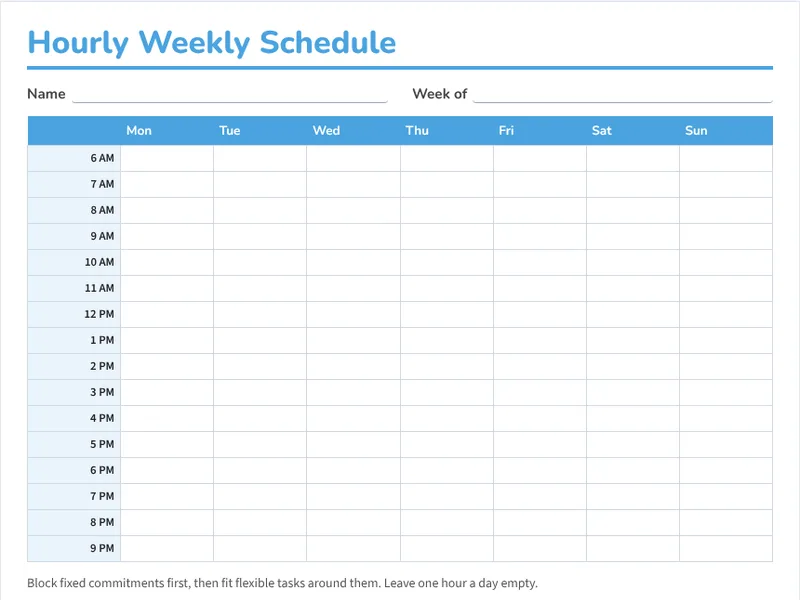 Hourly Schedule Template: Free Printable Weekly Planner
 Daily Planner 2027: Free Printable Page for Every Day