
Printable Medication Log Sheet You Can Fill In and Print

A printable medication log is a one-page record of every dose you take or give: which medicine, how much, when it was due, when it was actually taken, who gave it and anything worth noting. The free medication log sheet on this page does exactly that, with one row per dose, and it fits neatly on a single US Letter page. You can type into it here, save it in your browser, then print it.
| Date | Medication and strength | Dose | Due | Taken at | Initials | Notes or side effects |
|---|---|---|---|---|---|---|
One row per dose. Follow your prescriber's directions. This log is a record, not medical advice.
Free for personal, classroom and office use. Your entries are included in the print, PDF and PNG. Prints on US Letter and fits A4.
Black and White Medication Log Printable
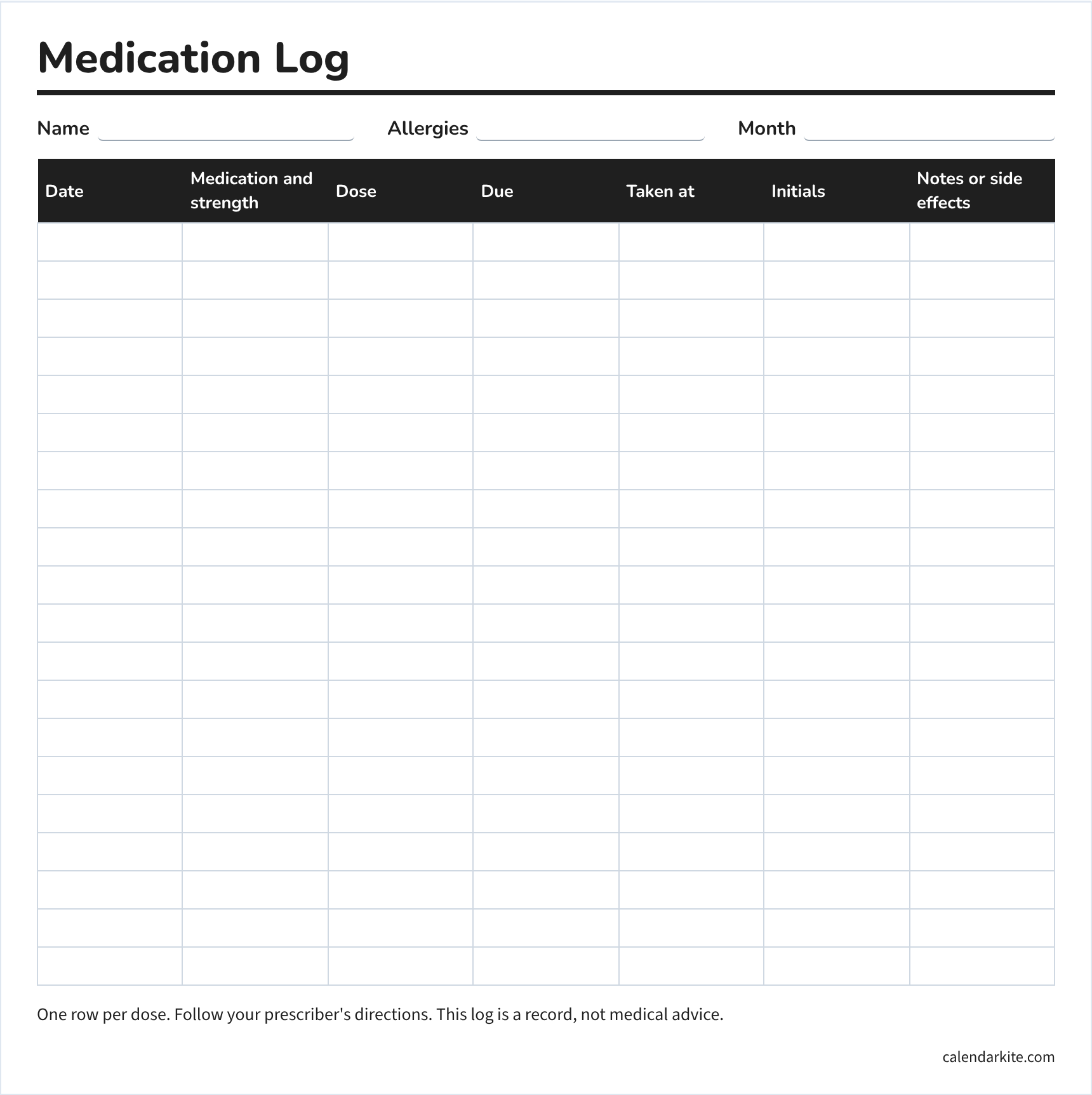
This is the one I print most, since plain black lines use hardly any ink and photocopy cleanly for a caregiver or doctor's visit. I test-print every design on my home inkjet, and this one stays crisp even on draft mode.
Sage Green Medication Log
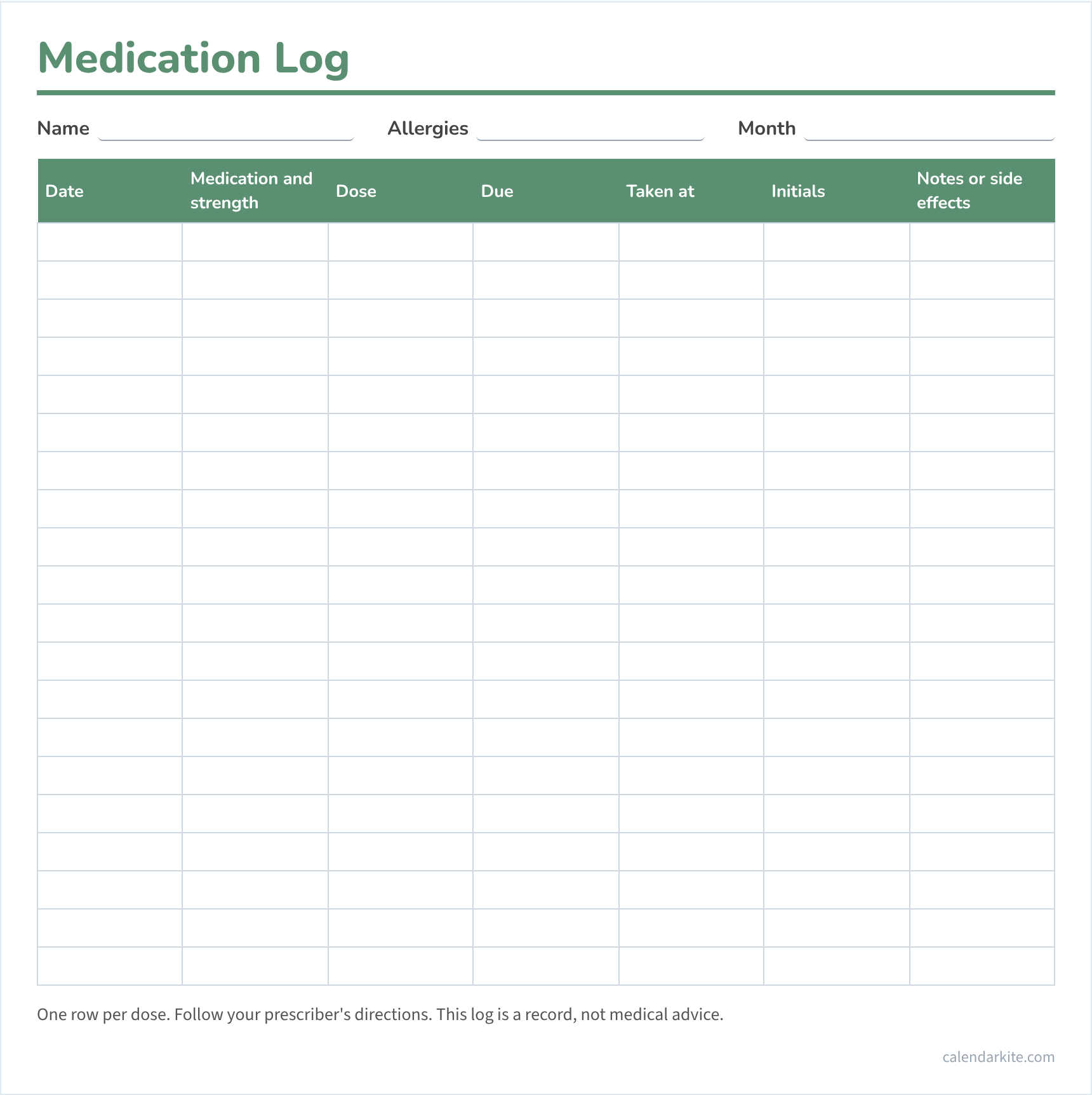
The calm green suits a kitchen counter or bathroom shelf where you want a log you will actually glance at daily. I keep my planner on the kitchen counter, so I like a medication sheet that blends in beside it.
Lavender Medication Log Printable
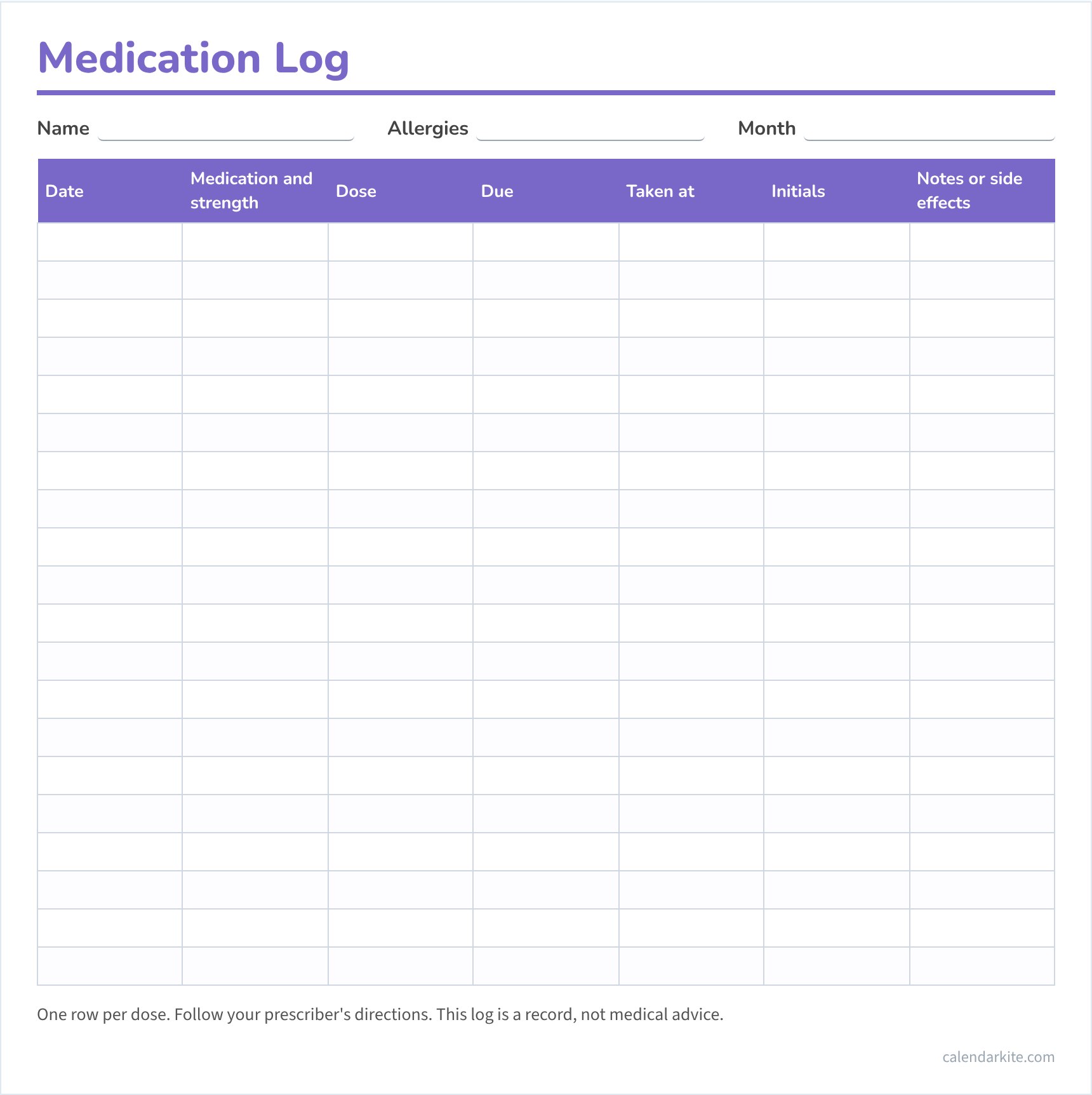
Lavender works well if you are tracking a few daily medications for yourself and want a soothing sheet to clip inside a planner or cabinet door. I left the rows roomy because tiny boxes were the first thing I changed in my early drafts.
Cute Medication Log
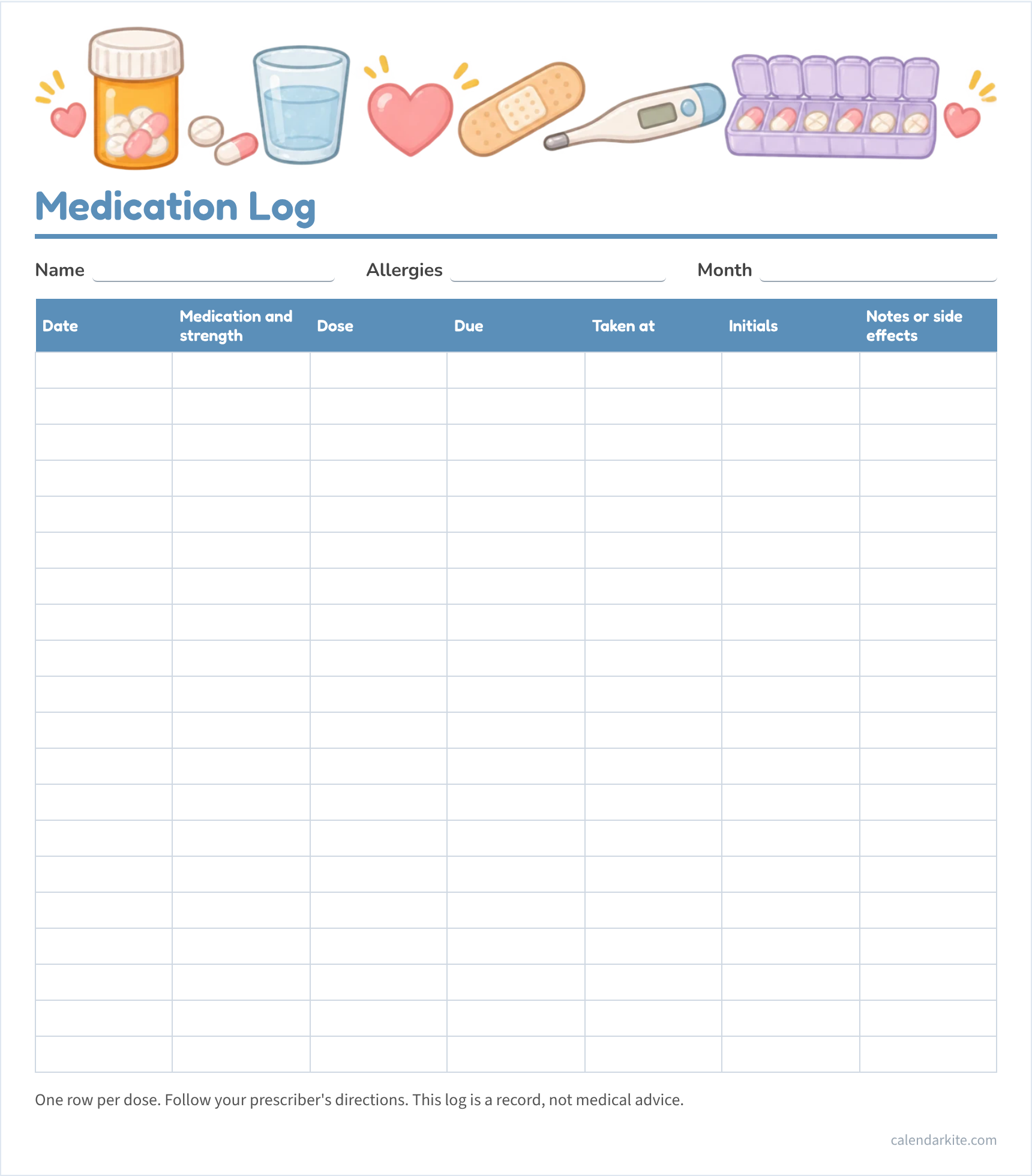
Pastel blue with little hand-drawn illustrations makes this a friendly pick for a parent logging a child's antibiotics or vitamins. With two kids at home, I find that a log that looks cheerful gets filled in far more reliably.
Floral Medication Log Printable
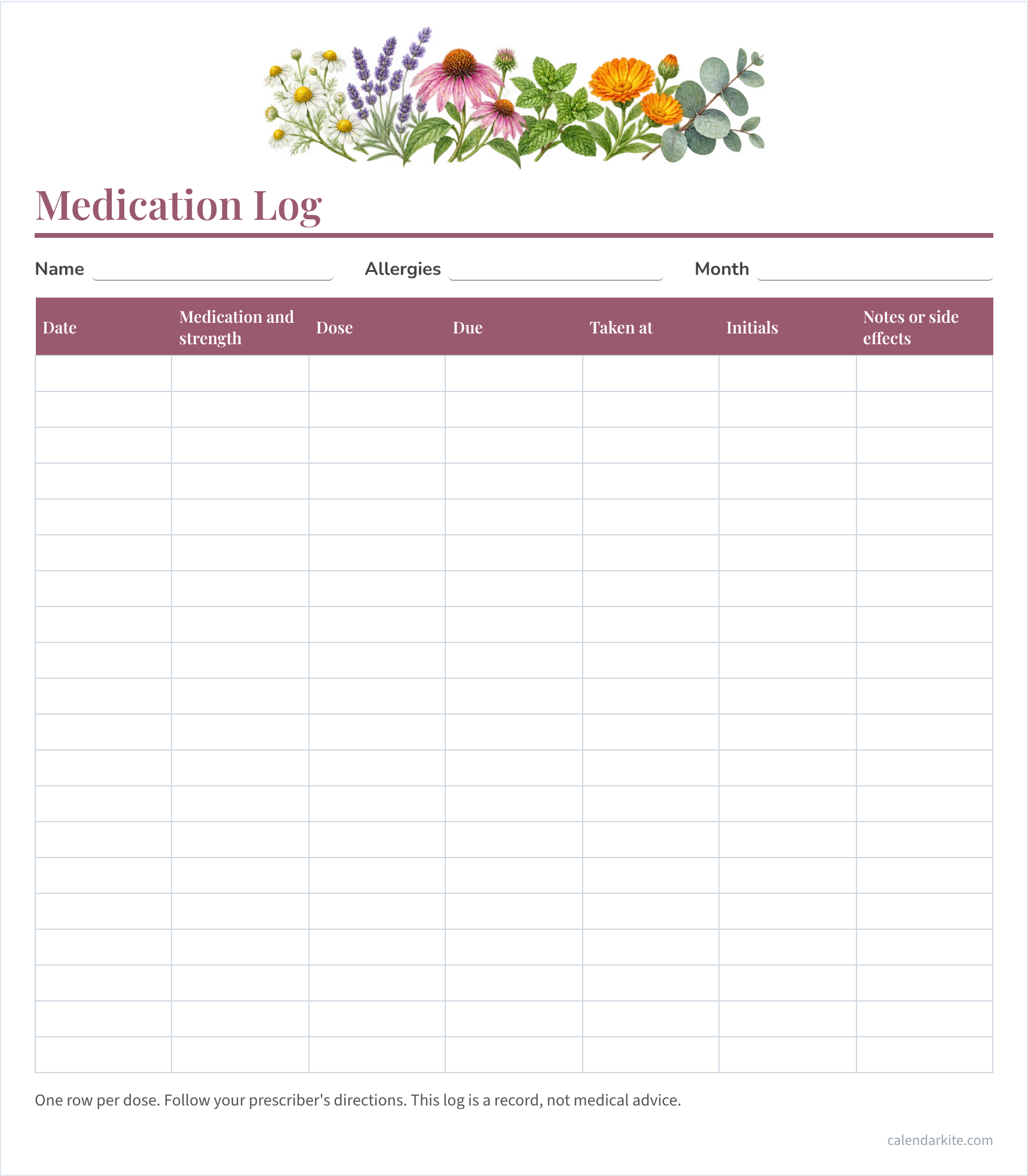
Watercolor flowers and elegant serif headings suit a gift for an older relative or a log you keep on a bedside table. I test-print it on both US Letter and A4 so the margins hold up either way.
Colorful Medication Log Printable
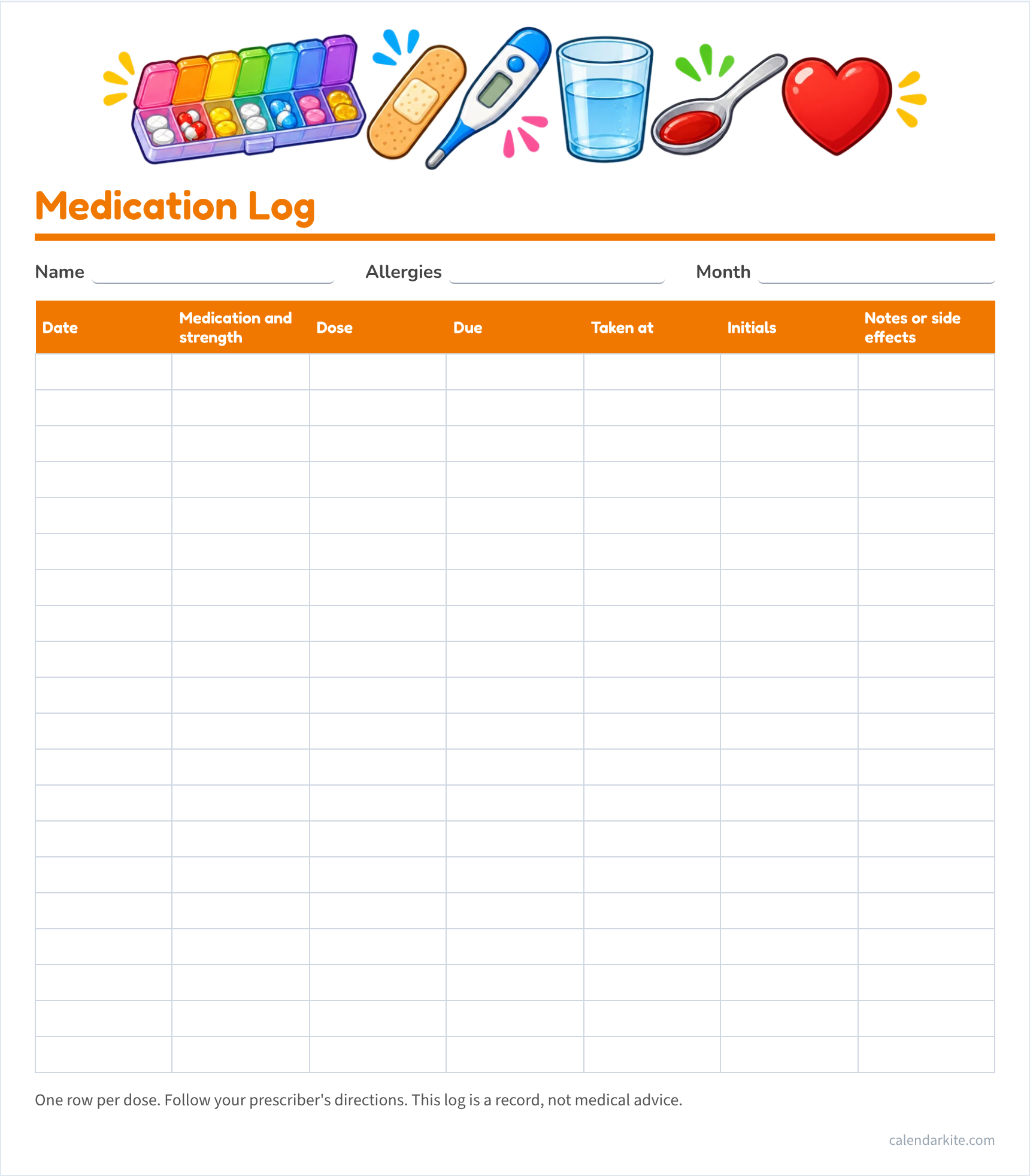
Bright orange and yellow with bold cartoons make this the easiest sheet to spot on a busy fridge, handy for a household sharing one log. I keep my paper calendar on the fridge, so that is where I would post it.
Simple Minimalist Medication Log
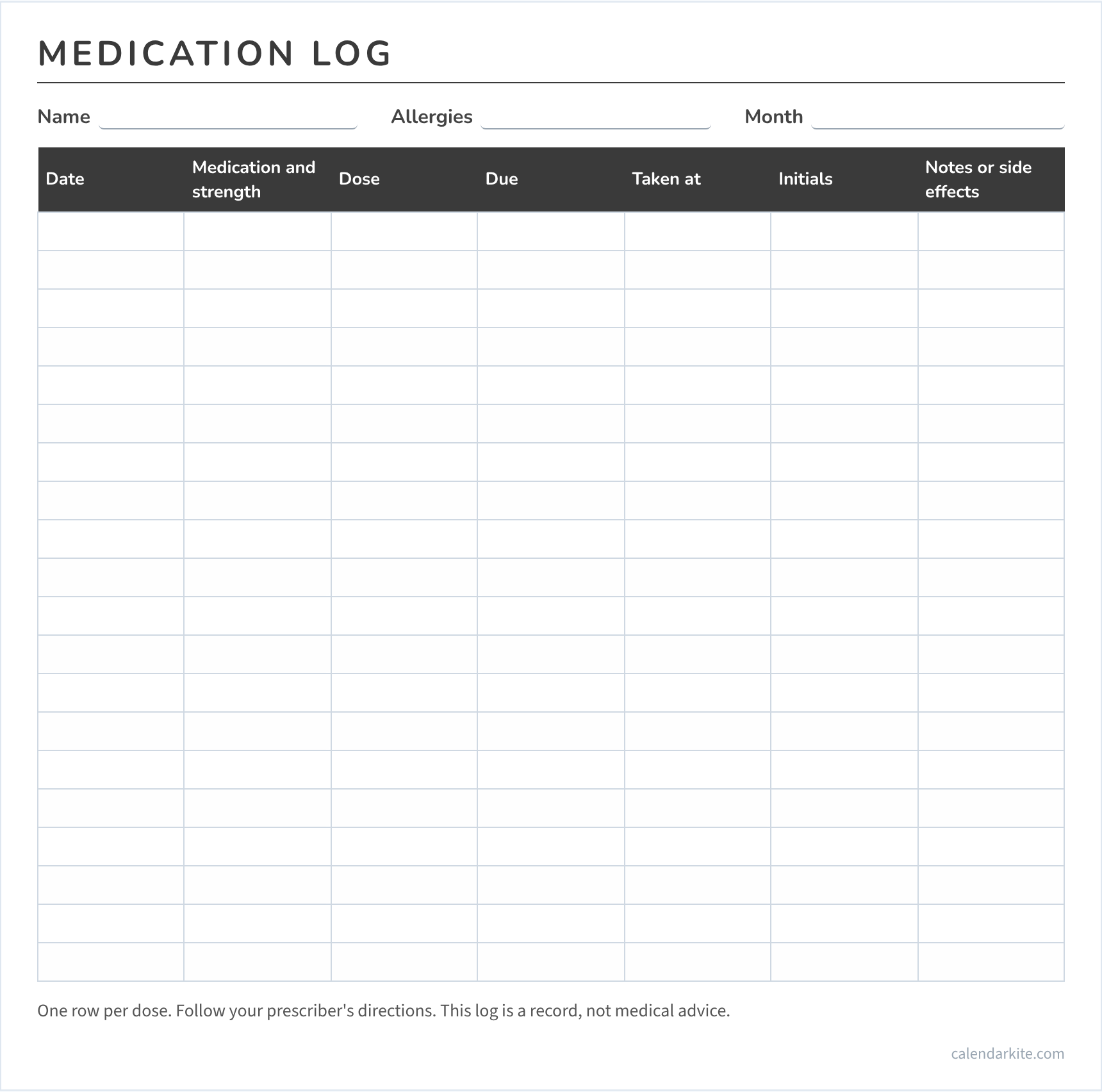
Thin gray lines and a light uppercase heading give you a clean sheet for a doctor's appointment or a long-term prescription. In my office years I learned that the less clutter on a form, the fewer entries get skipped.
Aesthetic Medication Log Printable
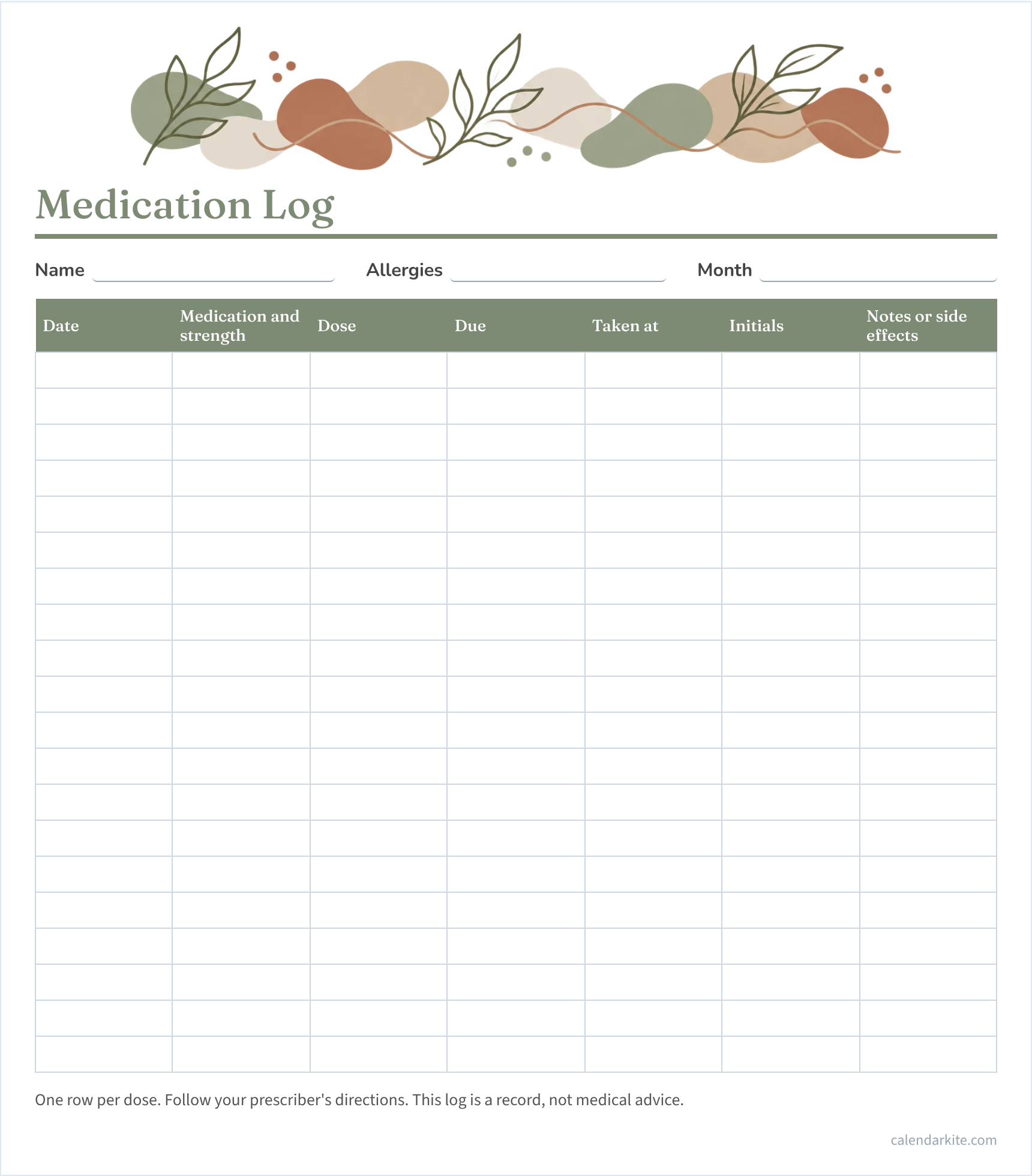
Muted sage, sand and terracotta with soft line-art leaves suit a tidy home where the log lives in a binder or beside your planner. Fill it in right after each dose, because logs rebuilt from memory at night are the ones that go wrong.
Vintage Style Medication Log
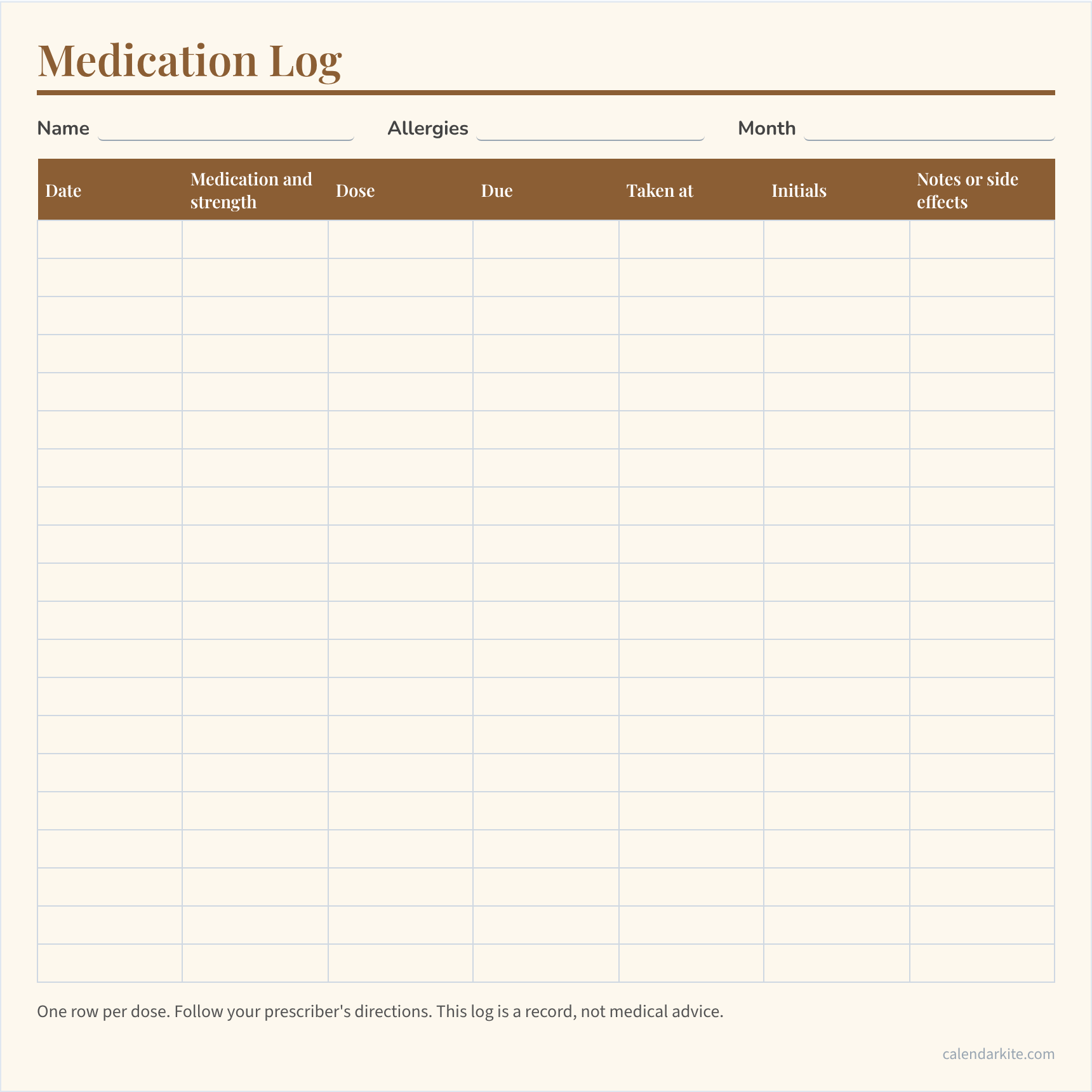
Cream paper and brown serif headings give a classic, apothecary feel that suits a gift for a grandparent or a binder of family health records. I checked it on plain white paper from my inkjet, and the warm tones still print clearly.
Bold Modern Medication Log Printable
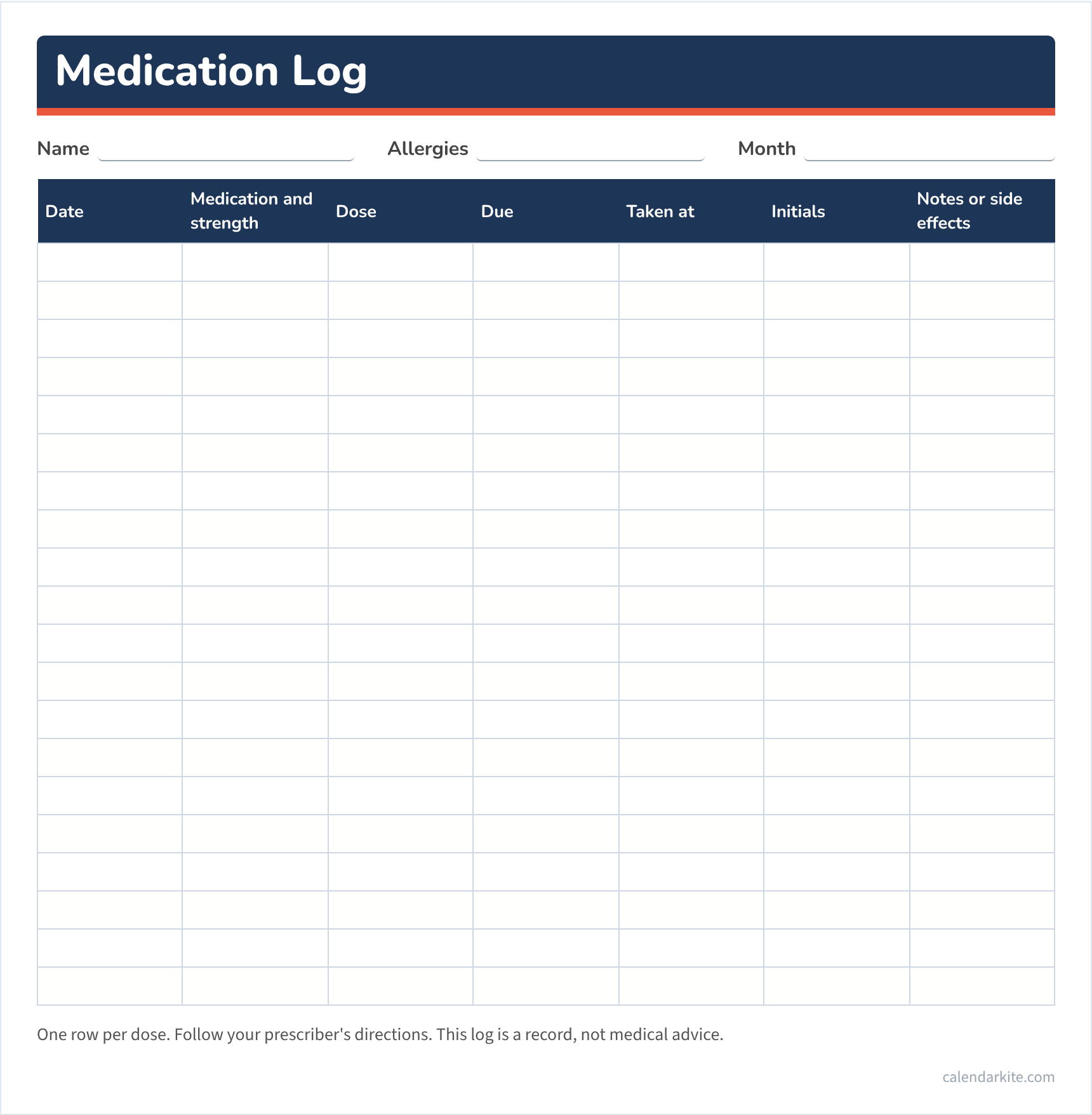
The navy header band and coral accent make the medication name and dose stand out, which helps when several people share care of one family member. In my office days I wanted key details readable at a glance, so I kept the header large.
I spent about ten years in office administration keeping schedules, supply lists and staff rotas readable, and the lesson that carried over is simple: a record only helps if it is quick to fill in and clear to read later. This log is built around that idea. It is a tool for organizing information, not medical advice, so always follow the directions from your doctor or pharmacist.
What a medication log is, and what it is not
A medication log is a running record of events. Each line says that a particular dose of a particular medicine was taken at a particular time. That makes it different from a medication list, which is a standing summary of everything you are prescribed, and different from a medication schedule, which says what should happen. The log says what did happen.
That difference matters more than it sounds. If your schedule says 8 AM and you took the tablet at 10:30 because you were out of the house, the log should say 10:30. A doctor looking at a pattern of late doses, or at a headache that always shows up after a missed one, can learn something from that. A log that only repeats the plan teaches nobody anything.
A log also does not replace the label on the bottle or the advice of your pharmacist. Treat it as a notebook that sits beside those, not a substitute for them.
What is on this printable medication log sheet
The sheet opens with three fill-in fields: name, allergies and month. Putting allergies at the top is a habit borrowed from clinical forms, and it costs one short line. If anyone else ever picks up this sheet, whether a relative, a babysitter or a paramedic, that line is the first thing they should see.
Below that is a table with twenty rows and seven columns:
- Date: the day of the dose.
- Medication and strength: for example “Amoxicillin 250 mg” or “Vitamin D 1000 IU”.
- Dose: how much you took, such as one tablet or 5 mL.
- Due: the time the dose was scheduled.
- Taken at: the real clock time.
- Initials: who took or gave it.
- Notes or side effects: anything unusual, plus reminders such as “with food”.
Most free logs I looked at while planning this one combine the due time and the taken time into a single column. I split them on purpose. When I was keeping rotas in an office, the gap between planned and actual was always the interesting part, and the same is true for medicines. I also made the notes column the widest, because that is where people run out of room first.
How to fill in the log, step by step
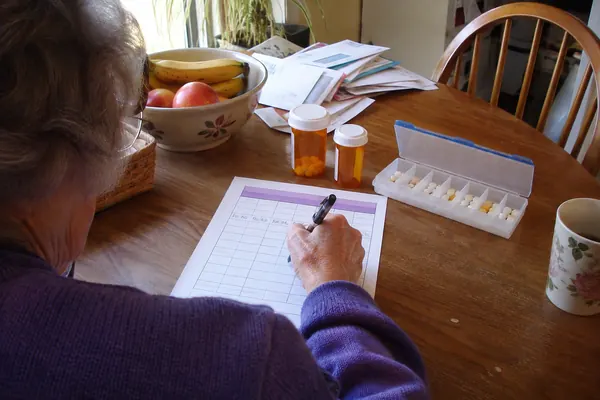
Start with the bottles or packets in front of you, not from memory. Copy the name and strength exactly as the label shows them, because “the white one” is no use to anyone else. Write your name, any allergies and the month at the top.
Then work through the day like this:
- Write the date and the medicine name with its strength on the next empty row.
- Enter the dose as the label gives it (one tablet, 10 mL, two puffs).
- Fill in the time the dose was due.
- When you take the dose, write the actual time and your initials straight away.
- Add a note if anything is worth remembering: taken with food, felt dizzy, dose was late.
One medicine taken three times a day uses three rows a day. That feels like a lot of lines, but it keeps every entry unambiguous, and it means you never have to squint at a tiny checkbox to work out which dose it belonged to. If you take many medicines at the same time of day, give each its own row and write the same time on each.
Try this: Before you print, type your medicines into the sheet once, then print three copies. Pre-filling the medicine and due-time columns means that each day you only add the taken time and your initials.
Who this log suits
It suits anyone who takes more than one medicine, or one medicine on a tricky schedule. That includes people on a short antibiotic course, people recovering from surgery, adults managing a long-term condition and anyone adding vitamins and supplements to prescriptions. Writing supplements down is worth the trouble, since they can interact with prescriptions and your pharmacist will want to know about them.
It is also a good fit for family caregivers. If you help a parent with their tablets, or share the job with a sibling, one sheet on the counter tells you both whether the 6 PM dose has already happened. Two people each assuming the other one did it is how doses get doubled or skipped.
Parents of children on temporary medicines, such as antibiotics or inhalers, will find it handy too. Children’s doses are often measured in milliliters and can change with weight, so recording the exact amount given is more useful than a tick.
Logging as-needed medicines
Pain relievers, allergy tablets, inhalers and similar medicines are taken “as needed” (often written PRN on prescriptions). They are the hardest to track, because no schedule tells you when the next dose is due. A log is the best tool for them.
For an as-needed medicine, write “PRN” or “as needed” in the Due column. Put the real time in the Taken at column, and use the notes to record the reason: headache, wheezing, trouble sleeping. When you check the sheet before the next dose, you can see at a glance how long it has been, which is what the label’s minimum gap between doses is really asking.
The reasons also help at appointments. “I took it eleven times this month, mostly on Mondays” is a much more useful sentence for a doctor than “I take it quite often.”
What to do when a dose is missed or late
Log the truth. If you missed a dose, write the row anyway, leave the Taken at column empty and write “missed” in the notes. If it was late, write the real time. Do not leave a tidy-looking blank that someone later reads as a dose that was taken.
What to do next depends on the medicine, and that is a question for your pharmacist or prescriber, not for a printable. Many package leaflets have a section on missed doses, and a pharmacist can answer it in a minute on the phone. Never double up to catch up unless a professional has told you to.
Try this: Write your pharmacy’s phone number in the first notes cell of the sheet. When a dose goes wrong at 9 PM, you will not have to hunt for it.
Using the log for a child or another person
When you are giving medicine to someone else, the initials column becomes the most important one. It answers the question “did someone already give this?” before anyone says yes twice. In a household with two adults and a busy evening, that single column does more than any reminder alarm.
Use one sheet per person. Put their name and allergies at the top, and write doses in the units on the label. For children, it helps to record the measuring tool you used (a dosing syringe or a cup) so the number means the same thing every time. Household spoons are not reliable measures, and the log is a good place to stop relying on them.
If medicine is given at school, daycare or by a grandparent, a printed sheet that travels with the child keeps everyone on the same page. Many schools and childcare providers have their own required forms, so check with them first and use this log as your home record.
Marking mistakes and corrections
You will get a row wrong sooner or later. Cross it out with a single line so it can still be read, write the right entry on the next row and put a short note such as “wrong time, corrected”. Avoid correction fluid and heavy scribbling. A record that has been visibly blotted out is harder to trust than one with an honest correction.
I print my logs in black and white and fill them in with a pen rather than a pencil, because pencil smudges on a fridge door and fades when it is handled daily. If your handwriting is small, use the typed version on this page and print the result. Typed text is easier to read for anyone helping you, particularly if your sheet is shared with someone who has tired eyes.
Keep abbreviations to a minimum and agree on them in advance if more than one person writes on the sheet. “AM” and “PM” are fine. Personal shorthand that only you understand is not.
Tracking refills and course end dates
A medication log is a quiet early warning system for running out. Once a medicine is on the sheet, you can see how many days of it you have used. A simple habit is to write the “runs out” date in the notes column on the first row of a new bottle, then glance at it each week.
For short courses such as antibiotics, write the last day in the notes on the first row (“finish 14th”). Stopping early or carrying on past the end date are both common mistakes, and a written finish line removes the guesswork.
If you like to see the whole month at once, put the refill date on your wall calendar as well. The weekly calendar printable is a good place for pharmacy pick-ups and appointment reminders, with the log keeping the dose-by-dose detail.
Taking the log to appointments
A completed sheet is excellent evidence at a doctor’s visit. It shows what you really took, how regularly and how you felt, which is often more reliable than a recollection from three weeks ago. Bring the current sheet and the last finished one, along with the actual bottles if you can.
Before you go, read through the notes column and highlight anything you want to ask about: a side effect that showed up on a certain day, a dose you often forget, a medicine you have stopped. Pick two or three questions rather than twelve, and write them at the bottom of the page.
If you also want to track how you have felt alongside your doses, a few related sheets pair well with this one. The sleep log printable and the communication log are useful if you are noting symptoms or recording calls with a care team.
Variations: weekly grid, AM and PM, injection log
The one-row-per-dose layout here is the most flexible, but it is not the only way to keep a record. If you take the same few tablets every day, a weekly grid with the days across the top and medicines down the side is faster to fill in, because each dose is one tick. The trade-off is that a tick cannot hold a time, a dose change or a note, so use it only for steady routines. The habit tracker printable works for that kind of daily tick-off.
Other adaptations are easy to make from this sheet:
- Morning and evening only: put “AM” or “PM” in the Due column and leave out clock times.
- Injection log: use the Notes column for the injection site, and rotate sites as your care team advises.
- Temperature and dose: for fever medicines, write the temperature reading in the notes.
- Medication administration record (MAR): this is the formal version used in care homes, with signatures and sometimes a legal retention period. A home log is not a substitute where a facility’s rules apply.
For a broader look at everything else in this family of sheets, the trackers and logs page has more to choose from.
Printing tips for Letter and A4
The sheet is built for US Letter in portrait orientation. I test-print every printable on my home inkjet on both Letter and A4 before it goes on the site, and this one fits both with the print dialog set to 100 percent or “actual size”. If your printer offers “fit to page”, turn it off, because it can shrink the table and make the Notes column harder to write in.
Plain 20 lb copy paper is fine. If you plan to keep a sheet on the fridge for a month and handle it daily, print it on slightly heavier paper or slide it into a clear sleeve and write with a dry-erase marker on the front, copying the information onto a fresh sheet at the end of each week.
Print a few at a time. Having a spare sheet in a drawer means a full page is never the reason a dose goes unrecorded. For a month of twice-daily medicines, plan on roughly three sheets.
Where to keep the sheet at home
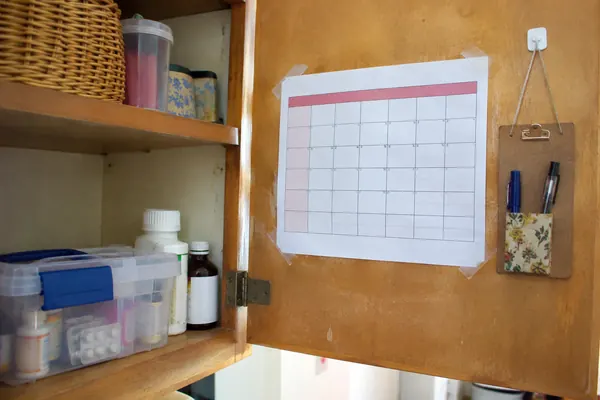
Put it where the medicine is taken, not where it is stored. If you take your tablets with breakfast, the sheet belongs near the kettle or the coffee maker. The log is only useful if writing a line takes about ten seconds and no walk across the house.
Keep medicines themselves out of reach of children and pets and stored as the label says. Keep the sheet itself away from heat and moisture, which usually rules out the bathroom. I keep a paper calendar on the fridge and a planner on the kitchen counter, and a medication sheet fits naturally beside the planner. It becomes part of the same morning scan: what is on today, and has the dose been done.
Anyone else in the home who might need to help in a hurry should know where it is. A quick word, or a note on the fridge, is enough.
Filling it in on the page and saving it
You can fill in the sheet directly on this page. Type into every line and field, tick the boxes, edit the items and tap the cells you want to mark. Everything is saved in your browser on your own device, so it will be there when you come back, and I do not see what you type. Because it is stored locally, clearing your browser data or using a different device will remove it, so print or keep a copy of anything you rely on.
Your medication details are personal, so if you share a computer, print the sheet and then clear it from the page. If you prefer to write by hand, use the blank PDF download instead.
For a bigger picture of health habits beyond medicine, the wellness planner gives you space for sleep, movement and appointments on one spread. I like using a log like this for the daily detail and a planner for the rest of the week.
Try this: Print one sheet, fill it in for three days, then ask yourself which column you skipped. If it is the notes, widen your habit: add one word a day. If it is the initials, you probably do not need them yet.
Common questions
What is the difference between a medication log and a medication list?
A medication list says what you are prescribed: names, strengths, how often and why. A medication log records what actually happened: which dose was taken, at what time, by whom, and any notes. Many people keep both, and the log is the one you update every day.
How often should I fill in a medication log?
Fill it in at the moment you take or give the dose, not at the end of the day. Memory is the weak point of any log, and a row written five minutes after the dose is far more reliable than one written at bedtime.
What should I do if I forget to write down a dose?
Do not guess and do not take an extra dose to be safe. Leave the row blank or write 'unsure' in the notes, and ask your pharmacist or prescriber what to do. An honest gap is more useful to a clinician than a guessed entry.
Can I use one medication log for several people?
It is safer to use one sheet per person, with the name and allergies at the top. Mixing people on one page makes it easy to initial the wrong row, especially when two people take similar medicines.
How long should I keep old medication logs?
Keep the current sheet where you can see it and file finished sheets in a folder for a few months, or for as long as a treatment or a doctor's follow-up is ongoing. If you are a paid carer or work in a care setting, follow your employer's or state's record-keeping rules.
Does this log replace a pill organizer?
No, they do different jobs. A pill organizer sorts the doses ahead of time, while the log records that each dose was actually taken. Used together, they catch missed and doubled doses.
 Reading Log: Free Printable You Can Fill In and Print
 College Assignment Tracker: Free Printable Sheet
 Habit Tracker Printable (Free Monthly Sheet)
 Goal Tracker: Free Printable Sheet You Can Fill In and Print
 Job Application Tracker: Free Printable Sheet
 Workout Log Template (Free Printable Fitness Log)