
Reading Log for Kids (Free Printable)

A reading log for kids is a simple sheet where a child writes the date, the book, how much they read and how it went, so reading becomes a small daily habit that you can see. The free printable on this page has all of that in one table: date, book title, pages, minutes, who read, a star rating and a space for a grown-up’s initials. You can type into it on screen, or print it and fill it in with a pencil.
| Date | Book title | Pages | Minutes | Who read? | Stars | Grown-up |
|---|---|---|---|---|---|---|
Who read? Write Me, Us or You (a grown-up read to me). Color in stars from 1 to 5.
Free for personal, classroom and office use. Your entries are included in the print, PDF and PNG. Prints on US Letter and fits A4.
Black and White Reading Log for Kids Printable
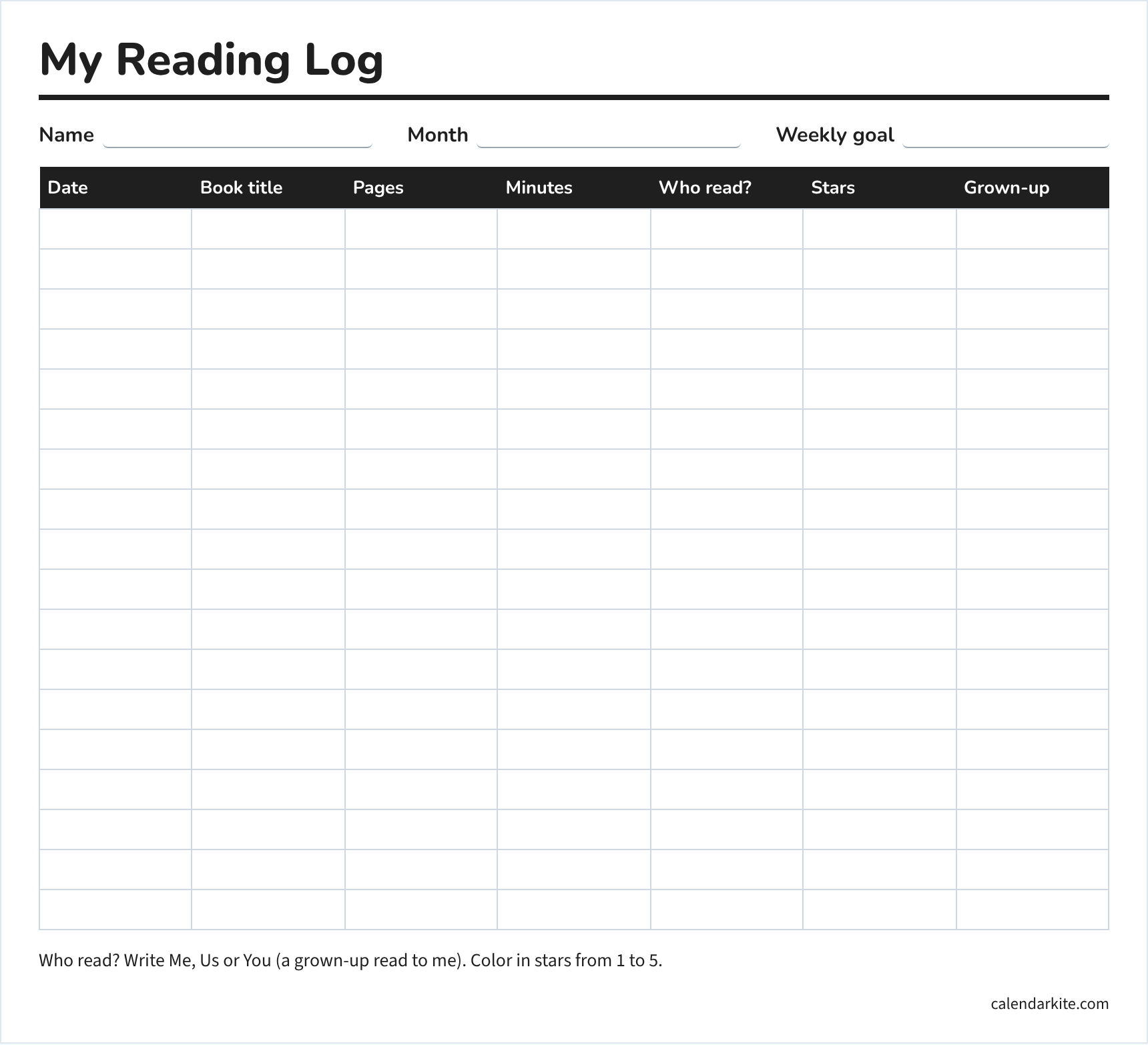
I made this one for families who print a lot and want to save color ink, or for classrooms that photocopy a stack. I test-print every log on my home inkjet, and the plain black lines stay crisp even on draft mode.
Pink Reading Log for Kids
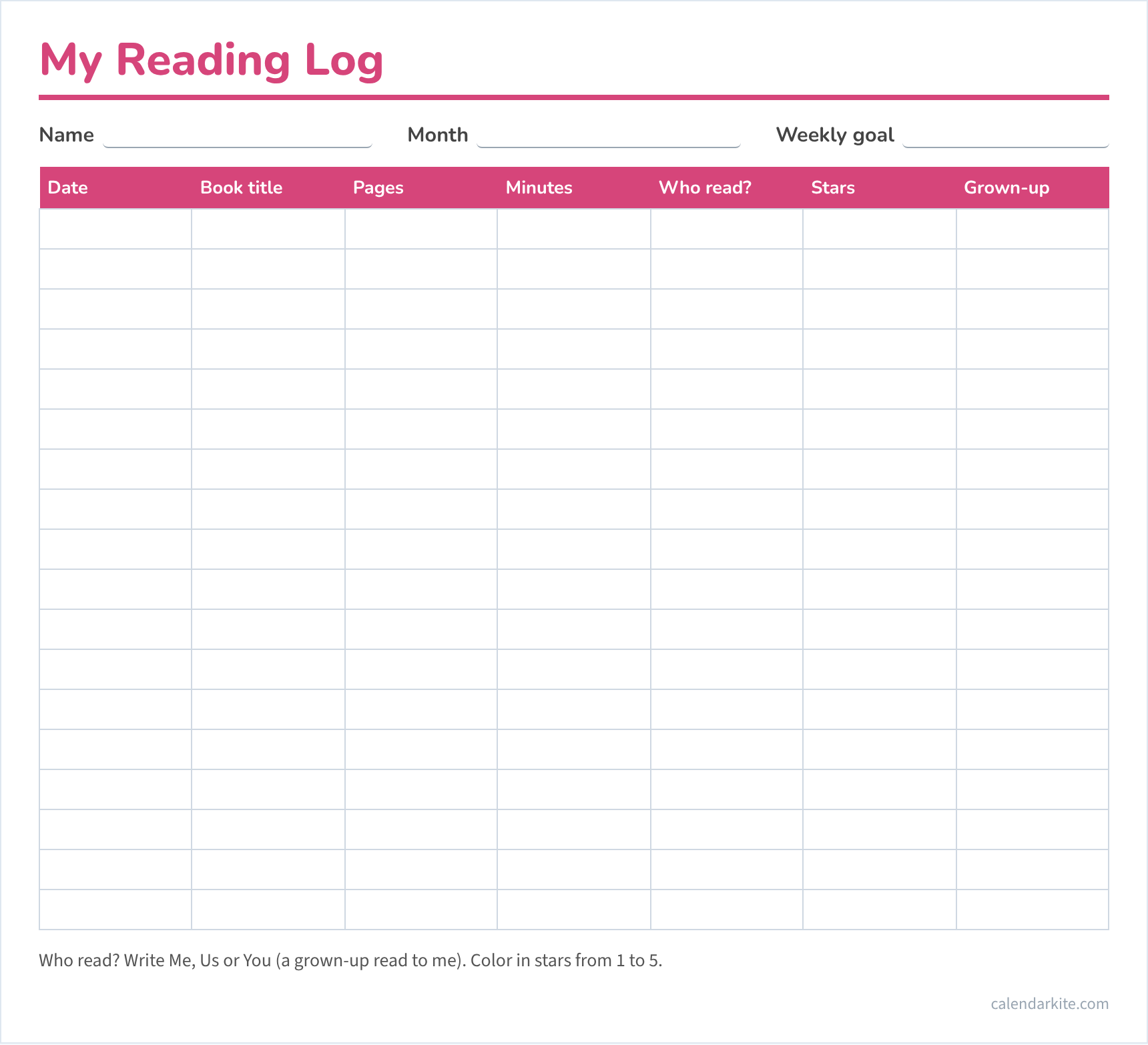
This soft pink log suits a young reader who likes a little color on the page, and it works well for a 20-minute bedtime reading habit. You can have your child jot down the title, pages read and a quick favorite part each night.
Sage Green Reading Log for Kids
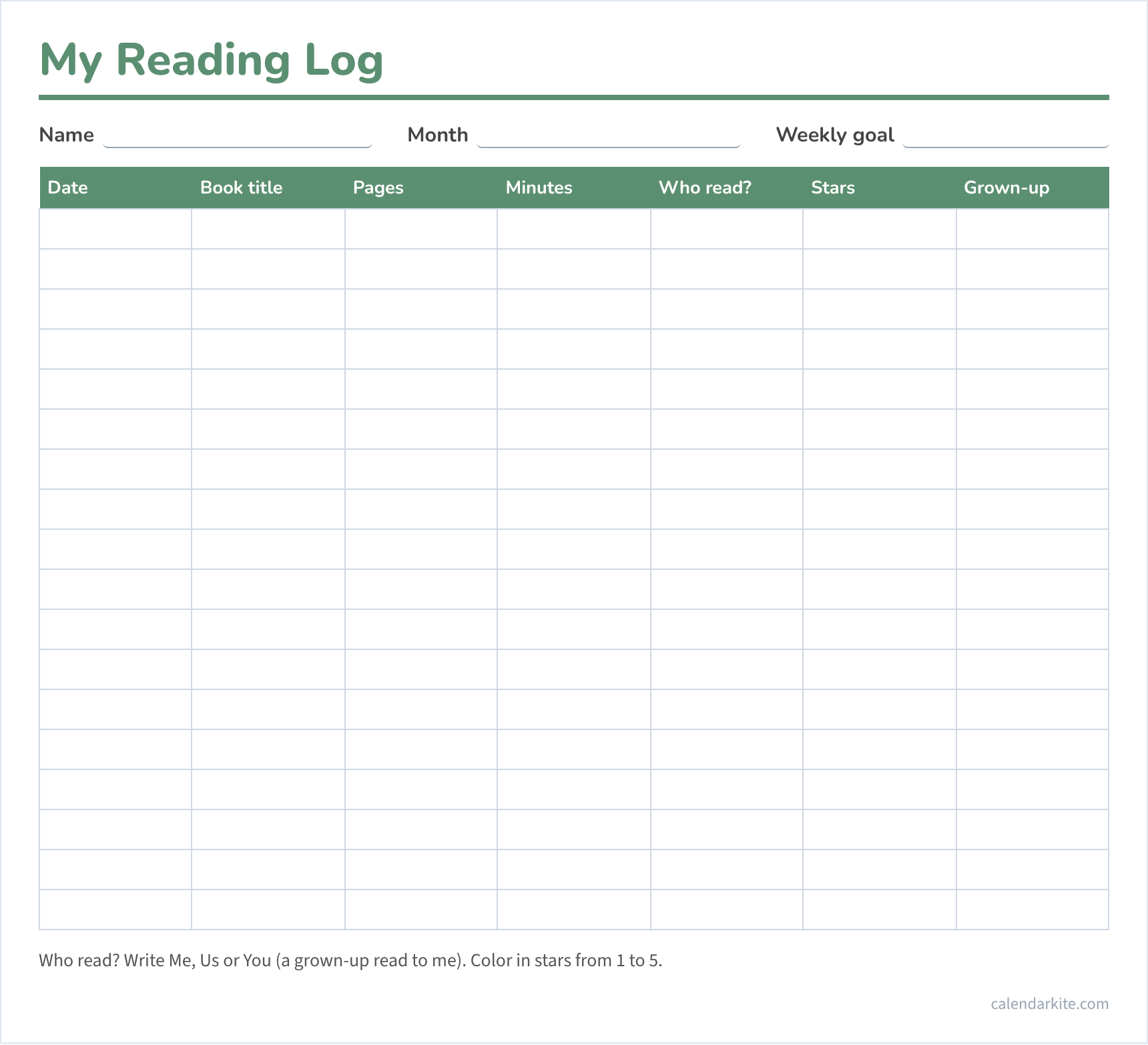
I like this sage green version for older kids who think bright designs are babyish, and it looks calm clipped to a clipboard. It suits a summer reading challenge where you track books and minutes each week.
Lavender Reading Log for Kids
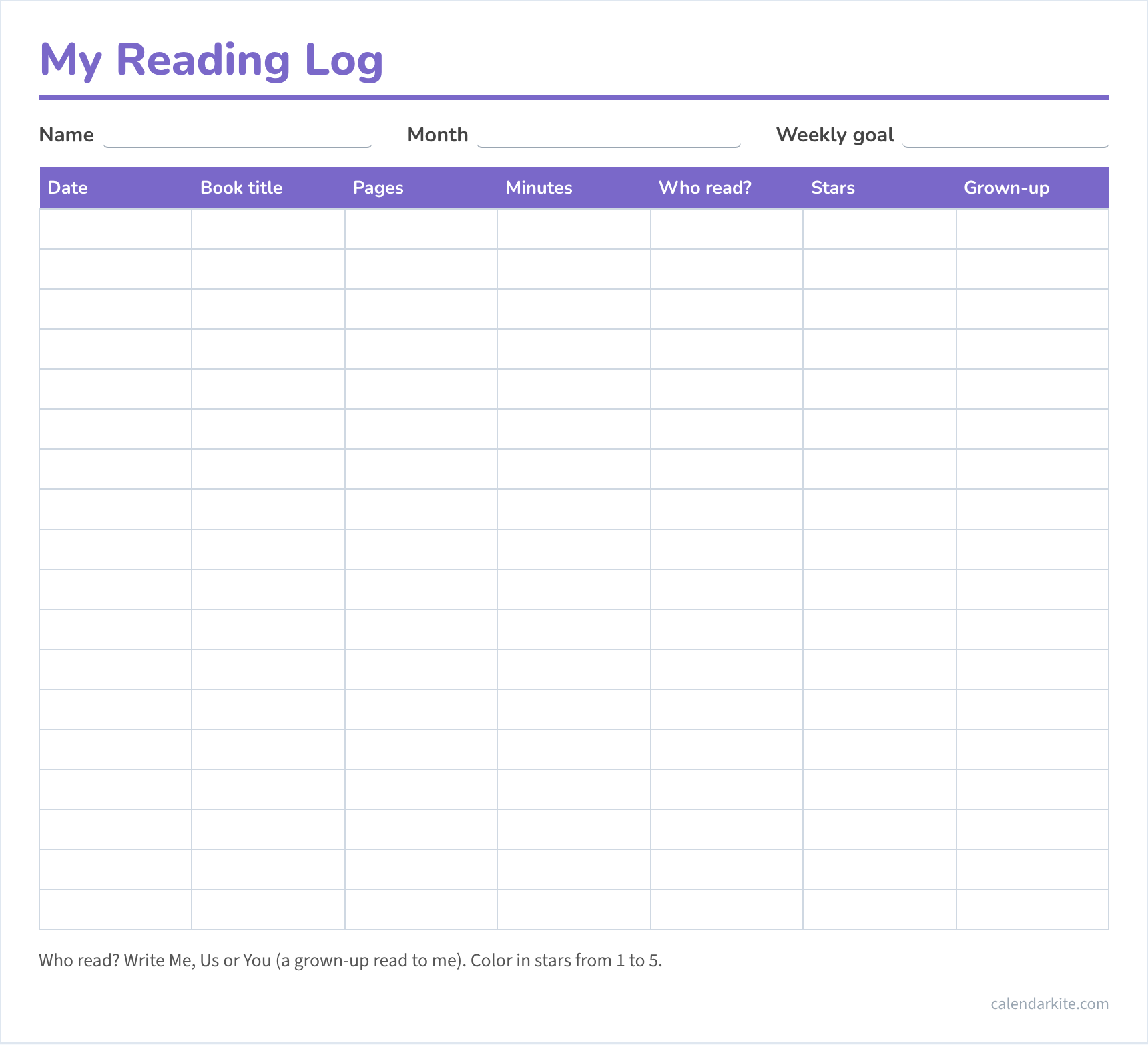
This lavender log works nicely for a child who loves purple and wants a reading chart for their bedroom wall or binder. I keep the rows roomy because small writing boxes are the thing I see frustrate kids most.
Cute Reading Log for Kids
The pastel blue design with hand-drawn style illustrations at the top suits early readers in kindergarten or first grade. Use it for a classroom reading challenge or a home sticker routine where each finished book earns a mark.
Floral Reading Log for Kids
I picked this watercolor floral version for families who want something a bit more elegant, like a reading journal page tucked into a planner. At home my planner lives on the kitchen counter, so a log like this fits right beside it.
Fun Colorful Reading Log for Kids
Bright orange and yellow with bold cartoon art makes this the one for younger kids who need reading to feel like a game. Hang it on the fridge, where I keep my paper calendar, and let your child mark each finished book.
Simple Minimalist Reading Log for Kids
This thin gray line design is for kids and parents who prefer a clean page with no distractions, and it prints light. I learned in the office that plain, well-spaced rows get filled in more consistently than crowded ones.
Aesthetic Reading Log for Kids
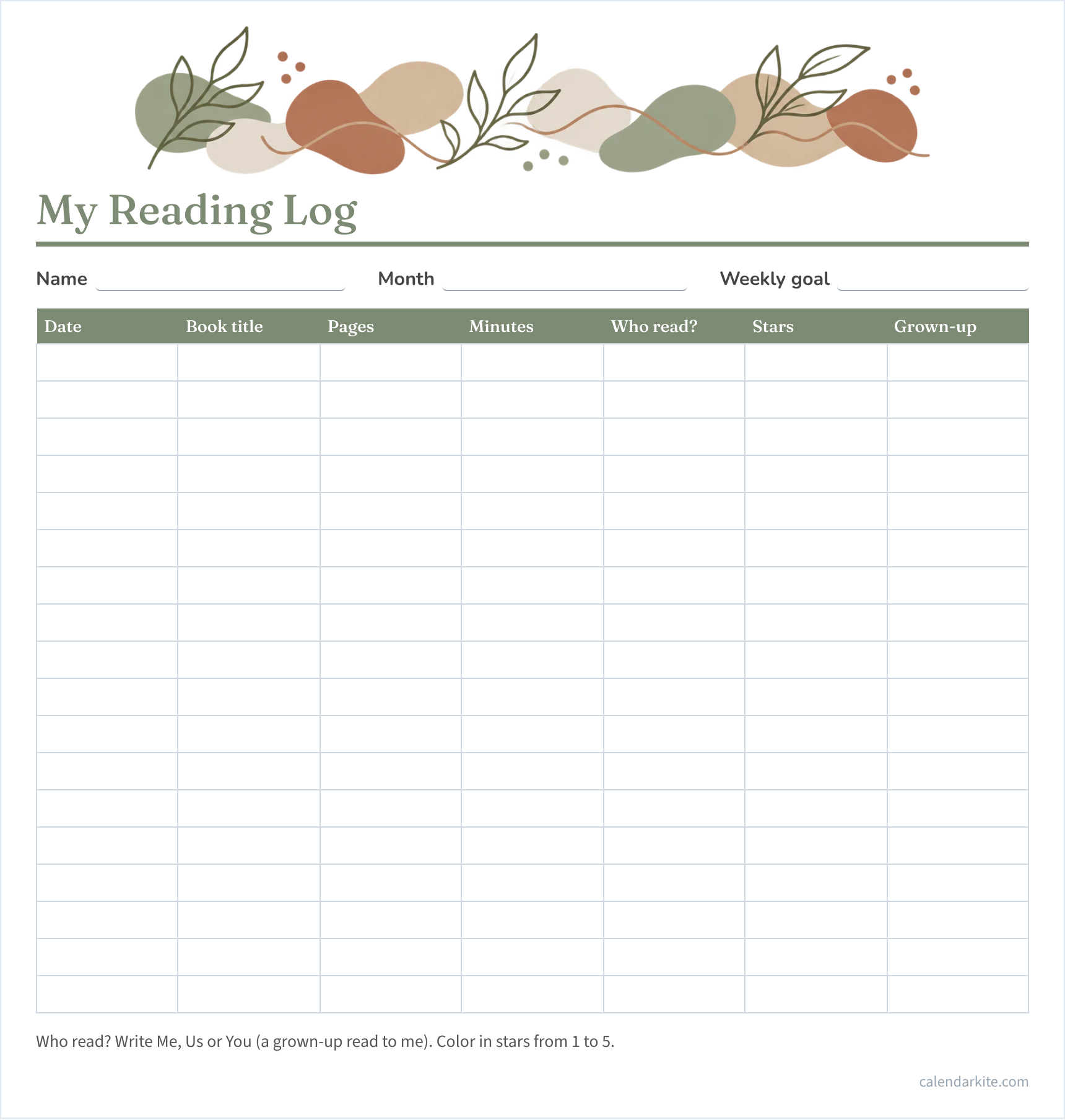
With muted sage, sand and terracotta and soft line-art leaves, this suits tweens who want a reading log that looks like a journal page. It works well for tracking a book-club list or a monthly reading goal.
Modern Bold Reading Log for Kids
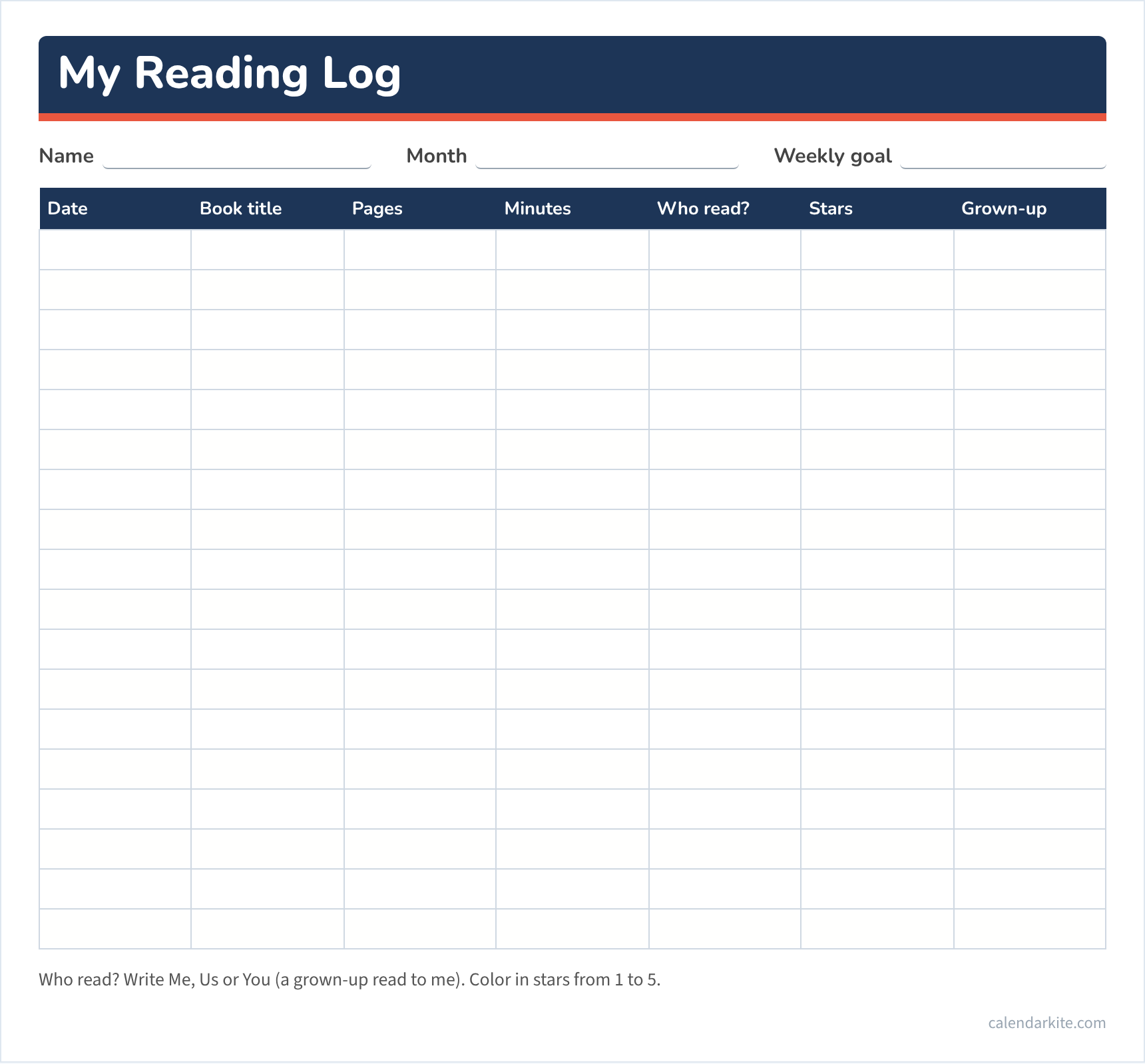
The navy header band with a coral accent gives this log a modern, school-ready look for upper elementary readers. It suits a classroom folder or homework binder, and I check that it prints cleanly on both US Letter and A4.
I spent about ten years in office administration, where the whole job was keeping lists readable at a glance. I brought that thinking to this sheet. The rows are tall enough for a young child’s handwriting, the columns are few enough to stay tidy, and every box earns its place. Below you will find how to fill it in, how much reading to aim for, what counts, and ways to adapt the sheet for different ages.
What a reading log for kids is for
A reading log has two jobs. For the child, it is proof that something happened: a row of titles and little stars is a surprisingly good feeling at the end of a week. For the adult, it is a quick way to see whether reading is actually happening, without having to ask “Did you read today?” every evening.
Teachers often send home a log to build a routine and to see what a child is choosing. At home, I think it works best as a record of effort rather than a test. Nobody gets graded on their star ratings, and a book that took three weeks is just as welcome as one finished in an evening.
You might also hear the same thing called a children’s reading log, a reading tracker or a reading chart. The names overlap, and the sheet below covers all of them. If you want a wider record that lasts years, a book tracker template suits an older reader who wants to keep a list of everything they finish.
How to fill in the reading log
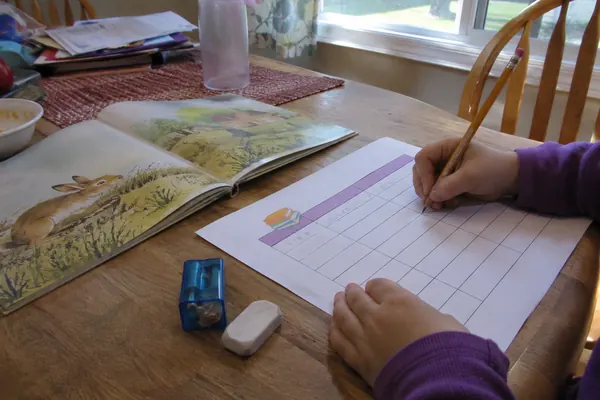
Start at the top. Your child writes their name, the month, and a weekly goal. The goal can be minutes (“100 minutes this week”), a number of nights (“5 nights”) or a number of books. Pick one, write it in, and keep it small enough that a normal week can reach it.
Each time they read, they fill in one row:
- Date: the day and month are enough (for example, 12 Mar).
- Book title: the full title for older kids, a short version for little ones, or a grown-up can write it.
- Pages: the pages read in that sitting, or a chapter number if that is easier.
- Minutes: the time spent, rounded to the nearest five.
- Who read?: Me if the child read alone, Us if you took turns, You if a grown-up read aloud.
- Stars: one to five, colored in or circled. This is just their opinion.
- Grown-up: initials or a signature, if your teacher wants one.
The sheet has 18 rows, which is enough for about a month of reading five or six days a week. If your child reads more than once a day, use two rows. If they skip a day, leave the row blank and do not fill it in later from memory. An honest gap is more useful than a guess.
Try this: Fill in the first row together tonight, using a book your child is already reading. Let them choose the star rating, even if it is only two stars. Seeing that honest ratings are allowed makes the rest of the log easier.
Who this reading log suits
I built the layout for children from about five to eleven, roughly kindergarten through fifth grade. A five-year-old will mostly use the date, title and “Who read?” columns, with a grown-up doing the writing. A nine-year-old can handle every column on their own and may like the independence of it.
It works for the classroom or for home. Teachers who ask for a take-home log can print a stack and staple the sheets into a small reading folder. Homeschooling families can use it as a simple record of reading time across subjects, and it pairs well with a homeschool planner if you are keeping the rest of the week on paper as well.
It also suits readers who do not fit the usual mold. Kids who read comics, graphic novels, audiobooks or books in another language can log all of it, because the title and minutes columns do not care what the book is. If you have an older child, the general reading log on this site has a more grown-up layout.
How many minutes should kids read each day?
Guidance varies, which is why I do not print a fixed target on the sheet. One by-grade guide suggests about 10 to 15 minutes in kindergarten and first grade, 20 minutes in grades two and three, and 20 to 30 minutes in grades four and five. A school district’s parent page suggests 10 to 15 minutes a day for first and second grade, and at least 15 minutes for grades three to five. The numbers differ a little, but they sit in the same range.
What matters more than the number is steadiness. One reading guide for parents puts it plainly: 10 minutes every day beats 30 minutes twice a week. For reluctant readers, another source suggests starting with 5 to 10 minutes and building up gradually.
So write your own goal at the top of the sheet. If your teacher gives you a target, use that. If not, start with something your child can reach on a tired Tuesday, then raise it after a few weeks once the habit feels easy.
What counts as reading
This is the question I see cause the most arguments, so decide it before you start. For young children, being read to counts, because listening to stories builds vocabulary and the love of books. That is why the “Who read?” column exists: you can log everything and still see how much was independent.
For older children, a lot of teachers want independent reading minutes only. If yours does, add up the Me rows and ignore the others, or ask the teacher whether paired reading counts. It is a short conversation and saves a lot of guessing.
Beyond that, I count picture books, chapter books, graphic novels, magazines, non-fiction and audiobooks. Instructions on a board game and a recipe read aloud are not really what the teacher means, but a child who reads a whole sports page because they love the team is reading. Keep the definition generous, and keep it the same all month.
Making the log a habit
A log only works if it gets used, and in my experience the only thing that matters is where it lives. At home I keep a paper calendar on the fridge and a planner on the kitchen counter, and anything that is not in one of those places gets forgotten. The reading log goes on a clipboard next to the couch, with a pencil tied on. If the sheet is hard to find, the habit does not happen.
Tie the reading to something that already happens every day. Right after dinner, before the bath, or in bed after the lights are dimmed are all good. A habit that follows an existing routine needs no reminding. If your child also has a morning routine chart, you can add reading to it there as one more line.
Fill in the row straight after the reading, not at the end of the week. Memory is poor, and a child who is guessing at minutes on Sunday night will feel the log is a chore. If the sheet gets filled in while the book is still in their lap, it takes thirty seconds.
Try this: Choose one reading spot and one time for this week, and write them in the footer of the sheet in pencil (for example, “couch, after dinner”). At the end of the week, see how many rows follow that plan.
Tips for kindergarten and first grade
Young children are just learning to read, so the log is more about habit than about writing. A grown-up can fill in the title, and the child can circle the stars or color them in. Letting a five-year-old stick a small sticker in the Stars box makes the page feel like theirs.
Keep reading sessions short. Ten minutes is plenty, and it is fine to split it into two sittings. If you are reading aloud, mark You in the “Who read?” column and do not worry about independent minutes yet. Children who feel they are succeeding want to do more, so stop before they get tired.
Pages can be a problem for the very young because picture books are short. Writing “1 book” in the Pages box works fine. Some families use the Pages column for chapters or for page spreads. Choose one and stay with it.
Tips for grades 3 to 5 and beyond
Older children can take over the sheet completely. Give them a pencil, show them the columns once, and let them run it. If they would like to add a note about each book, they can use the margin of the Book title cell, or you can print a second sheet and use the back for short reviews.
This is the age when many children stall, often because the books get longer and the log starts to feel like homework. Looking at the Stars column can help. If everything is three stars, try a different genre. If a whole week of titles is the same series, that is a good sign, because many children build real stamina by binge-reading one set of books.
At this age, a monthly view helps too. A habit tracker shows reading days as colored boxes across the month, which is a nice companion if your child likes a visual streak. For school nights that also include assignments, the homework tracker keeps those separate so reading does not get lost among them.
Reading logs and reluctant readers
If your child dislikes reading, a log can make it worse if it becomes another thing to nag about. In the office, I learned that a list people dread is a list people avoid. The same goes here.
Lower the bar first. Aim for five minutes and fill in the row together. Let them pick the book, even if it is a comic you would not choose. Do not comment on the stars. Many children are more willing when the pressure is gone and the sheet feels like their own record.
Another tip is to make the “Who read?” column work for you. Shared reading is a good bridge: you read a page, they read a page, and you both mark Us. It is still reading, it still counts, and it takes the dread out of it. After a few weeks, you will see more Me entries appear without having to ask.
What to do about the parent signature
Many school reading logs ask a parent or guardian to sign each week. The Grown-up column is there for exactly that, and you can sign each row or just initial the end of the week. Check what the teacher wants, because some classrooms want a full signature at the bottom and others are happy with initials.
If you do not need a signature, use that column as a quick check instead: a tick for “I saw this happen”. Either way, try not to leave it for the end of the week. Signing the whole sheet on Sunday night, while your child is hunting for their shoes, is how a log becomes meaningless.
I have seen this in offices too: sign-off sheets filled in at the last minute lose their value. A quick initial each evening takes five seconds and keeps the record honest. If you do miss a few, leave them blank.
Reading chart and reward ideas
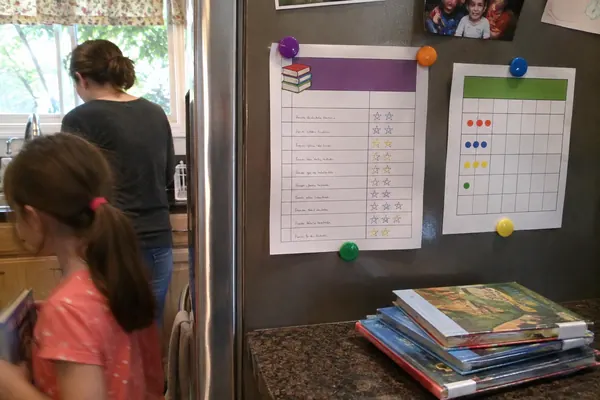
A reading chart is a visual layer on top of the log. The simplest version is to count your minutes at the end of the week and color in one box on a chart for every 20 or 30 minutes read. When the chart is full, there is a small celebration.
Rewards work best when they are related to books: a trip to the library, choosing a new book, or staying up ten minutes later to read in bed. Prizes that are not about books can sometimes make reading feel like a means to an end. A trip to the library has the benefit of feeding the habit.
Keep goals team-sized if you have more than one child. In our house, with two kids, a shared family goal is easier than a competition, because the older one reads faster and the younger one would give up. A family target of, say, 300 minutes across the week keeps everybody in the game.
Try this: Add up the minutes from this week’s rows and write the total at the bottom. Then choose a goal for next week that is about 10 percent higher, not double.
Variations to try
The same sheet can be adapted in several ways, and you do not need a new template for each. A few that work well:
- Summer reading: keep the same columns, but write the goal for the whole summer at the top. It helps to have the dates in front of you, so print a summer calendar next to the log and tick off reading days.
- Library visits: use the Book title column to list library books, and circle the ones you have to return.
- Series log: if your child is reading a long series, put the book number in the Pages column to see progress through it.
- Audiobook log: write Audio in the Pages column and track minutes only.
- Family log: one sheet each for every person in the house, including the grown-ups. It makes reading something everyone does, not just a task for the child.
If you want one sheet for the whole month, the monthly version is a printed monthly calendar with a tick or sticker on each day your child reads. It is not as detailed as the log, but it makes a streak easy to see on the fridge.
Printing tips
The sheet fits on one US Letter page, and the blank PDF is set up the same way. I test-print every printable on my home inkjet on both US Letter and A4, and this one prints cleanly on either if you choose “Fit to page” in the print dialog. Do not choose “Actual size” on A4, or the bottom row may be clipped.
Use plain printer paper for a log that will be filled in and thrown away. If your child will be pressing hard with a pencil or a marker, a slightly heavier paper, around 24 lb, stops the lines from showing through. Pencil is better than pen for young children, because mistakes are part of learning.
Print a few copies at a time. A stack of four or five sheets in a folder takes care of a whole term, and nobody has to hunt for a new one in the middle of the week. If your printer is low on ink, choose “Black and white” or “Draft” mode, because the sheet is clear without any color.
What to do with finished logs
When a sheet is full, do not throw it away right away. Look at it together. Which book got five stars? Which one never got finished? Which day of the week had the most reading? These are better conversations than a lecture about how many minutes were left over.
If your child’s teacher collects the sheets, make a photo of them first. It takes ten seconds and gives you a record, and children are often proud to look back at a month of books. If you save the logs in a folder, by the end of the year you will have a real record of what your child chose to read and how their taste changed.
For older children, the list of titles can become the start of a book list or a wish list for birthdays and the library. That is the real payoff of keeping a log: it stops being about minutes, and starts being a history of what your child loved.
Common questions
How long should my child read each day?
Most guidance lands between 10 and 20 minutes a day for kindergarten to second grade, and 20 to 30 minutes for older elementary readers. Follow your teacher's request first, and start smaller for a reluctant reader. A short session every day beats a long one now and then.
Does being read to count on a reading log?
Yes, for young children it should. That is why this sheet has a Who read? column, so you can mark Me, Us or You. If your teacher only counts independent reading, you can still log both and add up the right column.
Should a grown-up sign the reading log?
Only if the teacher asks for it. The Grown-up column is there for a signature or initials, and it is easy to ignore if you do not need it. Many families find a quick initial helps the habit stay visible.
What is the difference between a reading log and a reading chart?
A reading log records details such as the title, pages and minutes. A reading chart is usually a simpler picture of progress, such as colored boxes or stars toward a goal. The star column and weekly goal on this sheet give you a little of both.
Can my child fill in the reading log on a screen?
Yes. You can type into every line on this page, and it saves in your browser until you print it. There is also a blank PDF if your child would rather write by hand.
How many books should a child read in a month?
There is no single right number. A beginner may finish thirty short picture books while an older child spends the whole month on one long novel. Track minutes as well as titles so slow, steady reading still shows up as progress.
 Reading Log: Free Printable You Can Fill In and Print
 College Assignment Tracker: Free Printable Sheet
 Habit Tracker Printable (Free Monthly Sheet)
 Goal Tracker: Free Printable Sheet You Can Fill In and Print
 Job Application Tracker: Free Printable Sheet
 Workout Log Template (Free Printable Fitness Log)